Telehealth and Digital Health Policy
Telehealth has become a standard part of clinical care delivery in Australian aged care. Residents now receive GP consultations, specialist reviews, and allied health sessions via video and phone, and facilities need a clear policy to govern how those consultations happen safely. This template helps facility managers, directors of nursing, and compliance officers put a workable framework in place quickly.
What This Policy Covers
A telehealth and digital health policy sets out the rules for planning, delivering, and recording remote clinical consultations in a residential aged care setting. It covers who can initiate a telehealth session, what technology is acceptable, how staff support residents during consultations, and how records are maintained afterward.
The policy also addresses consent, privacy obligations, and what happens when a connection fails or a resident lacks the capacity to participate independently. These details matter because telehealth in aged care involves vulnerable people who may need physical assistance to engage with digital services.
Why This Policy Matters for Aged Care Compliance
Two of the Strengthened Aged Care Quality Standards are directly relevant to telehealth delivery.
Standard 3 (The Care and Services) requires providers to give each resident access to the care and services they need, delivered in a way that respects their dignity and preferences. Remote consultations must meet the same quality bar as in-person care. Providers need documented procedures to demonstrate that telehealth is not being used as a cheaper substitute for appropriate care.
Standard 5 (Clinical Care) requires providers to deliver safe, evidence-based clinical care, including access to GPs and specialists. A policy covering how telehealth consultations are arranged, conducted, and followed up is part of the evidence base that auditors will look for.
The Medicare Benefits Schedule also imposes specific conditions on telehealth claiming. GPs and specialists must meet an existing clinical relationship requirement for most telehealth items, and certain item numbers require video rather than phone. Your staff need to understand these rules so they can book consultations correctly and support accurate claiming.
RequirementRelevant Standard or RegulationWhat Your Policy Should AddressAccess to clinical careACQS Standard 5 (Clinical Care)How remote consultations are arranged and documentedResident dignity and choiceACQS Standard 3 (The Care and Services)Consent process and resident preference recordingMBS telehealth item eligibilityMedicare Benefits ScheduleExisting clinical relationship, video vs phone rulesPrivacy and data securityPrivacy Act 1988, Australian Privacy PrinciplesApproved platforms, data storage, third-party accessClinical governance oversightACQS Standard 5Audit trail, incident reporting, policy review cycle
What a Good Telehealth Policy Should Include
A well-structured policy goes beyond a simple list of approved apps. It covers the full lifecycle of a remote consultation, from initial booking through to follow-up care and documentation.
Key elements include: a clear purpose statement, defined roles for nursing staff, care workers, and administrative staff, a consent procedure that accounts for residents with cognitive impairment, technology standards (approved platforms, bandwidth requirements, backup options), privacy safeguards, and a process for documenting consultation outcomes in the care record.
The policy should also connect to your broader governance framework. If you have a Clinical Governance Framework Policy, your telehealth policy should reference it and sit within that structure. Similarly, because telehealth consultations involve transmitting health information digitally, your Privacy and Confidentiality Policy should be cross-referenced to cover how video recordings, chat logs, and third-party platform data are handled.
How Governa Helps Providers Stay Compliant
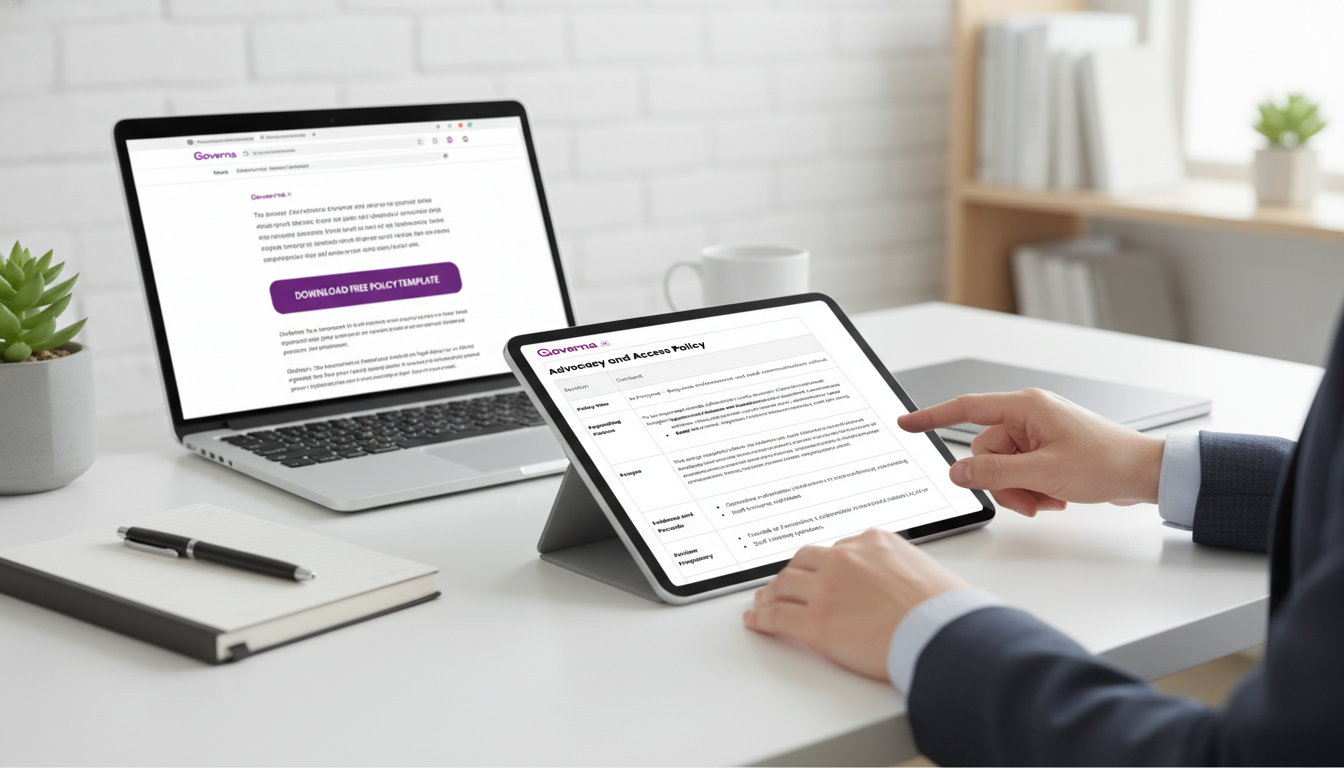
Governa's platform gives aged care providers access to a growing Policy Templates Library that is mapped to current Australian standards and regulations. Each template is written for practical use in residential aged care, not as a generic corporate document.
The Norma compliance bot can answer staff questions about policy obligations in plain language, flag when a policy is due for review, and help teams understand how a specific standard applies to their day-to-day operations. This reduces the time compliance officers spend hunting through legislation and increases the chance that frontline staff actually follow the policy.
When the Aged Care Quality and Safety Commission updates its guidance on telehealth or when MBS item requirements change, Governa updates its templates accordingly so providers are not left working from outdated documents.
Download the Free Template or Book a Demo
The downloadable template below is ready to customise for your facility. Add your organisation name, review dates, and any site-specific procedures, and you have a compliant starting point within minutes.
To see how Governa can manage your full policy library and keep your team audit-ready, book a demo at governa.ai.