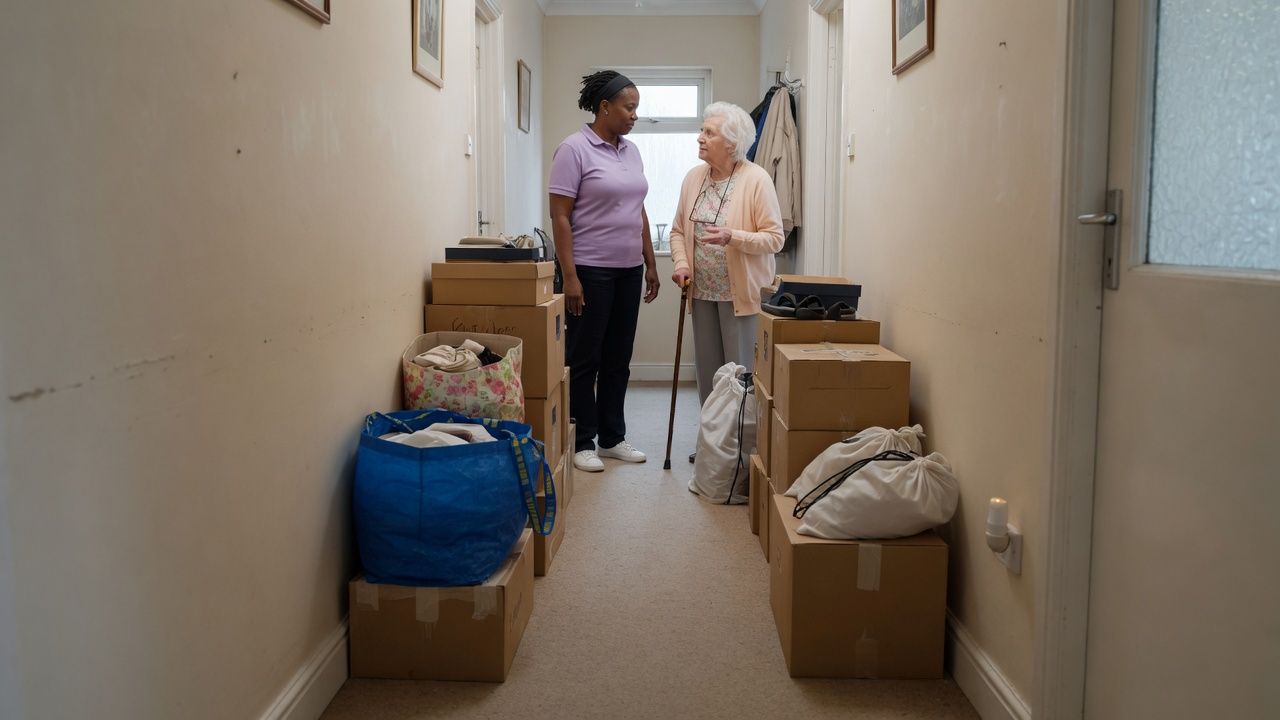


Hoarding and squalor in home care rarely announce themselves at intake. A home that was manageable last year can change after a hospital stay or a bereavement. The provider owes a duty to the client and to the worker walking in.
This guide covers recognising the problem without judgement and grading your response so care continues wherever it safely can. It sits alongside the baseline home environment risk assessment.
Key Takeaways
- Hoarding and squalor are care and work health and safety issues and belong in the care plan and risk register, not on a cleaning roster.
- Workers do not clear or dispose of a client's belongings without the client's consent and written approval from someone with authority.
- Grade the response as continue with controls, modify the service, or pause, and record the reasoning and a review date each time.
- Offer referrals to the care partner, GP and hoarding and squalor assistance, and track each one.
Why This Is a Care Issue, Not a Housekeeping Issue
Fire and Rescue NSW describes hoarding as persistent difficulty discarding possessions, often with continued accumulation, and squalor as very poor, unsafe or unsanitary conditions from waste, dirt, vermin or disrepair. Squalor can occur with or without hoarding. Clutter in clean conditions calls for access and fire controls, unsanitary conditions call for infection control and clinical input, and both together carry the highest risk.
A private home is a workplace once a worker goes there to work, so your work health and safety policy applies. The client keeps their rights to dignity and choice, which your consumer rights policy should spell out.
Recognising the Level of Risk
Do not wait for a diagnosis. Workers report what they see and the assessment does the grading:
- Pathways too narrow for a walker, or items stacked high enough to fall.
- Exits, windows or the bathroom door blocked.
- Spoiled food, mould, waste, vermin or strong odours.
- Disconnected or unsafe power, gas or water, or an unusable bed or stove.
Record conditions in neutral terms, such as "hallway clear width about 40 centimetres". Avoid words like "filthy" in a file the client or the Commission may read.
The First Conversation: Consent and Dignity
Many people with hoarding behaviour feel shame and fear losing control. Visible disgust, or an announcement that the house must be cleared, usually ends access.
Start with what the client wants, usually to stay home and keep their things. Explain what the service needs, such as a clear path to the bathroom, and offer to start small.
Fire and Rescue NSW notes that sudden or unplanned removal of items may cause distress and does not always result in sustained risk reduction. Your dignity of risk policy frames this conversation. A client may choose to live with some risk, but the provider decides what risk its workers can carry. Where capacity is in doubt, involve the care partner and the person's representative.
Hazards for Workers and Clients
- Trips and falls: narrow paths, loose items, poor lighting.
- Falling objects: unstable stacks and overloaded shelves.
- Fire: high fuel load, blocked exits, unsafe cooking or heating.
- Infection: spoiled food, waste, mould, sharps hidden in clutter.
- Pests: rodents, cockroaches, bed bugs or lice that can travel home on clothing.
- Manual handling and emergency access: cramped spaces and no route for ambulance crews.
Put the controls into the visit plan. Our article on lone worker safety covers check-ins and the authority to leave.
A Graded Service Response
Treat the decision as a ladder, not a switch. Each rung needs a reason, an owner and a review date.
Continue with controls
Where hazards can be controlled, services carry on, for example with a clear working path, a second worker, or a task moved to another room.
Modify the service
If a task cannot be done safely as planned, change how it is delivered. Meals may be delivered rather than prepared, for example. Record the change and tell the care partner.
Pause the service
Pause only when risk cannot be controlled, for example blocked exits with no agreement to clear them, an active infestation, or a gas or electrical fault. A senior clinician or manager should review it, speak to the client and representative, offer alternatives, explain how to complain to the Commission, and set a date to revisit. Escalate urgent clinical needs through your clinical pathway.
What Workers May and May Not Touch
Put this in writing so workers are not guessing. With the client's agreement, a worker may make a working space by moving items a short distance, and may take out rubbish the client has already put aside.
Workers may not clear rooms, discard belongings, papers, mail or food on their own judgement, or lift large items alone. A clean-up is separate planned work with consent, a defined scope and the right people and equipment.
Infection, Pests and PPE
Match protective equipment to the task. Gloves, aprons and closed footwear are common starting points. Your infection prevention and control policy and our guide to infection prevention and control on home visits set the baseline.
Keep bags off floors and soft furnishings, bag contaminated clothing, and warn colleagues of suspected insects. Report visible waste, vermin or possible infection to the GP or clinical lead. The provider escalates, it does not diagnose.
Hoarding Fire Risk in Home Care
Fire and Rescue NSW states that approximately 12% of fire fatalities in NSW have been associated with properties reportedly affected by hoarding and squalor. Its advice includes working smoke alarms, clear exits and key pathways, safer cooking and heating, and fixing unsafe or disconnected utilities.
In practice, check the alarms and ask permission to clear a route from the bed or chair to the exit. Where the client uses oxygen or smokes, see our article on oxygen and fire safety in client homes.
The fire service hoarding guidance adds that the service has no regulatory authority here and enters only when a resident invites firefighters for a safety visit. Its online report goes to the local council. Check your own state or territory, and tell the client before any report.
Referrals and Supports
Agree referrals with the client. The care partner can review the service mix, the GP can consider health and mental health factors, and an occupational therapist can advise on access.
The Department of Health lists hoarding and squalor assistance as a Commonwealth Home Support Programme service for older people who are homeless, at risk of homelessness or unable to receive the aged care they need because of hoarding behaviour or a squalid environment. It can include a one-off clean-up and linking the person to specialist support.
Support at Home participants can access it alongside their funding via an assessor referral. The Department states the program will transition to Support at Home no earlier than 1 July 2027, so confirm availability and eligibility with the assessor before promising it to a client.
Documenting Decisions and Review Dates
For each affected client, the file should show:
- Hazards observed, in neutral language, with dates.
- The client's views, what was offered, and what they accepted or declined.
- The grade of response, controls and any changed or paused tasks.
- Who approved the decision, who was told, and referrals made.
- A review date, plus triggers that bring it forward: a fall, a near miss, a new infestation, a hospital discharge.
What Auditors Look For
Assessors from the Aged Care Quality and Safety Commission will test whether risk was identified early, whether the client was involved and whether the response was proportionate. They want evidence that any decision to reduce or pause care was reasoned and reviewed.
Related Resources
- Support at Home home environment risk assessment policy template
- Dignity of risk policy template
- Lone worker safety in home care
- Policy mapping to the Quality Standards
- Fire and Rescue NSW hoarding and squalor guidance
- Department of Health CHSP services
- Aged Care Quality and Safety Commission
Frequently Asked Questions
Can a support worker tidy or throw things out if the client asks?
Only within limits the provider sets. Clearing a bench for meals can be fine. Discarding belongings in bulk should be planned work with written consent and approval from someone with authority.
What if the client refuses any change?
Refusal is a recorded decision, not the end of the conversation. Explain what the service cannot safely do, offer alternatives and review regularly. If worker risk stays uncontrolled, move up the graded response.
Do we have to report a hoarding home to the fire service?
Fire and Rescue NSW accepts reports for its own awareness, but it cannot act on a home without the resident's invitation. Check your state or territory arrangements, tell the client first, and prefer a safety visit they invite.
Who pays for a clean-up?
A routine support worker visit is not a clean-up. The Department lists a one-off clean-up within hoarding and squalor assistance, which needs an assessor referral and depends on eligibility.
Keep Care Going Without Clearing the Home
The goal is not a tidy house but a home where care can be delivered safely and the client keeps control of their belongings and choices. Grade the risk, set clear limits for workers and record your reasoning. Start by reviewing your current clients for clutter, squalor or blocked exits, and confirm each has a graded response and a review date on file.