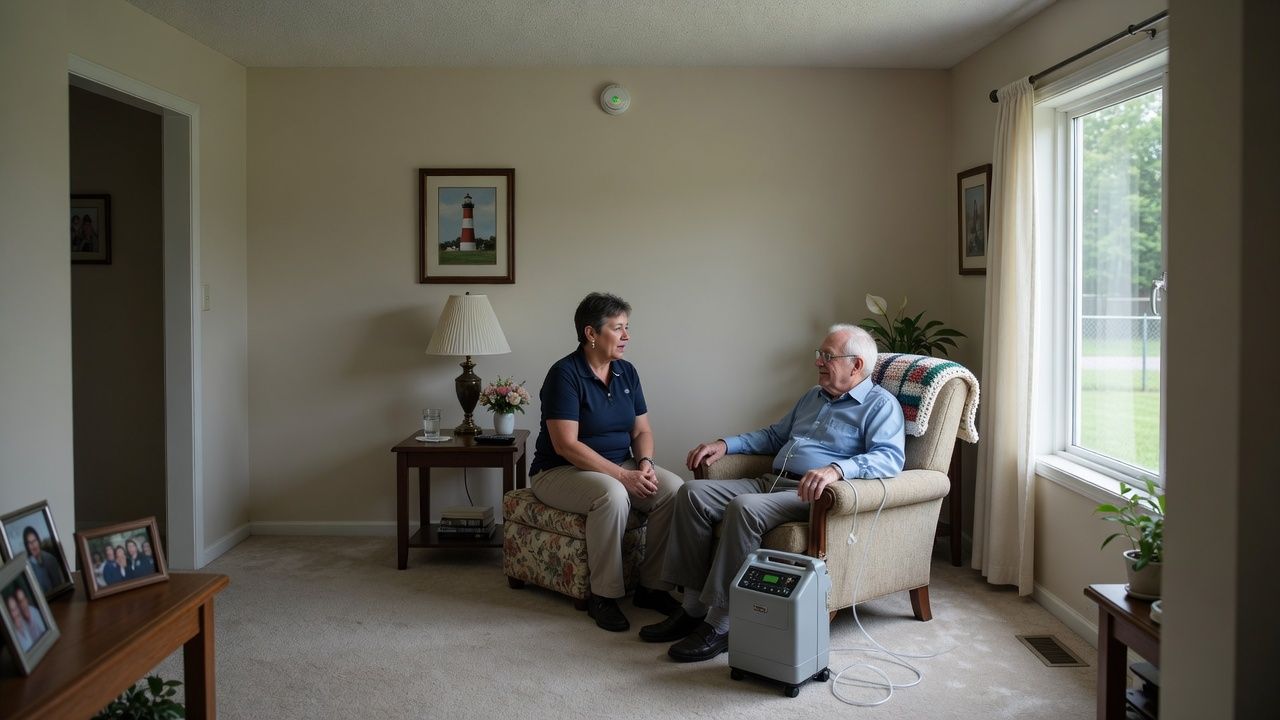


Home oxygen safety in home care rests on one fact: oxygen does not burn, but it makes almost everything else burn faster and hotter. A cigarette, candle, gas heater or frayed power board becomes a far more serious hazard when it sits near a person on oxygen.
Unlike a residential facility, you do not control the building, the wiring or who visits. You do control your assessment, worker instructions, escalation and records.
Key Takeaways
- Oxygen combined with smoking, naked flames, open-flame heaters or unsafe electrical set-ups is a serious fire risk that belongs in the intake assessment and every later review.
- Workers should not adjust flow rates or settings on oxygen equipment unless a clinician's plan and your own authorisation process say they can.
- A client's decision to keep smoking is a recorded decision with agreed controls, not a reason to withdraw support or to ignore the risk.
- Workers can stop or refuse work where they have a reasonable concern of serious risk, and your procedure should say what happens next.
Why oxygen and ignition sources are such a serious home hazard
Fire and Rescue NSW states that medical oxygen exposed to heat sources or open flames, such as a lit cigarette, may cause sudden fire intensity.
Its advice is plain: no smoking in any room containing medical oxygen, and no appliance with an open flame, such as a heater or fireplace, in those rooms.
The hazard also moves. A client may start oxygen after a hospital stay or begin using a gas heater in winter. Your home environment risk assessment policy should trigger a fresh look whenever circumstances change. Facility guidance such as fire safety essentials for aged care providers is a useful comparison, but a private home has no fire panel or maintenance team.
What to find at the first visit
Intake should record whether the client uses a concentrator, cylinders or both, who supplies the equipment and who prescribed it. Then check the home as part of your wider home environment risk assessment.
- Where the concentrator and cylinders sit, and whether any heat source is near them.
- Whether the client, family or visitors smoke, and where.
- Candles, gas heaters, fireplaces, gas cooktops, matches or lighters near the oxygen user.
- Oil, grease or lubricating gel near fittings. Fire and Rescue NSW advises never letting a lubricant touch oxygen fittings or hoses.
- Power boards, double adaptors and damaged leads.
- Working smoke alarms. Fire and Rescue NSW recommends one in the bedroom where oxygen is used and one outside it.
- A clear path from chair and bed to an exit.
Record what you found and who owns each fix. A worker noting a missing smoke alarm is not the same as an alarm being installed.
Smoking and dignity of risk without abandoning the client
Many clients on oxygen still smoke after decades of habit. A flat refusal to discuss it ends the conversation and the safety plan with it. Have the care partner or a trained coordinator explain the specific danger in plain words, ask what the client wants, and offer to involve their doctor, who can discuss support to cut down or stop.
If the client decides to keep smoking, the task becomes agreeing controls with the clinician and supplier, starting from the fire service rule of no smoking in any room with oxygen. Your dignity of risk policy and the guide to dignity of risk in home care cover how to document an informed choice.
Dignity of risk means choices are respected, risks explained, controls agreed and decisions reviewed. It does not remove your duty to protect workers. Your alcohol, smoking and substance use policy should state that workers do not smoke with clients and never light anything near oxygen.
What an oxygen concentrator home care worker may and may not do
Workers should not change flow rates or settings, repair or modify equipment, move it in ways the supplier has not described, or use oil-based products and ignition sources near it.
Workers can usually notice and report damaged tubing, an alarm sounding on the concentrator, a cylinder knocked over or stored near heat, and any new ignition source. They can keep walkways clear and follow the care plan the client's clinician has approved.
Anything further should rest on documented clinician direction, training and a competency check. Otherwise the worker observes, protects and escalates.
Tubing, cylinders, concentrators and power failure
Long tubing creates trip risks and can run close to a heater or candle. Fire and Rescue NSW advises checking the heat-deforming plastic indicator on the cylinder neck before use, and not using a cylinder if it is deformed. A worker who spots that reports it and does not try to fix it.
Power failure matters most for concentrator users. At intake, ask the supplier what the backup arrangement is, record it, and tell workers where it is and who to call.
If oxygen equipment fails, Fire and Rescue NSW advises calling triple zero (000) immediately. Treat a client struggling to breathe during a failure as an emergency first and a reporting task second.
Smoke alarms, escape routes and fire emergency response
Workers are not firefighters. In a fire their job is to get out, take the client if it is safe to do so, and call triple zero. Fire services advise not going back inside.
The hard case is the client who cannot walk out. For each client on oxygen, settle in advance who helps them leave, which exit they would use and what the worker can safely do. If workers are expected to turn oxygen off in an emergency, that instruction should come from the supplier and clinician and be taught beforehand.
Treat any fire or near miss as an incident, even if the fire was put out.
Refusing unsafe work and escalating
Under the model work health and safety laws, a worker may stop or refuse work where they have a reasonable concern that it would expose them to a serious risk. Safe Work Australia says they must tell the business as soon as they can and be available for suitable alternative work. State and territory laws differ in detail, so check your regulator.
A client smoking with oxygen running, or a lit heater beside a cylinder, may raise exactly that concern. Your work health and safety policy should say what they do: leave the area, tell the on-call manager, and face no penalty for stopping. Where they are alone, your lone worker safety arrangements apply.
Stopping work is not abandoning the client. Someone must still check on their welfare, and the care partner must speak to the client and clinician quickly. Services change through a documented decision.
Who to tell
- Oxygen supplier: equipment faults, damaged cylinders, backup power and changes to where equipment is kept.
- Treating clinician: continued smoking, changes in how oxygen is used, or breathing symptoms.
- Care partner: any change to controls, services or the plan.
- Local fire service: Fire and Rescue NSW says seniors who use medical oxygen are welcome to contact their local fire station with questions.
Keep the contact list in the care plan, not in a worker's memory.
Documenting risk controls and client decisions
A good record answers five questions. What was the hazard? Who knew? What did the client decide? What controls were agreed? When is the review?
That means a dated intake or change-of-circumstances assessment, a note of the smoking conversation and the client's decision, written worker instructions, any refusal to work with who was told, and follow-up with the supplier and clinician.
What auditors look for
Whoever reviews the file asks the same questions. Did the provider identify the hazard, act and tell the right people? A fire injury to a client is the sort of event that can come to the attention of the Aged Care Quality and Safety Commission, so your records need to speak for themselves.
A policy that says the right thing is not enough if no file shows it was applied. Check that each assessment predates the oxygen and was revisited after any change.
Related Resources
- Alcohol, smoking and substance use policy template
- Home environment risk assessment policy template
- Dignity of risk and positive risk-taking policy
- Home environment risk assessment in home care
- Policy mapping to standards
- Fire and Rescue NSW medical oxygen safety checklist
- Safe Work Australia
Frequently Asked Questions
Can a support worker adjust a client's oxygen flow rate?
Not unless the client's clinician has directed it and your provider has trained and authorised that worker for the task. Otherwise the worker observes, keeps the area safe and reports concerns. Settings are clinical decisions.
What if a client insists on smoking while on oxygen?
Do not withdraw support on the spot, and do not accept the risk without a plan. Involve the clinician, agree controls that keep smoking away from any room with oxygen, and record the decision.
When can a worker refuse to stay in a home?
When they have a reasonable concern that the work exposes them to a serious risk, such as a lit cigarette beside running oxygen. They tell the provider as soon as they can, and the provider decides what happens next.
Who do we notify after a fire or near miss?
Triple zero first if anyone is at risk. Then tell the on-call manager, care partner, the supplier if equipment was involved and the clinician if the client may be harmed.
Oxygen safety rests on assessment, limits and records
The hazard in an oxygen home is the ignition sources around the equipment, and you can only manage what you have assessed. Set clear worker limits, respect client choices through documented controls, and make sure every worker knows they can stop work and who to call. Start by checking that each current client on oxygen has a dated assessment, a smoking decision on file and an easy-to-find contact list.