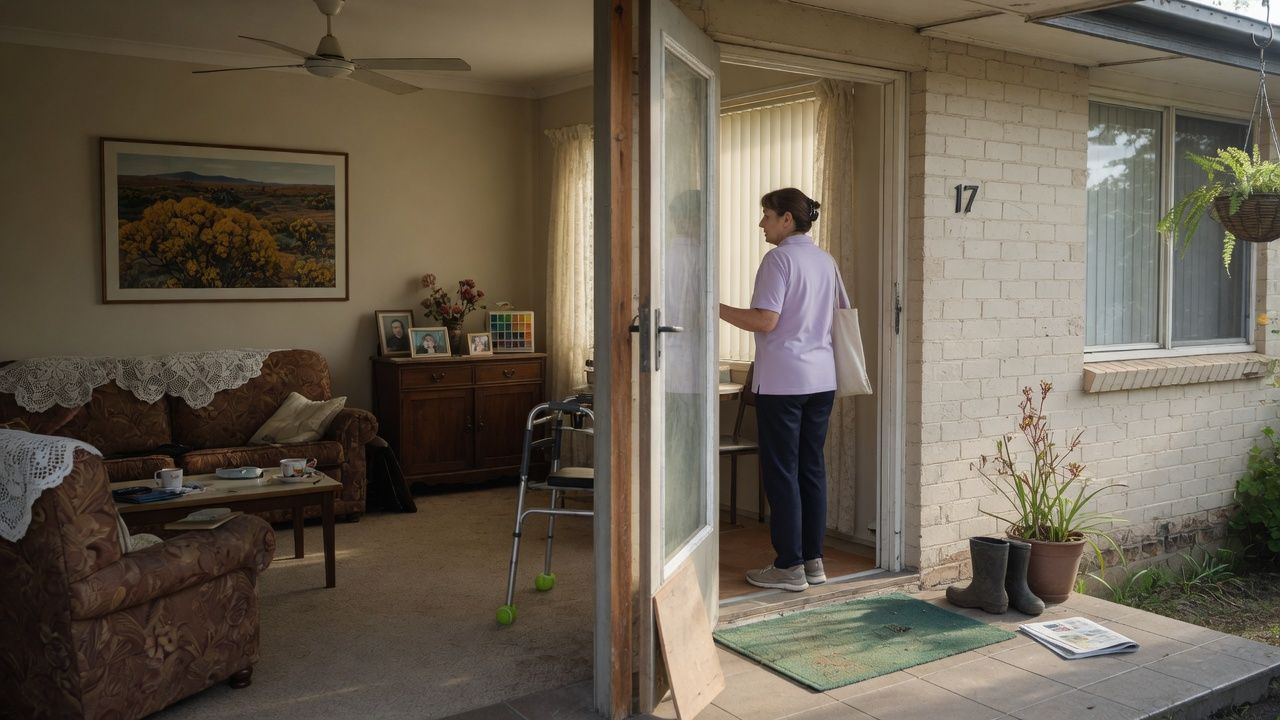


Residential facilities are designed as workplaces. A client's lounge room is not. That is why a home environment risk assessment belongs in the file before the first Support at Home or home care visit, not after the first near miss. The assessment is about the place of work: access, hazards, utilities, animals, smoking, clutter, and anything else that changes how care can be delivered safely for the client and the worker.
This article is for providers building a repeatable pre-visit and ongoing environment assessment. It is distinct from lone-worker safety procedures, which focus on the person delivering care. Here the subject is the home itself, how the findings enter the care plan, and how the record survives review by the Aged Care Quality and Safety Commission.
Key Takeaways
- Complete a baseline home environment risk assessment before the first visit wherever practical, and document any partial access limits.
- Cover hazards that are common in private homes: steps, lighting, hot water, electrical, clutter, smoking, pets, and insecure entry.
- Assign ownership: who completes, who reviews, and who updates the care plan when the home changes.
- Reassess after hospital discharge, home modifications, new equipment, new occupants, or a reported incident.
- Keep the assessment linked to WHS controls and service design so workers see controls in the field app, not only in a PDF.
Why Private Homes Are Uncontrolled Workplaces
In home services, the provider does not control layout, maintenance, or who else lives on the property. Stairs without rails, worn carpet, low lighting, overloaded power boards, and blocked exits are ordinary domestic conditions that become care risks once personal care, transfers, or meal support start. A solid assessment does not try to make the home perfect. It names what is present, what is tolerable with controls, and what blocks safe service until something changes.
Support at Home and home care delivery sit inside aged care quality obligations and work health and safety duties. Program context is set out in the Department of Health Support at Home program materials. Your local WHS procedure should sit beside clinical and care planning, not in a separate silo. Align environment findings with your Work Health And Safety Policy and organisation-wide Risk Management Policy Template.
What a Baseline Assessment Should Cover
Use a structured form, not free text alone. Capture at least:
- Access: street parking, path condition, steps, ramps, handrails, door width, key safe or entry method, lighting at night.
- Internal mobility: floor surfaces, rugs, clutter, furniture layout for transfers, bathroom grab rails, shower hob, toilet height.
- Utilities and environment: hot water temperature risk, heating and cooling, smoke alarms if observed, ventilation, mould or damp where visible.
- Electrical and equipment: obvious overloaded boards, damaged cords, client-owned hoists or wheelchairs and whether they appear maintained.
- People and animals: other occupants, visitors during care, pets that may bite, trip, or block work spaces.
- Substances and behaviours: smoking indoors, alcohol or other substance use that changes worker safety, hoarding that blocks egress.
- Emergency factors: how a worker would leave quickly, mobile coverage, nearest exit, known neighbourhood issues if relevant to scheduling.
For Support at Home providers, map the form fields to your Support at Home: Home Environment Risk Assessment Policy Template so policy and practice use the same categories.
Timing: Before First Visit and After Change
Ideal sequence: intake identifies likely hazards from referral notes, a competent worker or assessor completes the baseline at or before the first visit, and the care partner confirms controls before high-risk tasks (transfers, bathing, medication support in unsafe kitchens). When a full pre-visit is not possible, document what was assessed remotely, what remains unknown, and the interim controls (two-person visit, limited service scope, daytime-only schedule).
Reassessment triggers should be explicit:
- hospital or respite discharge
- new diagnosis affecting mobility, vision, or cognition
- home modifications or new assistive technology
- new pet, new housemate, or changed family dynamics
- incident, near miss, or worker hazard report
- client or family report of falls, clutter increase, or equipment failure
Do not treat the baseline as a one-off onboarding checkbox. Homes change faster than annual plan reviews.
Who Owns the Assessment
Name roles in procedure:
- Completer: trained assessor or senior support worker with competency in environment and WHS observation.
- Reviewer: care partner or clinical lead who accepts residual risk and signs off controls.
- Updater: field staff who must report new hazards the same day, not at the next care plan meeting.
Worker safety findings should also feed lone-worker and scheduling decisions. Pair this file with the sibling guidance on Lone Worker Safety When the Client's Home Is the Workplace so environment controls and personal safety controls are not split across unread documents.
Linking Findings to the Care Plan and Service Design
An assessment that sits in a folder while the roster still sends a single worker to climb broken stairs has failed. Translate each material risk into a control the field team can see:
- two-person assist for transfers
- no shower assist until grab rail installed
- daylight-only visits
- pets secured during care
- alternate venue for high-risk tasks if agreed
- pause of a service type until access is safe
Where environment risk blocks delivery, treat it as a care planning and communication issue with the participant, not a silent service cut. Keep dignity and choice in view through your rights framework while you still meet WHS duties.
Partial Access, Refusal and Dignity of Risk
Clients may refuse a full walk-through, restrict rooms, or decline recommended modifications. Record what was offered, what was refused, the information given about residual risk, and the service scope you can still deliver safely. Do not invent consent for entry into spaces the client has not authorised. Where refusal leaves a high residual risk to workers, escalate through clinical governance and, if needed, service redesign rather than pressuring staff to “just manage”.
Evidence Pack for Audit
Auditors and internal quality reviews look for a living system, not a single form date. Keep:
- completed baseline assessment with date, author, and review sign-off
- reassessment history tied to triggers
- care plan extracts showing environment controls
- hazard reports and incident links
- training records for staff who complete assessments
- policy version aligned to current templates and standards mapping via Governa Policy Mapping to Standards
If a worker was injured or a client fell in a known hazard zone, the file should show whether the hazard was identified earlier and what control was in place. Gaps there are harder to defend than gaps in prose quality.
Common Gaps Providers Miss
- Assessment completed months after services started
- No night-time lighting check for evening personal care
- Pets noted as “friendly” with no control instruction
- Hoarding or blocked exits described in progress notes but never escalated
- Home modification completed, assessment never updated
- Subcontractor staff not given the environment summary
Close those gaps with system rules: no high-risk task without an in-date assessment flag, and automatic reassessment tasks after hospital discharge events in the client record.
Related Resources
- Support at Home: Home Environment Risk Assessment Policy Template
- Work Health And Safety Policy
- Risk Management Policy Template
- Lone Worker Safety When the Client's Home Is the Workplace
- Governa Policy Mapping to Standards
- Aged Care Quality and Safety Commission
- Support at Home program (Department of Health)
Frequently Asked Questions
When should a home environment risk assessment be done?
Complete a baseline before the first visit where practical. If that is not possible, document interim limits and finish the full assessment at the earliest safe opportunity, before high-risk tasks expand.
Who can complete the assessment?
A worker trained and competent in environment and WHS observation, with review by the care partner or clinical lead. Do not leave residual risk acceptance to the most junior person on the roster.
Is this the same as a lone worker check?
No. Lone worker procedures protect the person delivering care. The environment assessment describes the place of work and the controls needed for safe service design. You need both.
What if the client refuses parts of the assessment?
Record the refusal, explain residual risk, and limit service scope to what remains safe. Escalate high residual risk through governance rather than informal pressure on staff.
How often should it be reviewed?
At least when triggers fire (discharge, modifications, incidents, new hazards) and at planned care plan reviews. Annual-only review is too slow for many home care clients.
Do Support at Home providers need a specific policy?
Yes, environment assessment should be written into procedure and preferably a dedicated policy aligned to your Support at Home home environment risk assessment template, WHS policy and risk management framework.
Build the Home File Before the First Transfer
A home environment risk assessment is the difference between hoping a private house will behave and knowing how care will run inside it. Do the baseline early, name owners, push controls into the care plan and roster, reassess when the home changes, and keep evidence that links hazard, control and review. That is how home care stays deliverable for the client and defensible for the provider.