

Lone Worker Safety When the Home Is the Workplace
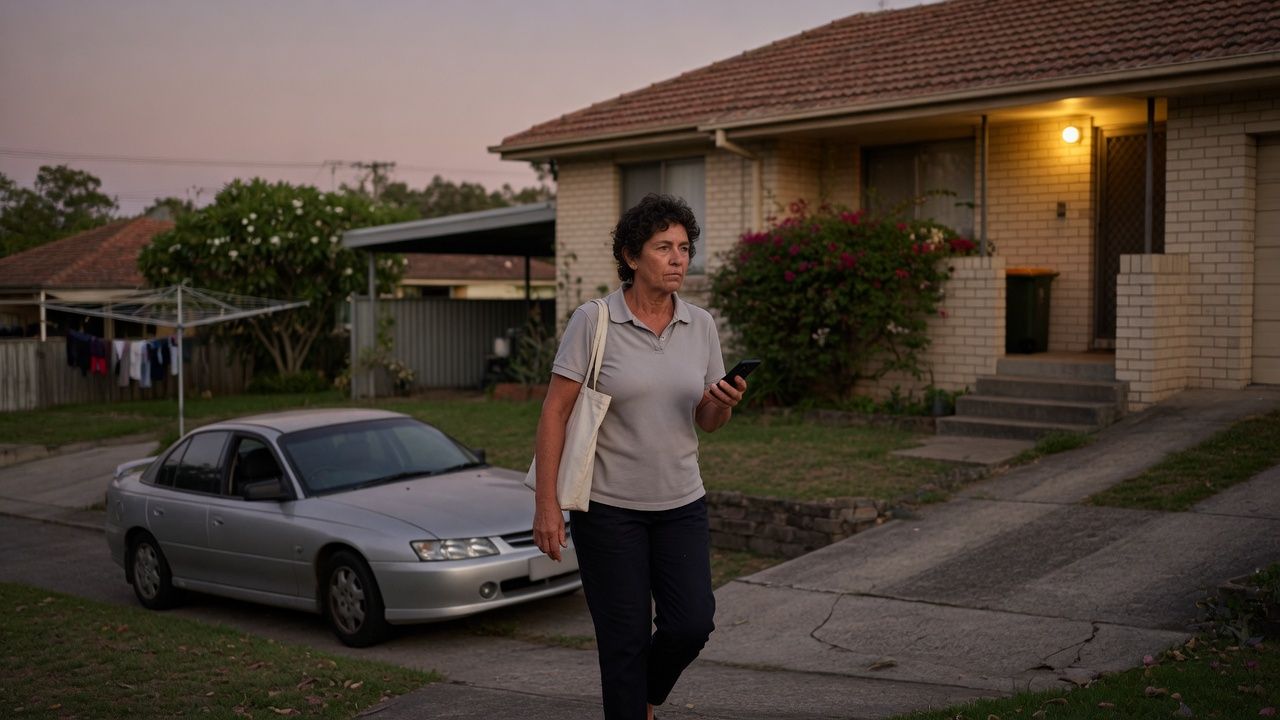
A support worker who lets herself into a private dwelling with a key safe code and spends forty minutes alone with a participant is working in a workplace under Australian law. Lone worker safety is not a courtesy extended to field staff. It is a statutory duty owed by the provider, and it must be discharged in a building nobody on your payroll owns, can modify at will or enters without invitation.
Key Takeaways
- A home becomes a workplace the moment a worker goes there to work, so the provider's duty applies in full even though it controls nothing about the building.
- Client risk and worker risk are separate assessments with separate owners.
- What prevents harm is a pre-visit home environment risk assessment with a rostering decision attached, not an app that logs incidents.
- Workers need standing authority to leave without asking permission, and a named person who answers after hours.
- Repeated near misses must change the care plan, or the register records harm you tolerated.
Two Duties Meet at the Front Door
The Work Health and Safety Act 2011 defines a workplace to include any place a worker goes while at work. That captures the lounge room, the bathroom and the front steps. Safe Work Australia treats community staff who work with the public but away from colleagues as remote or isolated workers, using a community nurse visiting at night as its own example.
Two obligations then run in parallel. Work health and safety duties require you to eliminate risks to workers so far as is reasonably practicable and, failing that, to minimise them. The model WHS Regulations address remote or isolated work specifically, requiring you to manage those risks and to communicate effectively with those workers, which is the footing for check-in and duress arrangements. Under the Aged Care Act 2024 and the strengthened Quality Standards, Outcome 2.4 separately requires a risk management system covering risks to individuals, aged care workers and operations. Worker safety is named in the Standard, not implied by it.
Neither duty gives you control of the dwelling. The Commission's position is that providers in a home setting manage the risks of their own service delivery and work with the older person and their carers on risks outside it. You cannot order a hallway widened or a dog rehomed. You can decide what work you send someone in to do.
Client Risk and Worker Risk Are Different Documents
Most providers run one home visit checklist and tick both boxes with it. That fails on audit, because the two assessments ask different questions. The client-facing one answers to Outcome 4.1a, which requires providers delivering in a person's home to identify environmental risks to the safety of the individual and discuss mitigation options with them. It is consultative and leaves room for dignity of risk.
The worker-facing home environment risk assessment answers to WHS law and is not negotiable the same way. It records whether the task can be done safely by one person, in that space, with the equipment present, with those animals and household members. The participant has a say in their own risk tolerance, not in whether your worker is exposed to a hazard. Keep the two on separate forms, and build the controls into your risk framework.
The Hazards That Recur in Private Dwellings
- Manual handling without equipment. Assisting someone to shower at home is a hazardous manual task. Weigh the layout, whether there is room for a hoist, and whether enough workers are rostered.
- Animal and hoarding hazards. The regulator's own example of an isolation control is a dangerous dog locked in the garage whenever workers attend. Hoarding and squalor raise fall, fire egress and infestation risks at once, so know the support available for hoarding and squalor situations.
- Smoking and home oxygen. Together they are a fire and burns risk, and second-hand smoke in a small room is an exposure a worker cannot walk away from mid-task.
- Access and heat. Unlit paths, steep driveways, broken steps, locked side gates and no drinking water on a 40 degree day all count.
- Aggressive household risk. The hazard is often not the participant. It is an adult child, a partner or a visitor who is hostile, affected by alcohol or other drugs, or escalating over money. Aggression from others at the workplace is a risk you must manage.
Controls That Work in Someone Else's House
Apply the hierarchy of controls honestly instead of reaching for the cheapest administrative measure. Safe Work Australia's healthcare guidance gives examples that translate directly: delivering part of a consultation remotely, substituting a household's toxic cleaning products, isolating an animal, and using lifting devices. Below those sit the administrative controls.
- Assess before the first visit, then on every material change. A new diagnosis, household member, animal or hospital discharge resets it, and the result has to reach whoever is rostered on. A generic induction will not tell a casual worker that the side gate is the only safe entry, or that the son must not be present during personal care.
- Roster two workers where the risk warrants it. This is the named control for aggression risk and for people handling one worker cannot do safely. Build the cost into service design.
- Run check-in and duress procedures someone monitors. Arrival and departure notifications and a discreet duress alarm are both regulator-endorsed. An unmonitored alert is not a control.
- Name the escalation after hours. This fails more often than anything else, because the worker is alone at 7pm with a number that rings out. One on-call role, and authority to call 000 without clearance.
Location tracking helps you know where staff are, but it is one control among several and prevents nothing on its own. Document the full set in a work health and safety policy template written for home delivery rather than a building, and see our guide to staying compliant with WHS duties for the governance above it.
Refusal, Withdrawal and Suspension Need Written Rules
Workers hesitate to leave because they fear the participant will go without care and they will be blamed. Remove that calculation. State in writing that a worker may withdraw immediately, without prior approval, where they reasonably believe their safety is at risk, and that this is not a service failure. Pair it with a duty to report within the shift.
Ceasing services is the sharper end, and the grounds are set by the Department. You may cease Support at Home services where the participant can no longer be cared for at home with the resources available, has intentionally caused serious injury to a worker, or has intentionally not complied with a worker's right to work in a safe environment. State those circumstances in the service agreement, give at least 14 days written notice with reasons, and keep delivering through that period. Continuity of care is a condition of registration under section 149 of the Aged Care Act 2024. Those grounds turn on intention, so a risk arising from cognitive impairment calls for a different service model, not cessation.
Reporting and Review That Changes the Care Plan
Two reporting streams run from a home visit and staff confuse them. Incidents involving a person receiving care may be notifiable to the Commission under the Serious Incident Response Scheme, with Priority 1 reported within 24 hours and Priority 2 within 30 days. Worker injuries and dangerous incidents go to your state or territory WHS regulator. One event can trigger both.
Near misses decide whether the system is real. A worker cornered in a hallway, or one who strained her back because the hoist sat behind a stack of boxes, has handed you information that must reach the care plan. Outcome 2.4 requires providers to collect and analyse risk data, engage workers in assessing risk, and review how the system performs. Read home visit incidents by dwelling rather than by worker, with a trigger that forces reassessment after a set number of events at one address.
Lone Worker Safety Is Decided Before the Visit
By the time a worker is standing in a hallway with no second person and no signal, the options have narrowed to whatever you put in place weeks earlier. A provider that can produce a dated worker risk assessment for the dwelling, a separate client risk discussion, the rostering decision that followed, a monitored check-in, a named after-hours contact and evidence that near misses changed the plan has met its duty. A tracking log and a signed induction form do not.
Related Resources
- Work Health And Safety Policy
- Staff Wellbeing and Mental Health Policy
- Incident Management and Reporting Policy Template
- Risk Management Policy Template
- Staff Rostering and Workforce Planning Policy
- Governa Policy Mapping to Standards
- Safe Work Australia
Frequently Asked Questions
Is a participant's home really a workplace under WHS law?
Yes. The Act defines a workplace to include any place a worker goes, or is likely to be, while at work. The duty to ensure health and safety so far as is reasonably practicable applies there, even though you cannot alter the building.
How often should a home environment risk assessment be redone?
Before the first visit, on any material change to the dwelling, household or the person's needs, after any incident or near miss at that address, and on a cycle you can justify. Tie the trigger to events, not only to a date.
Does a duress app satisfy our lone worker obligations?
Not by itself. A duress alarm works only where someone monitors it and can escalate immediately. The regulator expects a combination: risk assessment, higher order controls where available, two-worker visits where warranted, training and emergency planning.
Do worker injuries in a client's home go to the Aged Care Quality and Safety Commission?
Generally no. The Scheme covers incidents involving a person receiving aged care. Worker injuries go to your state or territory WHS regulator. Keep both pathways in your incident management procedure so staff do not have to guess.