

Summer starts on 1 December, and the weeks before it are the best time for providers to get their heatwave home care arrangements in order. The Aged Care Quality and Safety Commission's summer clinical alert on heat stress warns that heat-related illness can worsen very quickly in older people, leading to rapid deterioration and death.
This guide covers who is most at risk, what goes into each person's plan, what workers check on hot days, how to respond to illness and what to finish before December. It is general information, not legal or clinical advice.
Key Takeaways
- The Commission expects home care providers to have a heat action plan for each vulnerable person, covering how to reduce heat exposure and who to contact if they become unwell.
- A vulnerable client list should flag people who live alone, are socially isolated, have cognitive impairment, take certain medicines, have mobility problems or live in hot homes without cooling.
- Sudden high body temperature, confusion, seizures, vomiting, a weak rapid pulse or loss of consciousness is a medical emergency: start cooling first aid and call 000.
- Where there is no air conditioning, a fan with a wet sheet or towel placed in front of it, never over it, is the Commission's suggested option.
- October and November are the window to update client lists, test phones and pendant alarms, brief workers and check business continuity arrangements.
Why Heat Is Harder to Manage in Home Care
Home care carries more heat risk than most settings because providers see clients less often and control very little of their environment. The Commission's summer clinical alert names three specific challenges: less frequent monitoring, limited control over the home (some homes lack air conditioning or ventilation), and reliance on the older person to look after themselves between visits.
A heatwave can turn a stable client into an emergency between visits. The Commission also notes that many heat deaths are recorded as heart attacks. Its earlier summer alert cites Australian Institute of Health and Welfare figures showing extreme heat accounted for 7,104 injury hospitalisations and 293 deaths in Australia between July 2012 and June 2022, with people aged 65 and over the most commonly hospitalised age group for heat injuries from July 2019 to June 2022.
Building the Vulnerable Client List
Your vulnerable client list is the register of people who need extra contact and a written plan when hot weather is forecast. The Commission's earlier alert on caring for older people in hot weather suggests including people who:
- live alone or with other vulnerable people
- are socially isolated
- have cognitive impairment, including dementia
- take certain medicines
- use alcohol or other substances
- have mobility problems or disability
- live in hot homes or have no cooling
The more recent alert adds people who are frail or have low body mass, and those who find it hard to stay hydrated, such as people on thickened fluids or fluid restrictions. Draw the list from care plans, assessment notes and worker knowledge. Your home environment risk assessment should already record cooling and ventilation, so use it as a source.
Give the list an owner, a review date before December and a rule for adding people mid-season, such as after a hospital discharge.
Medicines that raise heat risk
Some medicines change how the body handles heat or fluid. The Commission lists antihistamines, beta blockers, diuretics, antidepressants and antipsychotics as examples. Workers should not change or comment on medicines. Instead, flag the client so a care manager can ask their GP or pharmacist whether any heat-season advice applies.
Writing a Heat Action Plan for Each Vulnerable Client
A heat action plan is a short, client-specific document saying how heat exposure will be reduced and who is called if the person becomes unwell. The Commission expects one for each vulnerable person. Keep it to one page.
A practical plan covers:
- Cooling - what works in this home; whether air conditioning is serviced and switched on; fan placement
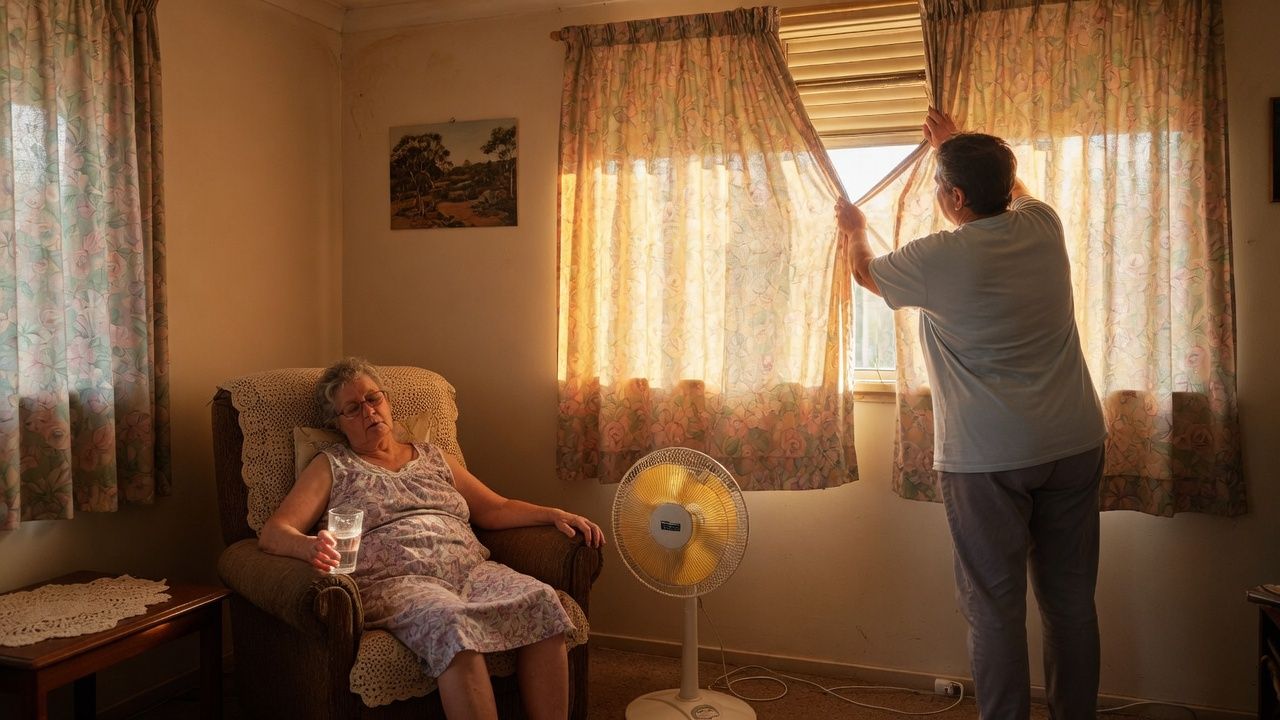
- Daily routine - limiting time outside in extreme heat; suitable light clothing; when to close blinds
- Fluids and food - preferences, any thickened fluids or restrictions set by a clinician, cool meals
- Extra contact - phone calls or added visits on forecast heatwave days, and who makes them
- Contacts - family member, GP and the trigger for calling 000
- Supplies - food and medication for up to a week, as Tasmania's Department of Health advises
Do not write fluid volume targets into the plan unless a clinician has set them; follow your nutrition and hydration policy and any individual clinical direction. Agree the plan with the client and, where they wish, their family.
What Workers Check on a Hot-Day Visit
On a hot day, every visit to a listed client should include a quick, consistent heat check. The Commission expects providers to make sure people limit time outside, wear suitable clothing, have enough fluids and have working cooling devices switched on.
- How does the person look and sound compared with usual? Any new confusion, drowsiness or unusual behaviour?
- Is the home hot? Are blinds closed and cooling switched on and working?
- Without air conditioning, is a fan running with a wet sheet or towel in front of it, not over it?
- Are drinks within easy reach, and has the person been drinking?
- Is clothing and bedding light enough?
- Are the phone and pendant alarm charged and working?
Workers record what they found and report any change the same day.
Recognising Heat Stress in Elderly Clients and Responding
Workers need to tell early heat stress from a medical emergency, because heat stroke can move fast. The Commission's earlier alert notes body temperature can exceed 40C within minutes in heat stroke.
- Heat exhaustion - often appears as heavy sweating, tiredness, weakness, dizziness, headache or thirst; move the person somewhere cooler, offer fluids if safe and report to the care manager for clinical review
- Heat stroke - sudden rise in body temperature, confusion or altered mental state, seizures, nausea and vomiting, a weak rapid pulse or loss of consciousness; this is a medical emergency
For emergency signs, the Commission's advice is to give first aid to cool the person and call emergency services on 000. Where workers are concerned but it is not an emergency, the alert says to call a family member, the GP or 000 depending on the concern, and any person whose health is getting worse must be clinically assessed. Workers escalate; clinicians assess. Heat triggers should sit inside your general clinical escalation pathway rather than as a separate process, and the Commission asks providers to train workers in recognition, emergency response and first aid.
Power Outages, Phones and Pendant Alarms
A heatwave often brings power outages, which can switch off cooling, phones and alarms at the worst moment. Tasmania's Department of Health advises checking that phones and safety alarm pendants will still work during an outage.
Ask each listed client whether their phone needs mains power and whether their pendant relies on a home base unit, and note a backup contact method in the plan. Your emergency and disaster management policy should say how you prioritise welfare checks when a suburb loses power, and your business continuity plan should cover how you keep running if your own office or rostering system is affected.
Keeping Workers Safe Between Homes
Workers face heat risk too, often driving between hot homes all day, and providers must manage that risk like any other work health and safety hazard.
Practical controls include rostering heavier tasks early in the day, building drinks and cool breaks into travel time, checking vehicle air conditioning, and letting workers pause a task in a dangerously hot home and report it. Lone workers need a check-in arrangement.
Pre-Summer Readiness Checklist for October and November
The weeks before December are the easiest time to prepare. Use this checklist with your quality team:
- Update the vulnerable client list and confirm who owns it
- Write or review a heat action plan for each listed client
- Ask clients to service air conditioners and test fans now
- Flag medicine-related risk for GP or pharmacist review
- Test phones and pendant alarms for outage readiness
- Brief all workers on hot-day checks, heat illness signs and first aid
- Set a process for monitoring Bureau of Meteorology heatwave forecasts and triggering extra contact
- Review worker heat controls, vehicles and lone worker check-ins
- Test the business continuity plan against a multi-day heatwave and power outage
Keep evidence of each step. Governa users can ask Norma to help map heat policies and records against their obligations.
Related Resources
- Emergency and Disaster Management Policy
- Business Continuity Policy
- Work Health and Safety Policy
- Nutrition and Hydration Policy
- Medication Storage and Cold Chain in Home Care
- Lone Worker Safety in Home Care
- Bureau of Meteorology Heatwave Service
Frequently Asked Questions
Does every home care client need a heat action plan?
The Commission's summer clinical alert expects a plan for each vulnerable person. Screen all clients against the vulnerable client list criteria and write plans for those who meet them.
What should a worker do if a client's home has no air conditioning?
Close blinds, encourage light clothing and keep drinks within reach. The Commission suggests a fan with a wet sheet or towel placed in front of it, not over it. Report the home so extra contact can be arranged.
Can workers give advice about medicines during a heatwave?
No. Workers should flag clients who take medicines such as diuretics, beta blockers, antihistamines, antidepressants or antipsychotics, and the care manager should refer questions to the person's GP or pharmacist.
When should a worker call 000?
Call 000 for signs such as a sudden rise in body temperature, confusion, seizures, vomiting, a weak rapid pulse or loss of consciousness, and start cooling first aid. For lesser concerns, contact the family, the GP or your clinical team depending on the situation.
How do we know when a heatwave is coming?
The Bureau of Meteorology publishes heatwave forecasts. Assign someone to check them through summer and set a clear trigger for activating extra calls and visits for listed clients.
Plan for Heat Before December
Heat harms older people at home quickly, often between visits. The answer is preparation: a current vulnerable client list, a one-page plan for each listed person, workers who know what to check and when to escalate, and outage arrangements tested in advance. Start this week by naming an owner for the list and setting a date in November to confirm every plan is complete.