

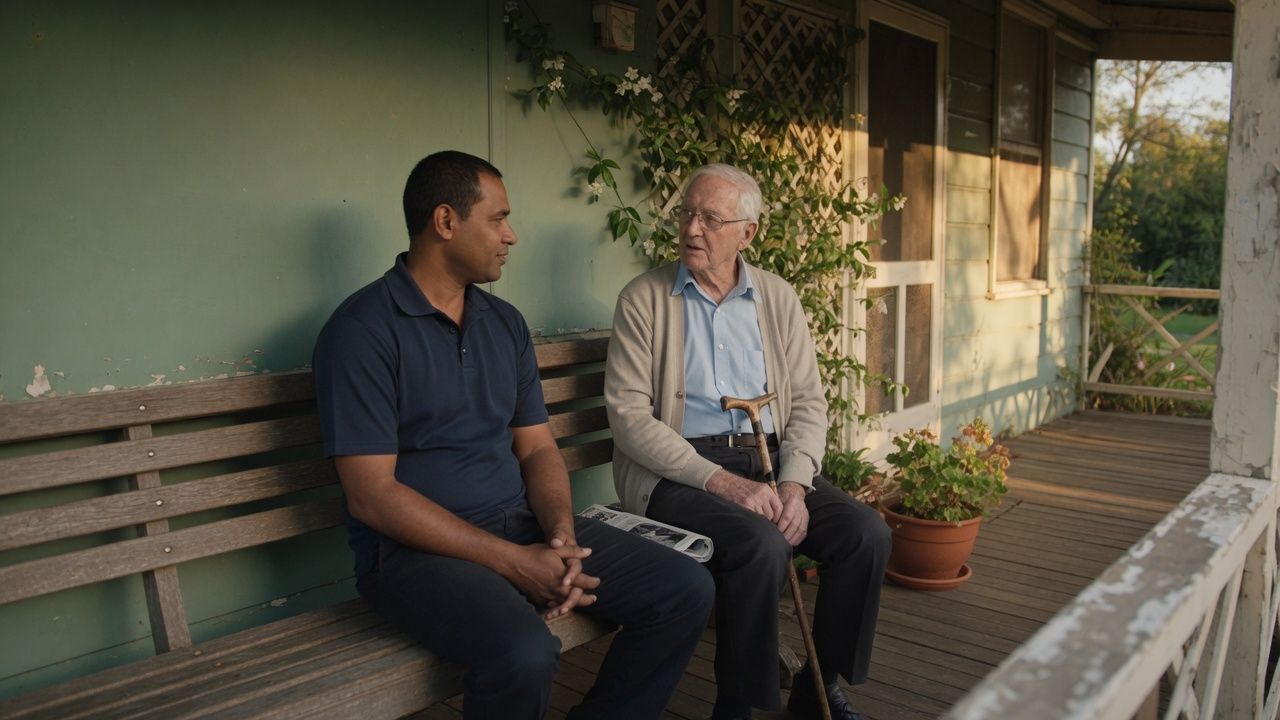


A support worker may be the only person who sees an older person for days. When that client says they want to die, the worker needs a procedure that already exists. This guide covers suicide risk in home care: what the worker and provider do in the first minutes, and how the concern is escalated, recorded and reviewed.
It covers provider process only, not clinical advice.
Key Takeaways
- If a client is in immediate danger, the worker calls 000 and stays with the person where it is safe to do so.
- Lifeline (13 11 14) and the Suicide Call Back Service (1300 659 467) run 24/7 but do not replace 000.
- A worker never promises secrecy and explains they will tell their coordinator.
- Every crisis is recorded as an incident, whether or not it is reportable to the Aged Care Quality and Safety Commission.
- Workers need a same-day check-in and a debrief.
Why Home Care Workers Are Often the Only Visitor
In a home, a worker may spend an hour alone with a client, and the next visitor may be days away. There is no nurse down the corridor.
Give every worker a short written procedure, a phone number that is answered, and permission to raise a concern without being sure. Your lone worker safety arrangements should also cover leaving and calling for help.
Warning Signs and What Clients Say
Workers notice and report; they do not assess. Your procedure should list what always triggers escalation:
- direct statements, such as "I want to die" or "I'd be better off gone"
- indirect statements, such as "you won't need to come much longer"
- giving away belongings suddenly
- acute distress or hopelessness that does not settle
- access to means, whether the worker sees it or the client mentions it
Our article on responding to self-harm and suicide risks in aged care covers residential settings. At home, fewer people are present and help takes longer to arrive.
The First Response: Stay, Listen, Do Not Promise Secrecy
The first job is to stay. The worker does not leave the room or rush to the next task. They stay calm and let the client talk without arguing or trying to fix anything.
Be plain about what workers must not do. They do not promise confidentiality, and they do not leave the client alone if risk appears immediate. A simple line works: "I'm glad you told me. I'm not leaving you on your own with this, and I need to get someone to help." The worker then makes the call the procedure sets and tells the client.
Immediate Danger: Call 000 First
Immediate danger means the worker believes the client may act now, has acted, or has means within reach and intent. The worker calls 000 first, stays where it is safe to do so and follows the operator's instructions. Only then do they call the on-call line. A 000 call never waits for provider approval, the same principle behind after-hours on-call escalation.
If the worker does not feel safe, they move somewhere safe and call 000 from there. Put that in writing.
Where the crisis lines fit
Lifeline says that if life is in danger, call 000, and that its crisis support on 13 11 14 runs 24 hours a day, seven days a week. The Suicide Call Back Service on 1300 659 467 offers free 24/7 phone and online counselling to people at risk of suicide and people worried about someone.
Use them when risk is not immediate, and for the worker who needs to talk after a hard visit.
Mental Health Escalation in Home Care When Risk Is Not Immediate
Many disclosures are not an emergency in that moment, but they should not wait for the next visit. Set the standard at same-day clinical escalation. The worker contacts the coordinator or on-call line before leaving the home, and a clinician or care manager decides the next step, such as a call to the GP, a mental health crisis service or a welfare check later that day. The worker does not decide alone.
Your clinical escalation policy should name who answers, how fast, and what happens if nobody does. A suicide disclosure should run through the home care clinical escalation pathway with a shorter clock.
Access to Means in the Home, Within Scope
A client's home is their own. Workers do not search it, remove property or take over medicines on their own initiative unless your policy and the client's consent clearly say so. They observe and report.
If a worker sees or hears about something that could be used to cause harm, they report it the same day, or immediately if risk is immediate. The clinician and care partner decide what happens next, and the home environment risk assessment should record known means.
Who Is Told: Consent and Privacy Limits
The coordinator, clinician, care partner and GP may need to know, and responders in an emergency. The client's wishes still matter: where danger is not immediate, the worker says who needs to know and why, and the clinician asks what the client agrees to share.
Your privacy and confidentiality policy should state in advance what can be shared in an emergency, who authorises it and how it is recorded. Have it legally checked, because limits depend on state or territory law. The coordinator or clinician, not the worker, calls family and records it.
What to Record
Write the record the same day, in the client file, using the client's own words. It should show:
- date, time and who was present
- what the client said or did
- what the worker did, including whether 000 was called and when
- who was told, when, and what they decided
- any means seen or mentioned
- follow-up, with an owner and a time
A rostering app message is not the record, so copy the detail into the file.
Worker Wellbeing and Debrief
A worker who hears a client talk about dying may carry it for days. A coordinator should check in the same day, and a shaken worker should not be expected to carry on with a full run. Offer a structured debrief and say clearly that raising the concern was right.
Your staff wellbeing and mental health policy should describe this, including employee assistance access.
Training and Drills
A procedure in a folder will not be used under pressure. Build it into induction and supervision, with records under your workforce training and competency policy. Run short scenario drills, including one where the on-call line does not answer, and ask workers what they would say and whom they would call.
Incident Classification and Review
Every crisis goes into the incident management system, which the Commission says must be used for all incidents. Whether it must also be reported depends on the Serious Incident Response Scheme (SIRS). The Commission's SIRS page for residential and home services lists eight reportable incident types, covering Support at Home, and says an incident outside them need not be reported to the Commission, though it may need to go elsewhere. A disclosure is therefore not reportable by itself. The question is whether the circumstances involve a reportable type, such as neglect.
Priority 1 incidents are reported within 24 hours of becoming aware, Priority 2 within 30 days. If a client dies, reporting to a coroner or police may also be required under state or territory rules. Record the classification decision and reasoning, even when the answer is no.
Then review the event: how fast the worker reached someone and whether the care plan changed. Your incident management policy should give each action an owner.
What auditors look for
Assessors from the Commission look for a procedure workers can describe, escalation records with times, classification decisions, debrief evidence and matching training records.
Related Resources
- Incident management and reporting policy
- Staff wellbeing and mental health policy
- Home care clinical escalation pathway
- After-hours on-call escalation in home care
- Policy and evidence mapping to the Quality Standards
- Aged Care Quality and Safety Commission
- Lifeline
Frequently Asked Questions
Should a support worker call 000 or a crisis line?
Call 000 if the client is in immediate danger. Use a crisis line when risk is not immediate, and tell the coordinator either way.
Can a worker promise to keep a disclosure confidential?
No. The worker explains up front that they will tell their coordinator so the client gets support.
Is every suicide-related incident reportable to the Commission?
No. It is always recorded internally, but reported only if it fits one of the eight categories.
What support should the worker receive afterwards?
A same-day check-in, a structured debrief and employee assistance access.
Make the Response Plain Before It Is Needed
A disclosure is rarely planned. What matters is whether the provider has already settled who calls 000, who answers the on-call line, who is told and what gets written. Put the procedure in front of every worker and review each event. Start this week by running one drill with your on-call team.


