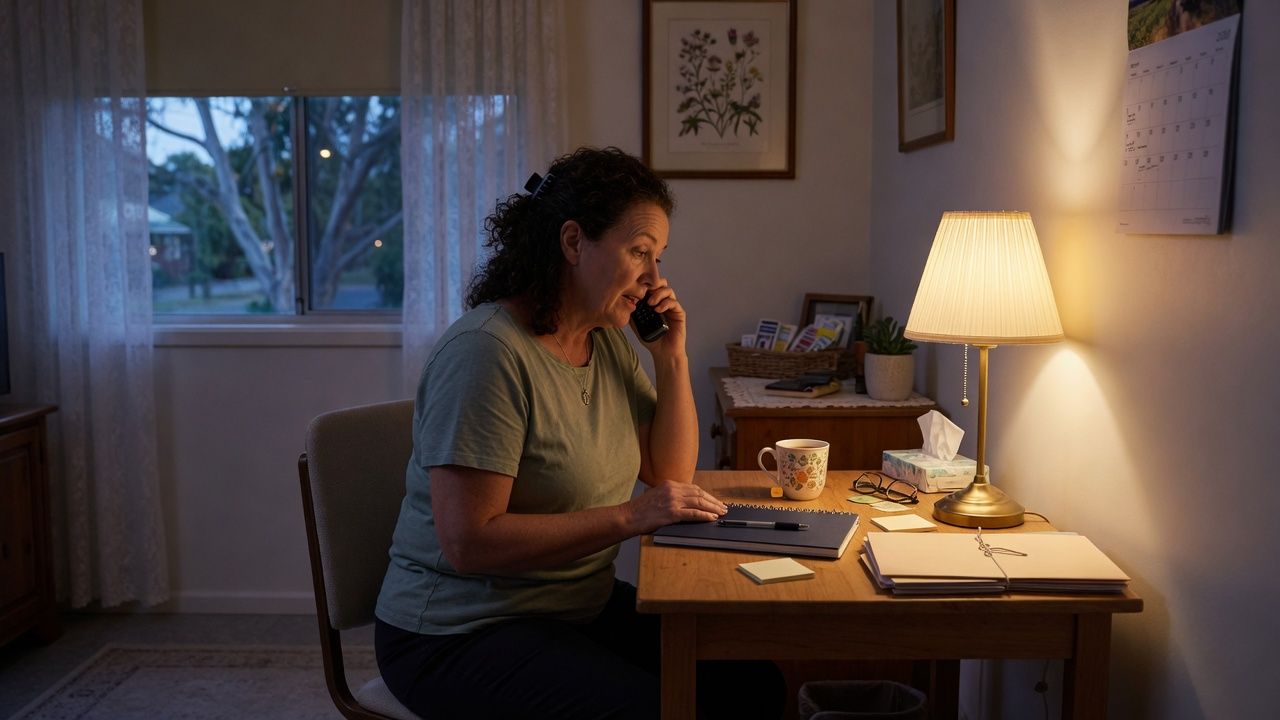


Residential aged care can walk a concern to a nurses' station. Home care cannot. After hours home care escalation is how providers answer nights, weekends and public holidays when a client falls, a medication dose is unclear, a family panics, or a worker is stranded at a silent house. If on-call is only “call the manager's mobile and hope”, risk sits with whoever happens to pick up.
Design the system with your clinical handover and escalation procedures, clinical governance framework, and staff rostering and workforce planning rules. For distributed clinical oversight patterns, pair this with our guide on remote clinical governance in home care.
Key Takeaways
- Name who is on call, for which issues, and with what authority before the phone rings.
- Separate welfare, clinical, roster and facilities calls so the wrong person is not improvising.
- Write triage trees for falls, medication concerns, no-answer visits and family distress.
- Protect on-call staff from unsafe fatigue and unclear decision rights.
- Hand every open item to the day team with times, decisions and next actions.
Why Residential Playbooks Fail in Home Care
Home care on-call deals with dispersed geography, limited immediate backup, variable family dynamics, and workers who may be alone in private homes. Copying a facility after-hours folder without rewriting for travel time, key access and ambulance decision points leaves gaps. Clinical governance still applies; the operating model must match the setting.
Define On-Call Scope
Publish a scope table for staff and subcontractors:
- Clinical on-call: medication queries within role, fall advice, wound concerns, deterioration, hospital discharge issues overnight.
- Operations on-call: missed visits, roster gaps, access failures, worker safety check-ins.
- Out of scope: routine scheduling preferences that can wait, non-urgent supply orders, general complaints without safety impact.
State when the on-call person must conference a second clinician, call the GP after-hours service, or send triple zero without delay.
Triage Trees That Field Staff Can Use
Workers under stress need short steps, not essays. Example branches:
- Fall with suspected injury or head strike: do not haul the client up; call emergency services as indicated; notify on-call; secure scene; document.
- Medication uncertainty: do not guess doses; contact clinical on-call; withhold pending advice where policy says so; record.
- No-answer on high-risk client: run entry and welfare ladder; escalate early; do not close the shift on hope.
- Family distress without clinical change: listen, stabilise information, schedule day-team follow-up, escalate if safety risk emerges.
Connect serious events to your incident management process the same night or at defined next-day thresholds - not “when someone has time next week”.
Ownership, Handover and Records
Every after-hours contact log should capture caller, client, time, issue category, advice given, actions, open tasks and owner for morning. Day team stand-up must clear overnight opens before new routine work buries them. Unowned after-hours decisions are a classic audit finding.
Fatigue and WHS for On-Call Staff
On-call that regularly destroys sleep without compensatory arrangements is a WHS problem and a clinical risk problem. Set expectations for response times, second-call backup, and when a tired clinician must hand over. Rostering policy should prevent the same person carrying unsafe consecutive loads.
Ambulance Thresholds
Write plain criteria for emergency services: suspected stroke, chest pain, severe breathing difficulty, uncontrolled bleeding, unresponsiveness, and other local emergency indicators. Staff should never delay triple zero to “check with office first” when immediate danger is present. Office notification happens in parallel or immediately after.
Oversight and Review
Review on-call logs monthly for volume, time-to-answer, category mix, ambulance rates, and near misses. Share themes with clinical governance. External quality expectations for aged care providers are overseen by the Aged Care Quality and Safety Commission, with broader program context via the Department of Health and Aged Care.
Script Packs for Common Calls
Give on-call staff short scripts and checklist cards for the top call types: fall, medication doubt, no-answer, worker feels unsafe, family angry about a missed visit, and client requesting urgent extra care. Scripts reduce variation and help new on-call officers. They also make documentation faster because the checklist mirrors the note template.
Review scripts quarterly against real call logs. If a frequent call type has no card, you are training people by fire drill only.
Technology: Phones, Escalation Apps and Failover
On-call rotas should publish a primary number that always reaches the current owner, with automatic diversion to backup. Personal phones without diversion create single points of failure when someone is in poor coverage or already on a call. If you use an app, test failover to voice. After-hours is the wrong moment to discover a forced update locked a clinician out.
Log reliability metrics: abandoned calls, time to answer, and after-hours contacts that went to the wrong person.
Linking After-Hours Work to Daytime Quality
Many night calls are daytime failures arriving late: unclear care plans, missing PRN parameters, unresolved family conflict, and roster gaps. Tag after-hours events to root themes and assign daytime owners. Celebrate reductions in repeat call types. If the same medication chart generates weekly 2 a.m. calls, the chart process is the incident system, not the nurse who answered.
Psychological Safety for On-Call Clinicians
On-call staff make hard calls with partial information. Clinical governance should review decisions for system learning without turning every imperfect judgement into a personal failure, except where conduct standards were breached. Offer debriefs after difficult nights, especially where a client died or emergency services were involved. Burnout on the on-call roster eventually becomes a client safety problem.
Document Retention and Legal Hold
After-hours logs can become evidence in complaints, coroners matters and employment disputes. Store them in systems with retention rules, restricted edit rights, and export capability. Discourage side-channel decisions in private message apps that disappear. If a decision was made on a personal chat, copy the substance into the official log the same night.
Hospital Interfaces Overnight
Emergency departments and ambulance services will call providers about clients they found with your service paperwork. On-call needs a way to confirm identity, share essential care information lawfully, and plan next-day follow-up. Build a minimum dataset access path that does not require the full office system if it is down. After hospital overnight stays, trigger environment and care plan checks because the client who returns is not always the client who left.
When On-Call Should Wake a Senior Manager
Define rare wake-up triggers: multiple clients affected by a system outage, media-sensitive incidents, death in care with immediate family escalation, or worker serious injury. Everything else should be solvable by the rostered on-call role. If senior managers are woken for routine medication queries, the skill mix or scope table is wrong.
Related Resources
- Clinical Handover and Escalation Policy Template
- Clinical Governance Framework Policy
- Incident Management and Reporting Policy Template
- Remote Clinical Governance Home Care Strategy Guide
- Staff Rostering and Workforce Planning Policy
- Aged Care Quality and Safety Commission
- Australian Government Department of Health and Aged Care
Frequently Asked Questions
Does every home care provider need 24/7 clinical on-call?
You need a defined after-hours response that matches your service types and risk profile. High-acuity clinical supports need clearer clinical on-call than low-risk domestic-only services. Document the model you actually run.
Can operations staff give medication advice after hours?
No. Medication advice stays inside clinical role boundaries. Operations can gather facts and connect the clinical on-call person.
What must be handed to the day team?
Every open safety item: who is affected, what was decided, what remains, and who owns the next step. Include failed contact attempts.
Should subcontractors use our on-call line?
Yes if they deliver under your service. Train them on the same trees and log rules. Parallel informal chains create blind spots.
How do we stop on-call overload?
Filter non-urgent work out of scope, roster backups, review call categories monthly, and fix recurring daytime failures that spill into night.
When do we call triple zero versus on-call?
Immediate danger: triple zero first. On-call supports decisions and follow-up; it does not replace emergency services.
Name the Night Owner Before Dark
After-hours on-call escalation for home care providers is a designed clinical and operations service, not a heroic mobile number. Define scope, publish triage trees, protect decision rights and fatigue limits, log every contact, and clear open items at dawn. That is how nights stay governed when there is no nurses' station down the hall.