

Life story care planning in aged care means recording who a person is, including their work, family, faith, language, routines and values, alongside their needs and risks, and then using that record to shape daily care. Under the Strengthened Aged Care Quality Standards, in force since 1 November 2025, providers must identify each person's background, culture, diversity, beliefs and life experiences during assessment and planning, and use them to direct how services are delivered.
A plan with a falls risk and a medication chart but no mention that the person ran a farm for forty years leaves staff guessing. This article covers what to capture, how to ask, and what evidence an auditor can see.
Key Takeaways
- The Strengthened Quality Standards require providers to identify background, culture, beliefs and life experiences in assessment and planning, and use them to direct service delivery (Action 1.1.2(a)).
- Care and services plans must be individualised, describe current needs, goals and preferences, and be used by workers (Action 3.1.4).
- Ask the person first and family or supporters second, record who said what, and share it only with the person's informed consent.
- A life story counts as evidence only if it is kept current and visible in handover and allocation.
Why do care plans need identity as well as needs?
The Standards are written from the person's point of view. The Standard 1 expectation statement says: "My provider understands who I am and what is important to me, and this determines the way my funded aged care services are delivered." The Strengthened Aged Care Quality Standards turn that into Outcome 1.1, which asks providers to understand and value identity, culture, ability, diversity, beliefs and life experiences, and to develop services tailored to each person.
The Statement of Rights points the same way. Section 23 of the Aged Care Act 2024 gives a person the right to have their identity, culture, spirituality and diversity valued and supported. The Department's guide to the Statement of Rights describes it as a reference for providers.
Research supports the idea, with caveats. A 2023 PLOS ONE systematic review of reviews on life story books in dementia care found that six of the seven reviews it included reported better communication between the person, relatives and staff. Its authors say the evidence is limited and more research is needed.
Good practice, not a research finding: a person is more likely to accept help when it fits how they see themselves. A retired tradesman who declines a "shower" may accept getting cleaned up before his morning walk, but staff can only find that framing if the plan records who he is.
What should a life story and identity section record?
Keep it short enough to read at the start of a shift, and let the person leave any item blank.
- Work and roles: past occupations, community roles and sources of pride.
- Family and significant people: who matters, what they are called, and who the person does not want involved.
- Faith and spirituality: practices, observances, dietary rules and sources of comfort.
- Language and culture: first language, preferred name, food, music and customs. See recording language and cultural needs, culturally safe care preferences and the cultural diversity and inclusion policy.
- Aboriginal and Torres Strait Islander identity: providers must ask and record whether a person identifies as Aboriginal or Torres Strait Islander (Action 1.1.2(c)) and support connection to community, culture and Country. See the Aboriginal and Torres Strait Islander care policy.
- Gender and sexual identity: name, pronouns, relationships, and who the person wants told. Action 1.1.3 recognises the right to intimacy and sexual and gender expression. See the LGBTQI+ inclusive care policy.
- Veteran identity: the Standards list veterans as a group but set no veteran-specific action. As good practice, record service history only if the person wants it known.
- Routines, values and communication: wake time, how they take tea, what a good day looks like, and how they communicate. Action 1.1.2(b) requires providers to identify communication needs and preferences.
How do you ask, and protect what you hear?
Action 3.1.2 says assessment and planning must rest on ongoing communication and partnership with the person and anyone they wish to involve. Start with the person, at their own pace. Bring in family or a supporter second, and only where the person agrees.
- Use open prompts: "What did you do for work?" or "What does a good morning look like?"
- Spread it over several chats: good practice is short conversations, not one admission interview.
- Record the source: mark each item as said by the person, reported by a relative or observed by staff, with a date.
- Offer a way out: record "chose not to share" rather than leaving a gap.
A life story holds sensitive detail, such as sexual orientation, religion, trauma history or estrangement. Section 23 gives a person the right to have their personal privacy respected and their personal information protected, and Action 3.1.3(b) allows sharing planning outcomes with supporters with the person's informed consent. Good practice is to record what the person agreed to share and with whom, and to mark items for the care team only. Confirm any legal questions with your own legal adviser.
How do you turn the story into daily care and handover?
Action 3.1.4(e) requires workers to use and understand care plans, so build the story into three routines.
- Handover: start each entry with one line of what matters to the person, before the risk summary. Action 3.3.1 requires a system for communicating structured information to workers.
- Allocation: make reasonable efforts to involve the person in choosing their workers, including gender and language spoken, and to maximise continuity (Action 3.2.8).
- Daily prompts: put two or three cues on the care sheet, such as "likes the radio on before breakfast" or "prefers the visiting minister on Thursdays".
What about dementia and communication difficulty?
Action 3.2.6(b) requires a system that identifies and regularly reviews the strengths and skills of people living with dementia and encourages their use in day-to-day activities. Action 3.2.9 requires support for workers to understand how different people communicate. The dementia care policy covers the wider system.
- Keep their own words: record phrases used for comfort, distress or refusal.
- Use supporters as partners: Action 3.2.6(c) names supporters as partners in planning, in line with the person's wishes.
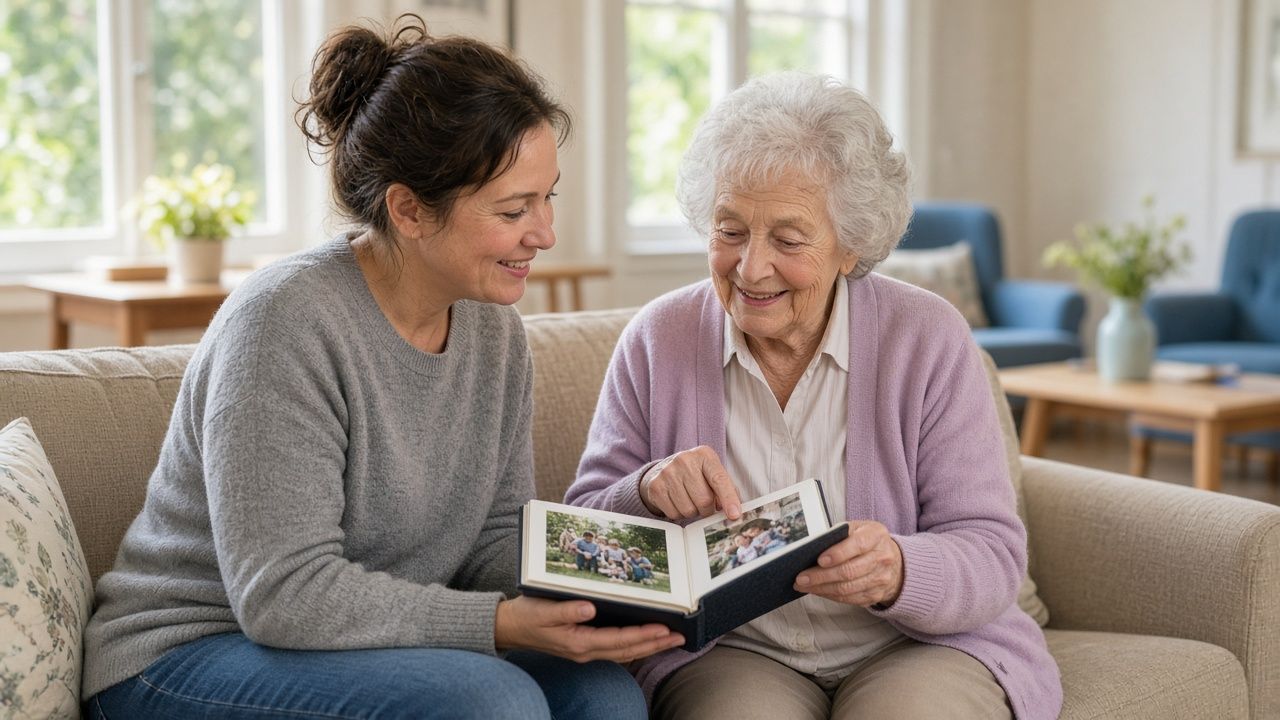
- Use objects: photographs, music and familiar items help staff start conversations.
- Escalate changes: if communication or behaviour changes, refer to the registered nurse or treating clinician. A life story informs that assessment, not replaces it.
How do you keep it current and show an auditor?
Action 3.1.5 requires regular review of plans, including when needs, goals or preferences change, when cognition or capacity changes, at transitions and after incidents. Action 1.3.6 adds that providers record, monitor and respond to changes in quality of life. Good practice adds triggers such as bereavement, a room move or the person's own request.
- The record: a dated section with sources and a consent note.
- The workflow: handover and care sheets showing the story in use.
- The change: a progress note where care shifted because of it, such as a changed shower time.
- The voice: feedback or a conversation where the person or supporter confirms staff know them.
Governa Connect maps an organisation's policies to the Strengthened Aged Care Quality Standards, Norma answers staff questions grounded in the organisation's own policies, and Governa publishes free policy templates. None of these replaces the conversation with the person.
Identity Belongs in the Care Plan
The Standards ask providers to know the person, not just the diagnosis, and to let that knowledge direct care. A short, consented, sourced and regularly reviewed life story section is a practical way to meet Actions 1.1.2, 3.1.4 and 3.1.5. This week, pull three current care plans and check whether a new worker could learn from each who the person is and what matters to them.
Related Resources
- Person-centred care training module for aged care staff
- Dignity and choice policy template
- LGBTQI+ inclusive care policy template
- Dementia care policy template
- Creating individualised care plans in aged care
- Map your policies to the Strengthened Quality Standards
- Department of Health, Disability and Ageing resources on the Strengthened Quality Standards
Common Questions About Life Story Care Planning
1. What is a life story in an aged care plan?
It is a section of the care plan that records who the person is: their history, relationships, faith, culture, language, routines, values and preferences. It sits beside needs and risks and tells staff how to deliver care in a way that fits the person.
2. Do the Quality Standards require a life story section?
They do not name one. They do require providers to identify background, culture, diversity, beliefs and life experiences in assessment and planning (Action 1.1.2(a)) and to keep individualised plans that describe needs, goals and preferences (Action 3.1.4). A life story section is a practical way to meet both.
3. Can family complete the life story if the person cannot?
Family and supporters are a valuable source, and Action 3.2.6(c) names supporters as partners in planning for people living with dementia. Record who provided each item, and keep asking the person where possible.
4. How often should it be reviewed?
Action 3.1.5 requires plans to be reviewed regularly and whenever needs, goals, preferences, capacity or circumstances change, including at transitions. The Standards set no fixed number of days. Set a review cycle in your policy.
5. Does this apply to Support at Home providers?
Generally yes. The Aged Care Quality and Safety Commission's framework analysis says the strengthened Quality Standards apply to providers registered in categories 4 to 6, and which outcomes apply depends on the services you deliver, so check your registration. The approach differs at home, because the routines belong to the person and the home is theirs.