

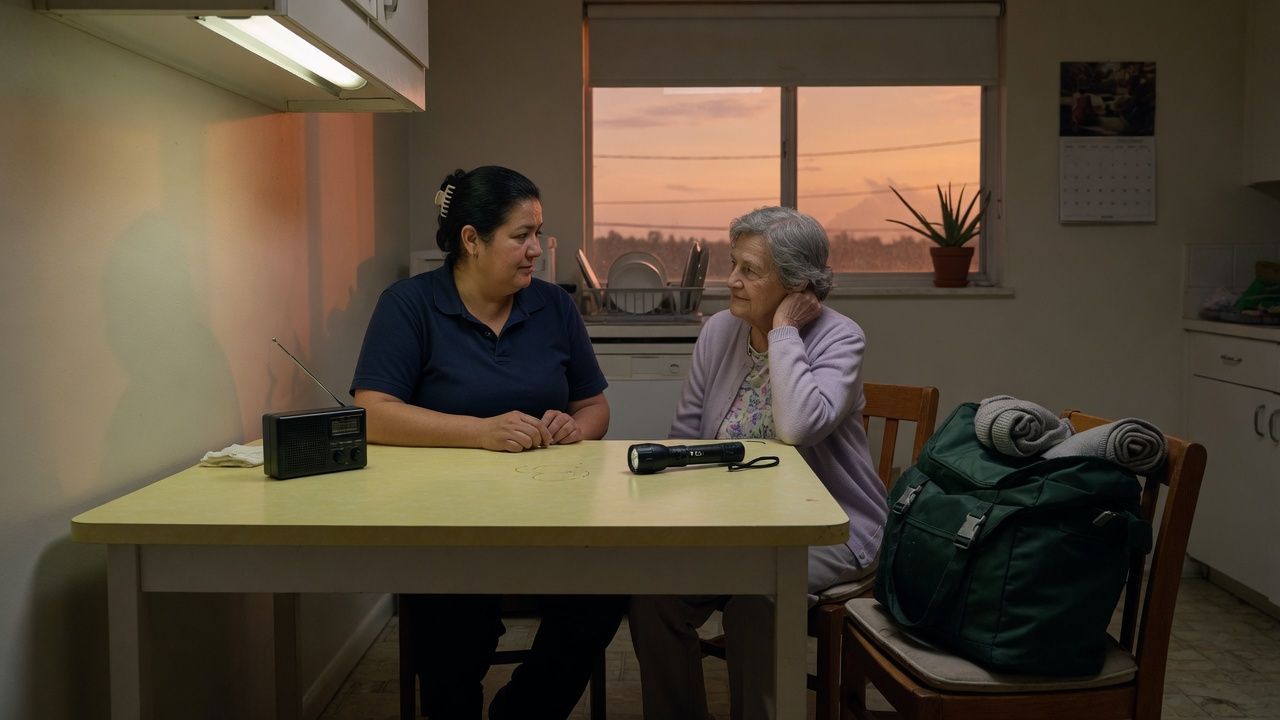


A residential aged care home has a generator, a night roster and a building staff know well. A person at home has a power point, a phone and whoever is nearby. Emergency planning for home care clients has to start from that difference.
The Department of Health, Disability and Ageing calls October to April the higher-risk weather season. It is early October, so check these plans now, not when a warning arrives.
Key Takeaways
- Providers working in a person's home are expected to hold a separate emergency and disaster management plan for each home.
- Power dependency, inability to self-evacuate and isolation decide who is contacted first.
- A contact and vulnerability list only works if someone owns it and keeps it current.
- Worker travel limits must be set before the season, so no worker decides alone whether to drive into a fire or flood zone.
- Every warning call, welfare check and relocation should leave a record, and every real event should end in a review.
Why home clients are exposed differently from residents
The Aged Care Quality and Safety Commission sets out emergency and disaster management as Outcome 2.10 of the strengthened Quality Standards. For providers in a home or community setting, its guidance describes separate emergency and disaster management plans for each older person’s home, plus processes to check each person's safety.
A facility holds or fails as one unit. A home care caseload fails in dozens of small ways at once: one client loses power to an oxygen concentrator, another is cut off by a flooded road, a third never hears the warning.
The Department's guidance also tells providers to plan for power failures, lost road access, phone and internet outages, and staff shortages. Your emergency and disaster management policy sets the organisation-wide frame; the work is making it hold up in one kitchen.
Tier clients by what they depend on
You cannot call every client first, so decide the order in advance. This model is a starting point to adjust to your caseload.
- Tier 1 - Who sits here: Depends on power for life or safety: oxygen concentrator, electric bed, hoist, pressure mattress, refrigerated medication; Provider response: Confirm backup, agree fallback with the clinician, call first
- Tier 2 - Who sits here: Cannot self-evacuate or act on a warning: limited mobility, cognitive impairment, lives alone, no transport; Provider response: Named support person, agreed destination, early call
- Tier 3 - Who sits here: Isolated: rural property, single access road, poor phone coverage; Provider response: Leave-early agreement, alternative contact method
- Tier 4 - Who sits here: Self-manages with a working plan and nearby supports; Provider response: Seasonal check, warning notice, post-event call
Power outage home care clients are the group most often missed, because nobody asked whether the air mattress, nebuliser or medication fridge needs mains power. Add the question to intake and reassessment, and send any fallback involving medication or equipment settings to the treating clinician. Your risk management policy should show how these dependencies are rated.
Put an individual plan in each care plan
A client emergency plan for aged care at home should be short enough to use. Keep it in or beside the care plan.
- Likely hazards and the warning sources the client uses.
- Power-dependent equipment, its backup, and the clinician-agreed fallback if the backup fails.
- The leave-early trigger the client and family agreed, and the destination.
- Medications, aids and pets.
- Who the provider calls, in what order, and who calls the provider.
Build it with the client, as Outcome 2.10 expects. The Australian Red Cross RediPlan emergency preparedness guide gives families a plain structure, and the conversation surfaces who has a spare key, who drives and which neighbour checks in.
Keep the contact and vulnerability list current
This is the document a coordinator opens when a warning issues. For each client it shows tier, address and access notes, best phone number, support person, destination and power-dependent equipment, with the date last confirmed.
Name an owner. A hospital discharge, a new oxygen prescription or a family member moving away should trigger an update that week. Keep an offline copy for the on-call coordinator, since phone and internet outages are among the failures providers are asked to plan for.
Seasonal readiness for bushfire and flood
The Department advises reviewing the emergency management plan every year, and the Commission suggests testing it periodically, for example once a year.
- Reconfirm the list. Phone each client or support person.
- Visit Tier 1 and Tier 2 homes. Check backup equipment works.
- Brief workers. Cover the call tree and travel limits.
- Run a drill. Pick a bushfire or flood scenario, ring a sample of clients and time the Tier 1 calls.
Heat has its own triggers, covered in heatwave preparedness for home care.
The warning trigger and the call tree
Write down which events start your response, such as an official warning for a client's area, a road closure or a notified power shutdown. Then follow a fixed order:
- Check official sources and list the clients in the affected area.
- Call Tier 1, then Tier 2, then Tier 3 clients or their support people. Ask whether they are leaving, staying or need help.
- For anyone staying or unreachable, decide who visits and who phones again.
- Record each call and outcome.
- Call 000 where anyone is in actual or immediate danger.
The Department expects Support at Home providers to make welfare checks, by phone if a visit is not possible, and to address every issue found. A client you cannot reach after a warning is a missed contact with consequences, so your missed visits and no-shows process should treat it that way.
Worker safety and when not to travel
Care continuity matters, but not at the cost of a worker driving into smoke, flood water or a closed road. Set the limits in policy, so the decision does not rest on one person at a doorstep.
- No travel into an evacuation area or closed road, and no driving through flood water.
- Any worker may turn back where conditions look unsafe, without penalty.
- The coordinator decides whether a visit becomes a phone check, another worker or a request to emergency services.
These limits sit beside your lone worker safety arrangements, since a worker on a rural road with no coverage is a lone worker in the most literal sense. Your rostering policy should also show who covers shifts when workers cannot reach clients. Safe Work Australia notes the model WHS laws require every workplace to have an emergency plan.
Evacuation, relocation and family communication
Be clear about what you will do. The Department states it does not provide evacuation support such as transport, and that providers carry emergency costs, including relocation. Agree transport, destination and payment beforehand.
For each Tier 2 client, record a primary destination and a second option in a different direction, and confirm it suits the person's needs, including accessible toilets, medication storage and power. If a client declines to leave, record the discussion and the revised plan.
Give families a short script: what has happened, what the provider is doing, what the family needs to do. The advice on communication during aged care emergencies applies directly. Tell emergency services the client's address, mobility and equipment needs.
After the event: recovery and review
The danger does not end when the warning lifts. Power may be off, roads damaged and clients unwell or displaced. The Department asks providers to plan for the immediate, medium and long term.
Contact every client in the affected area, Tier 1 first, and arrange a clinical review where anything has changed. Record harm, near misses and equipment failures in your incident system and check whether any is reportable. Then debrief: which warnings reached clients, which calls were slow, which tiers were wrong. Pass resourcing gaps to your business continuity policy.
What auditors look for
The Aged Care Quality and Safety Commission expects plans based on risk assessment, developed with clients, supporters and workers, then tested and reviewed. Keep these to hand:
- Individual emergency plans in a sample of care plans, with dates.
- The contact and vulnerability list with tiering and version history.
- Records of the last drill and what changed.
- Worker briefing records and travel limits.
- Warning-day call logs and post-event review notes.
A strong organisational plan with care plans silent on emergencies is the gap most likely to be found. The Department's service continuity and emergency events guidance includes a home care checklist worth comparing against your own.
Related Resources
- Emergency and disaster management policy template
- Business continuity policy template
- Lone worker safety in home care
- Heatwave preparedness in home care
- Policy and evidence mapping to the Quality Standards
- Commission guidance on emergency and disaster management
- Red Cross emergency preparedness guide
Frequently Asked Questions
Do we need a separate emergency plan for each home care client?
The Commission's guidance describes separate plans for each older person's home and processes to check each person's safety. Hold an individual plan in or with the care plan, and review it when the client's circumstances change.
Can welfare checks be done by phone?
Yes. The Department says Support at Home providers should make welfare checks, by phone if they cannot visit, and address any issues found. Call 000 for immediate danger.
Will the Department arrange evacuation transport for our clients?
No. The Department states it does not provide evacuation support such as transport, and that providers are responsible for costs incurred during an emergency, including relocation. Agree transport and destinations with clients and families before the season starts.
When should a provider review its emergency plans?
At least once a year, and before the higher-risk weather season that runs from October to April. Add a review after any real event, and whenever a client's equipment, health or living arrangements change.
Plan for Each Home Before the Warning Comes
Home care clients meet bushfire, flood and outage without a building or night roster behind them, so the plan has to work one household at a time. Tier clients by dependency, put short plans in care plans and set worker travel limits before the season. This week, confirm that every Tier 1 client has a working backup and a named person to call.


