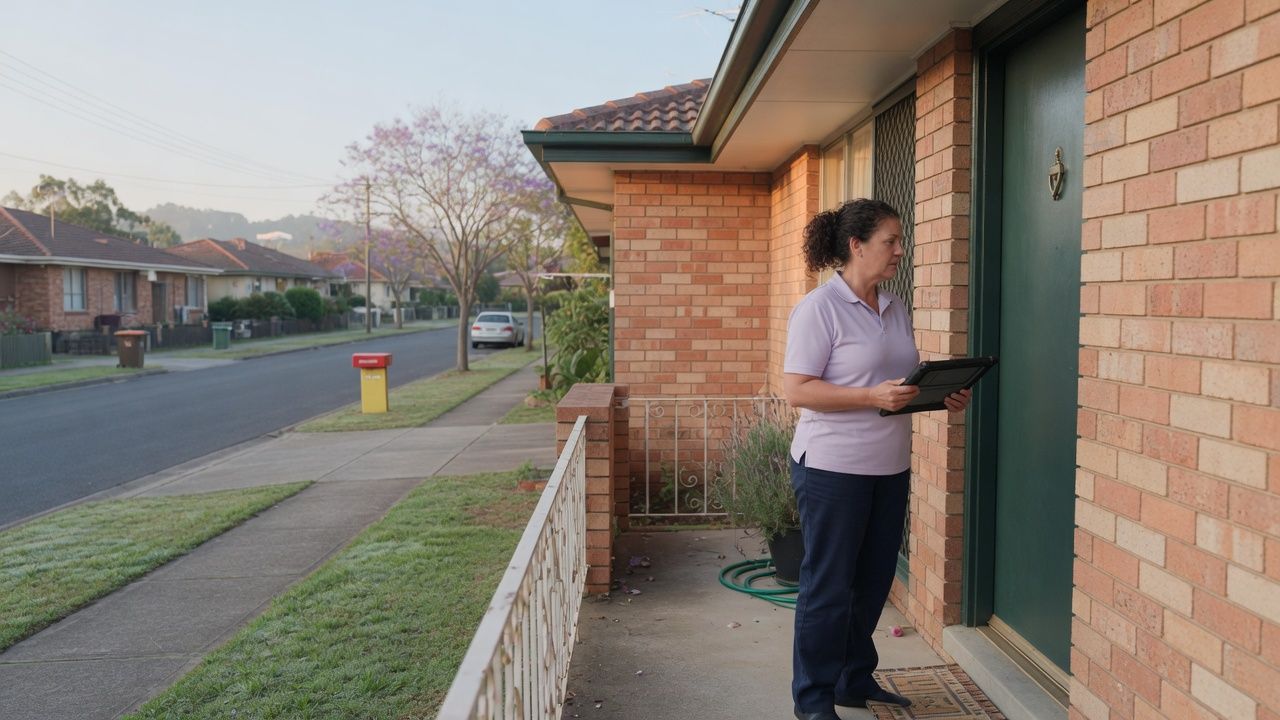


When a scheduled visit does not go ahead, the problem is rarely only a free slot on the roster. Missed visits home care events sit at the join of client welfare, clinical risk, workforce reliability and Support at Home continuity. A provider miss, client no-answer, doorstep refusal and late cancellation each need a different first response, yet all need a clear record for review.
This guide is for registered home care and Support at Home providers building an operational procedure, not a full exit pathway. It covers event types, welfare escalation, risk-tier windows, family and clinical contact, continuity, and when a pattern moves into suspension or exit planning.
Key Takeaways
- Classify every event as a provider miss, client no-answer, doorstep refusal or late cancellation before you choose the response.
- Welfare checks and escalation speed must match the client's clinical and social risk tier, not a single generic time limit.
- Document attempts, outcomes, who was notified and the next planned contact so the file supports audit and handover.
- Repeated missed visits are a continuity signal; treat suspension or exit as a separate, planned pathway, not a silent stop.
- Trend the register monthly so roster failure, high-risk clients and service types drive improvement, not only incident cleanup.
What Counts as a Missed Visit or No-Show
Teams lose time when staff use the same label for different events. Define four categories in policy and in the roster system so the first action is automatic.
Provider miss
The organisation failed to attend as scheduled: roster error, uncovered absence, travel delay, wrong address or system failure. Treat this as a service failure and continuity risk. Offer a same-day or next-agreed visit where clinical need requires it, document the reason, and open an incident or variance where thresholds require it under your Incident Management and Reporting Policy Template.
Client no-answer
The worker arrives on time, follows the agreed entry and call protocol, and cannot confirm the client is safe and present. This is a welfare event until ruled otherwise. It is not automatically a cancellation for claiming or for closing the day without further action.
Doorstep refusal
The client is present and declines the visit or part of it. Capture capacity and communication issues, whether the refusal is for today only or a wider change in preference, and whether personal care, medication support or clinical observations were declined. Refusal is not no-answer, and it is not ending services.
Late cancellation
The client, supporter or provider cancels inside the notice window set in the service agreement. Record who cancelled, when notice was received, and whether a replacement time was offered. Late cancellation rules should follow current Support at Home program guidance and your published service agreement. Do not invent charge or claim rules that conflict with those sources.
Risk Tiers and Time Windows
A single "wait 30 minutes then leave" rule fails high-risk clients. Build tiers into the care plan and field app so workers see the ladder before leaving.
- Risk tier: Higher - Typical indicators: Lives alone, falls history, cognitive impairment, recent hospital discharge, medication-dependent visit, elopement or self-neglect risk - First response window: Immediate on-site protocol, then rapid phone tree and clinical escalation
- Risk tier: Standard - Typical indicators: Regular personal care or domestic support, reliable contact person, no active clinical red flags - First response window: Agreed on-site wait and call attempts, then office-led follow-up same day
- Risk tier: Lower - Typical indicators: Non-time-critical support, client often away with notice, strong informal network - First response window: Documented attempts and next-business-day contact if safety is confirmed by other means
Time windows belong in the care plan, not only a generic manual. Reassess the tier after hospital stays, new diagnoses, bereavement, or a change in who lives in the home.
Welfare Escalation Ladder
Write the ladder so a lone worker can follow it without waiting for a busy manager. Align steps with your Clinical Handover and Escalation Policy Template.
- On-site protocol: knock, doorbell, agreed call or text, check visible hazards from a lawful vantage, and use key-safe or entry rules only where consent and authority exist.
- Secondary contacts: phone the listed supporter, emergency contact or neighbour only where authorised for welfare purposes.
- Clinical or care partner review: the care partner or on-call clinician decides whether to escalate to GP, community nursing, or emergency services based on risk tier and history.
- Emergency services: call triple zero when the client may be injured, unresponsive, or at immediate risk. Do not delay that call for internal forms.
- Record and hand over: log times, attempts, outcomes and the next check. Hand the open item to the day team or after-hours owner.
Workers should never invent whether a silent house is "probably fine". The care plan should state what "enough attempts" means for that person.
Communication With Family, Supporters and the GP
Notify people the client has authorised, in the order the care plan sets. Say what happened, what you did, and what happens next. Avoid alarming language when facts are unknown, and avoid minimising language when the risk tier is high.
Where the missed visit involved clinical observations, wound care, medication support or a post-discharge check, the care partner should decide whether the GP or treating team needs same-day advice. That decision is part of care partner work in Care Partner Obligations Every Support at Home Provider Meets, not an optional courtesy call.
If the client later explains a simple reason, still close the loop so the next worker does not re-escalate from cold notes.
Continuity of Care Under Support at Home
Registered providers remain responsible for safe, continuous support while the participant is with them. A missed visit does not pause that duty. Where a provider miss removes a needed service, plan replacement support or temporary alternatives and record agreement where practical.
Program expectations sit in the Department of Health's Support at Home materials and in regulation by the Aged Care Quality and Safety Commission. Use those sources for claiming, cancellation and continuity rules rather than informal roster custom. If finance applies late-cancellation or non-attendance treatments, they must match the service agreement and current program rules.
After a no-answer on a higher-tier client, the next visit may need a welfare-first approach, a joint visit, or a care plan review. Do not assume the next slot resets risk.
When Missed Visits Point to Suspension or Exit
One missed visit is an event. A pattern is a service design problem. Triggers for formal review include repeated no-answers without explanation, repeated refusals of essential supports, inability to gain safe access, or a mismatch between assessed need and what can be delivered at home.
That review sits under your Consumer Entry, Transition and Exit Policy. It is separate from the same-day welfare response. Do not use "we stopped attending" as a quiet exit. Notice periods, continuity arrangements and communication duties still apply. For the operational path when services must pause or end, use Suspending or Ending Support at Home Services Safely.
Include the client and any registered supporter early. Ask whether the schedule, worker, service type or goals need to change before formal cessation steps.
Registers, Documentation and Trend Review
Every missed visit file should answer five questions: event type, risk tier, attempts and times, who was notified, and the next action and owner. Link roster evidence, call logs and care plan extracts where the system allows.
Keep a register or dashboard with client, service type, event category, risk tier, outcome and whether an incident was raised. Review it monthly in quality or clinical governance. Look for provider misses on certain shifts or subcontractors, clients with repeated no-answers who need a different access plan, high late-cancellation service types, and escalations that stalled for lack of on-call ownership.
Train staff on two scenarios: a higher-tier no-answer and a calm doorstep refusal. Both should end with a complete note, not only a roster change.
Related Resources
- Consumer Entry, Transition and Exit Policy
- Clinical Handover and Escalation Policy Template
- Incident Management and Reporting Policy Template
- Suspending or Ending Support at Home Services Safely
- Care Partner Obligations Every Support at Home Provider Meets
- Aged Care Quality and Safety Commission
- Support at Home program (Department of Health)
Frequently Asked Questions
What is the difference between a missed visit and a no-show in home care?
A missed visit is any scheduled service that did not proceed as planned. A no-show usually means the client was not available or did not answer when the worker attended. Keep provider misses and client-side events separate so welfare response, incident thresholds and cancellation rules stay accurate.
How long should a home care worker wait if there is no answer?
There is no single safe default for every client. Set the wait and call protocol by risk tier in the care plan. Higher-risk clients need faster escalation and more attempts. Standard and lower tiers can use longer office-led follow-up once on-site steps are complete and documented.
Should every missed visit be logged as an incident?
Not always. Many late cancellations and low-risk reschedules are service variances. Raise an incident when harm, near harm, unexplained no-answer on a higher-tier client, a repeated pattern, or a serious provider failure meets your incident definitions. When unsure, record the event fully and escalate for a second look the same day.
Can we stop visiting after several no-shows?
Not without a planned pathway. Repeated no-shows should trigger review, risk reassessment and formal communication. If suspension or exit is required, follow your entry, transition and exit policy, keep continuity arrangements for the notice period, and use the dedicated suspending or ending process rather than removing the client from the roster.
How do missed visits affect Support at Home claiming and contributions?
Claiming, cancellation and contribution treatment must follow the participant's service agreement and current Support at Home program rules. Do not rely on legacy home care package customs. Confirm non-attendance and late-cancellation settings with finance against Department guidance before you automate them in the roster system.
Make the Missed Visit File the Default Response
Managing missed visits and no-shows in home care is less about perfect attendance and more about a repeatable decision trail. Define the event type, apply the risk tier, run the welfare ladder, notify the right people, protect continuity, and open a formal transition pathway only when the pattern demands it. Build that file into roster practice so workers, care partners and auditors see one story: what happened, what you did, and what happens next.