

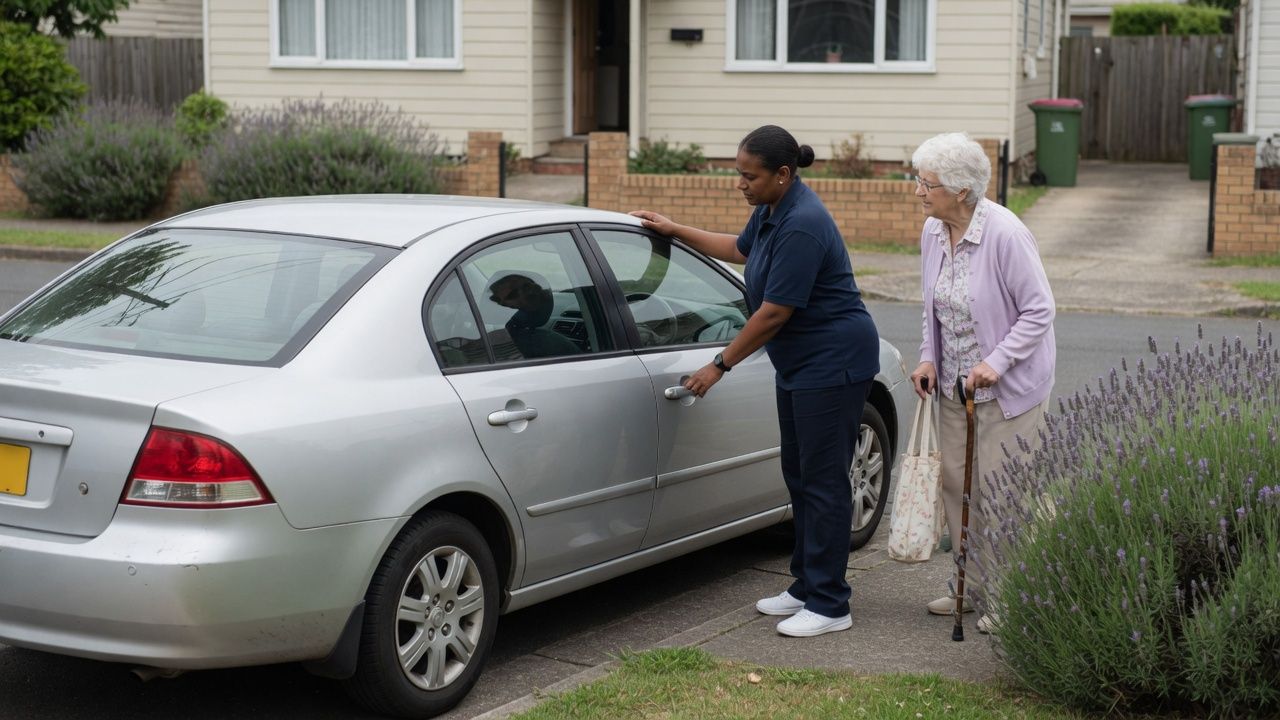


A support worker asked to run a client to the GP, the chemist or a social group usually says yes. But client transport in home care puts a person receiving care in a moving vehicle, often the worker's own car, with no second adult present and no record of what was agreed.
Key Takeaways
- Transport should be a service the organisation chooses to offer or decline, not a favour each worker settles at the front door.
- A vehicle used for a work purpose is a workplace, whether the provider or the worker owns it.
- Support at Home funds transport as its own service, separate from accompanied activities and from a worker's travel to the client's home.
- Insurance cover for a worker driving clients must be confirmed in writing with the insurer, not assumed.
- Licence checks, consent, trip logs and incident records show the risk is controlled.
Why transport is a hidden risk in home care
Most home care risk assessments focus on the client's home, yet Safe Work Australia says vehicle-related incidents are the single biggest cause of work-related fatalities in Australia. Its health care guidance also lists handling a person in and out of a vehicle and aggression from a passenger while driving.
Whether workers should drive clients at all
No provider has to offer every service. The Department of Health, Disability and Ageing says registered providers choose which services they deliver and must document what they offer in the service agreement. Transport is one of those choices.
Make the decision through your risk management policy. Ask which trips are likely, who would drive, which clients can board safely, and whether a taxi voucher, community transport or a family member is the safer option. Put the answer in writing.
What the care plan and service agreement should record
If transport is offered, both documents need it. The care plan covers boarding needs, the mobility aid that travels with the client, and any health condition that matters mid-journey. For the wider content of agreements, see what a Support at Home service agreement must include and use your service agreement policy as the baseline. For transport, also record:
- who may drive, and whether it is a provider vehicle or a worker's own car
- the client's consent to travel with that worker in that vehicle, or their representative's consent where the client cannot decide
- seatbelt and boarding expectations
- whether any recording device operates in the vehicle
Funding: who pays for what under Support at Home
The Department's Support at Home service list FAQs describe two transport services: direct transport, which supplies a driver and car, and indirect transport, which is a taxi or rideshare voucher. Both are for clients who cannot travel independently but do not need a worker during the activity.
If the worker stays and assists during the activity, the FAQs place that under a different service, accompanied activities. A worker's travel to a client's home belongs in the price of the service delivered there.
Transport connects a client with usual activities such as shopping, appointments and visits to family. State or local government travel assistance that can meet the need must be used before Support at Home funds.
The Department's pricing guidance sets the billable unit for transport as one trip, and a trip is one way, so a return journey is two trips. Confirm current price settings with the Department.
Licence, registration and vehicle insurance checks
Keep a dated register, not a one-off check. Before a worker drives clients, collect:
- a current, appropriate driver licence, sighted in person
- current registration and a basic roadworthiness check
- written confirmation from the relevant insurers about cover
A personal policy may treat driving clients for work differently from private use, and a provider's policy may or may not respond when a worker's own car is involved. Wording varies, so ask each insurer in writing and keep the replies.
Provider vehicle versus worker's own car
With a provider vehicle, the organisation controls servicing, inspection and equipment. With a worker's own car, the provider still carries its duties under your work health and safety policy but has less control over condition and cover. State which arrangement applies.
If worker-owned cars are allowed, check the vehicle at onboarding and at set intervals, agree in writing how running costs are handled, and give workers a clear right to decline a trip they consider unsafe. Tight rosters add pressure to say yes, a theme also covered in our guide to missed visits and no-shows.
Seatbelts, mobility aids and safe boarding
The worker should confirm the client is belted before moving off. If a client says they cannot wear a belt, stop and escalate. Any medical exemption is a matter for the client's doctor and the road rules in your state or territory.
Plan for mobility aids before the trip. Sticks and frames need a secure place so they do not move in a sudden stop, and lifting a frame into a boot is a manual handling task. A person who must stay in their wheelchair needs a vehicle built to restrain both chair and occupant, which an ordinary sedan is not. Transfers should follow the care plan or an allied health assessment. If a client falls at the kerb, follow your process for fall response during a home care visit.
When a client is unwell, distressed or refuses to leave the car
If a client becomes unwell, the worker pulls over safely, stays with them and follows the provider's emergency procedure, calling 000 where warranted. Workers get help and report; they do not make clinical judgements.
If a client is distressed, the worker stops when it is safe, speaks calmly and contacts the manager or on-call line. If a client refuses to get out or asks to go elsewhere, the worker does not use force or leave them somewhere unsafe. They stay, call for support and record it. Use the same check-in and escalation channels as your lone worker safety arrangements.
After a collision
Write the sequence down before it is needed.
- Check for injuries and call 000 if anyone may be hurt.
- Move to safety if possible and keep the client seated and accompanied.
- Notify the manager or on-call contact straight away.
- Arrange medical assessment for the client even without visible injury, following clinical advice.
- Record the event under your incident management policy, and have a manager assess whether it is reportable to the Aged Care Quality and Safety Commission.
Then review the trip and notify insurers as their policies require.
Privacy and dashcams
A dashcam that captures a client records personal information, and audio can capture health details. Your privacy and confidentiality policy should say whether recording is allowed in vehicles, what is captured, who can view it and how long it is kept.
Tell the client before the trip, record their consent in the service agreement and never record covertly. Rules on recording conversations differ between states and territories, so get advice before turning audio on.
Fatigue, journey logs and records
Build travel and break time into rosters, avoid clients being driven at the end of long shifts, and set clear rules on phone use.
A journey log should show date, driver, vehicle, start and end points, client, times and any concern. Keep it with the licence register, insurance confirmations, consent records and vehicle checks.
What auditors look for
An assessor will typically look for a risk assessment that matches practice, workers who know the procedure, consent on file, current checks and incidents that lead to change. Gaps usually sit in informal arrangements, such as a worker who drives a favourite client weekly with no agreement or log. The policy mapping hub shows how such records align with the Quality Standards.
Related Resources
- Work health and safety policy
- Incident management and reporting policy
- Support at Home service agreement policy
- Home care lone worker safety
- Policy mapping to the Quality Standards
- Safe Work Australia on vehicle hazards
- Support at Home service list FAQs
Frequently Asked Questions
Can a support worker use their own car to drive a client?
Only if the provider allows it and has checked licence, vehicle and insurance cover first.
Does a worker's own insurance cover them when driving a client?
Do not assume so. Get written confirmation from the worker's insurer and the provider's insurer before the first trip.
Can transport be charged to a client's Support at Home budget?
Yes, where the client is approved for the transport service and the trip connects them with a usual activity.
What if a client cannot wear a seatbelt?
Stop and escalate to the manager. An exemption is a medical and legal matter, not a worker's call on the day.
Make every trip a documented decision
Transport goes wrong when it is a casual favour. Decide whether you offer it, write the rules into the care plan and service agreement, and confirm cover with insurers before a worker drives anyone. Start by listing the informal trips your workers made last month and bringing each one under a written agreement.


