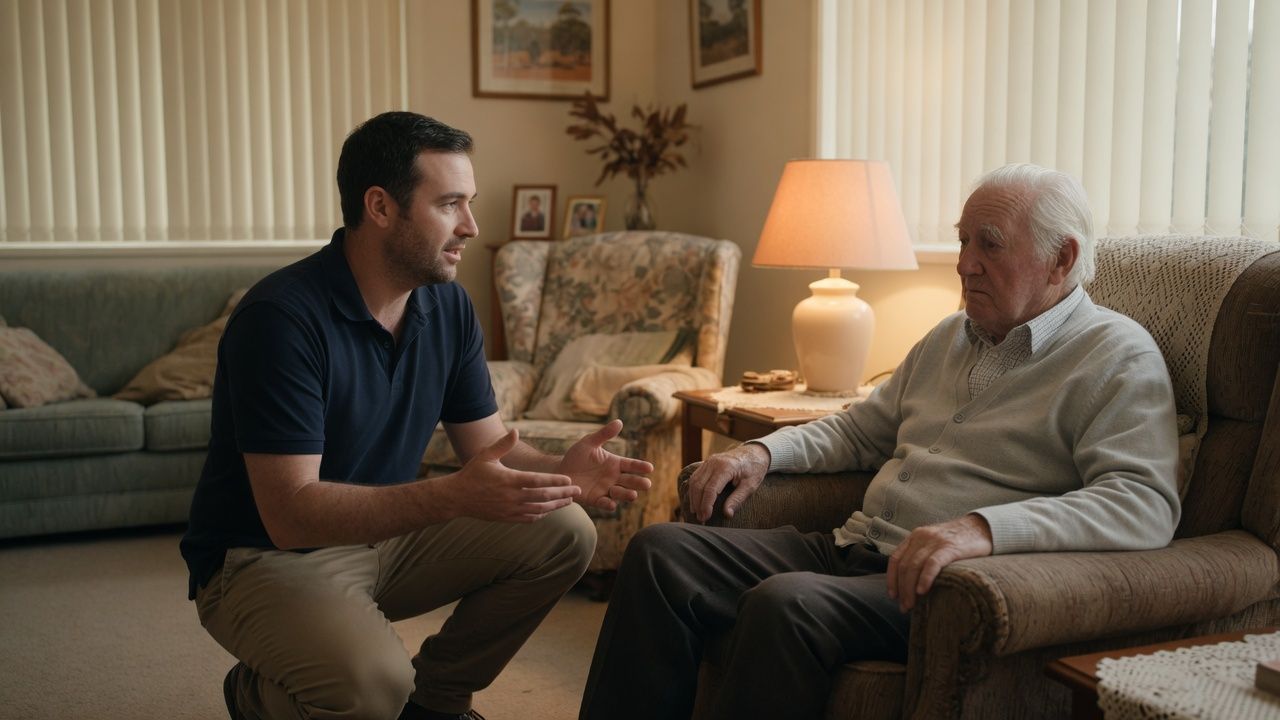


When a client living with dementia becomes distressed in their own kitchen, there is no nurse down the corridor and no team leader on the floor. The worker standing there has to read the situation, calm it if they can and leave if they cannot. That is why responding to changed behaviours in aged care at home needs a provider system behind it, not just one worker's instincts.
The Aged Care Quality and Safety Commission has named de-escalating changed behaviours as one of its four sector risk priorities for 2026-27, set out in Aged Care Quality Bulletin #8-2026. This article covers what home care providers should have in place before, during and after an episode. Where it discusses obligations, it is general information, not legal advice.
Key Takeaways
- Changed behaviour is usually communication of an unmet need such as pain, fear, hunger or confusion, so the first job is to work out what the person is trying to say.
- Triggers, early warning signs and calming strategies belong in the care plan and should be read before every visit, not discovered at the door.
- A worker at home should step back and leave when staying puts anyone at serious risk, then escalate by phone straight away.
- Episode records should describe what was seen and heard in objective terms, because that is what clinicians and advisory services need.
- Restrictive practices are regulated in home settings too, including practices a family carer started, and need consent from the right decision-maker.
Why the Commission Is Watching Changed Behaviours
The Commission is focusing on changed behaviours because poorly handled episodes harm older people's safety, wellbeing and rights. Commissioner Liz Hefren-Webb announced four 2026-27 priorities at a CEDA event: aged care rights in practice, sexual safety and sexual rights, de-escalating changed behaviours, and culturally safe care by mainstream providers for Aboriginal and Torres Strait Islander peoples. The priorities will guide extra regulatory attention and education through the year.
In home care the risk looks different from residential care. One worker visits alone, in the client's space, often alongside a spouse or adult child who is exhausted. If something goes wrong there may be no witness and no immediate backup, so providers should expect questions about how their system supports that worker.
Behaviour Is Communication of an Unmet Need
Most changed behaviours are a person's way of communicating a need they can no longer put into words. Agitation late in the day might be pain, hunger or tiredness. Resistance to a shower might be fear of falling, feeling cold or not recognising the worker.
Workers who see behaviour this way respond differently. They look for the cause and remove it where they can. Practical responsive behaviours training builds this habit through scenarios. A trauma-informed lens also helps, because some older people react strongly to being touched or undressed as a result of earlier experiences.
Put Triggers and Calming Strategies in the Plan
The worker should know a client's triggers before they knock on the door. The care plan, or a linked behaviour support plan, should record known triggers, early warning signs, what has calmed the person before and what has made things worse. Specific detail makes it usable, such as "settles with a cup of tea and talk about the farm".
Pre-visit information should also flag recent changes. A hospital stay, an infection, moved furniture or a family argument can all change how a person presents. Care partners can pass these on through visit notes or a short phone briefing. Our separate guide to behaviour guidance plans covers plan types and terminology, so this article stays with what happens inside the home.
Plans only help if they stay current. After each significant episode, someone should ask whether the strategies still fit and update them. A behaviour support policy that sets review triggers, owners and timeframes turns that into routine practice rather than goodwill.
De-escalation Steps a Worker Can Use in the Moment
In the moment, the worker's aim is to lower the person's distress, not to finish the task.
- Pause the task. Stop the shower, the prompt or the clean-up.
- Give space. Step back, keep your hands visible, stand slightly to the side and keep a clear path to the door for both of you.
- Slow down. Use a lower voice, short sentences, the person's preferred name and one request at a time.
- Acknowledge the feeling. Say something like "You seem upset, I'm sorry." Arguing about the facts usually makes things worse.
- Check for the unmet need. Think about pain, the toilet, temperature, hunger, thirst, noise, glasses and hearing aids.
- Redirect gently. Offer a drink, a familiar activity or a change of room, using what the plan says works.
- Try again later or differently. Return to the task after a break, or offer the person a choice about how it happens.
None of this asks the worker to diagnose. If the change is sudden, new or comes with signs of illness, the worker should treat it as a possible clinical issue and escalate for assessment, because infection and delirium often show up first as changed behaviour.
When to Leave and Escalate
A worker should leave when staying would put them or the client at serious risk, and the provider should treat that as an expected, supported decision rather than a failure. Warning signs include threats, being cornered, escalating physical contact or a family member becoming aggressive. The worker should never physically restrain the client or block their movement.
Once safe, the worker calls their supervisor or on-call contact straight away, and emergency services if anyone is in immediate danger. The provider then decides on follow-up: a welfare check, contact with family, a clinical review and whether the next visit needs two workers or a different time. Check-in calls, duress procedures and other controls are covered in our article on home care lone worker safety.
Record What Happened Objectively
An episode record is only useful if it describes what happened rather than the worker's judgement of the person. "Mr B was aggressive" tells a clinician almost nothing. "Mr B raised his voice, said 'get out of my house' three times and pushed the shower chair over when I offered to help him undress" gives a reviewer something to work with, as our guide to subjective and objective documentation explains.
Good records note the time, what happened just before, what the worker tried, what helped and how the episode ended. Supervisors should read them promptly, check whether the episode is reportable under the Serious Incident Response Scheme, which applies to home services, and watch for patterns across visits.
Bring In Family Carers and Specialist Advice
Family carers usually know the person's history and triggers better than any assessment, and they live with the strain every day. Involve them in building the plan, ask what works at night and on weekends, and share what workers are seeing.
When behaviours persist despite good planning, providers and families can seek specialist dementia behaviour support at home. Our glossary entry on Dementia Behaviour Management Advisory Services explains how these services advise carers and care workers supporting people living with dementia. Log the referral and make sure recommendations flow into the plan and worker briefings.
Restrictive Practices in Home Settings
Restrictive practices are regulated in home care as well as residential care, and providers should treat them as a last resort. A restrictive practice is any practice or intervention that limits a person's rights or freedom of movement. At home that might mean locking the front door, removing a walking frame, using bed rails, or using medicine mainly to control behaviour.
Home care carries a particular risk: workers may be asked to continue practices a family carer has already started, and these can drift into the provider's service without anyone noticing. A clear restrictive practices policy tells workers what to do when they see one or are asked to apply one, and who reviews it.
Consent matters. Where the client cannot consent, the law provides for a restrictive practices substitute decision-maker, and the Department has published a fact sheet on that role. Any practice the provider is involved in should be the least restrictive option, documented with the alternatives tried, and regularly reviewed. Inappropriate use can also be a reportable incident. Governa's policy templates and evidence mapping can help providers show how these pieces connect.
Related Resources
- Restrictive practices policy template
- Dementia care policy template
- Trauma-informed care policy template
- Dementia care training module
- Home care lone worker safety
- Subjective vs objective documentation
- Aged Care Quality and Safety Commission
Frequently Asked Questions
What counts as a changed behaviour in home care?
It is any behaviour that signals distress or an unmet need and affects the person's care or safety, such as agitation, resisting care, calling out, wandering or verbal and physical aggression. It is most common in people living with dementia but can also come from pain, infection or fear.
Can a worker end a visit if a client becomes aggressive?
Yes. A worker should leave when staying puts them or the client at serious risk, then call their supervisor straight away. The provider is then responsible for checking on the client and reviewing the plan before the next visit.
Is a family carer locking the door a restrictive practice?
It can be, because it restricts the person's freedom of movement. Providers should not simply carry it on. They should record it, talk with the family, look at alternatives and seek advice on consent and the provider's obligations.
Do changed behaviour episodes need to be reported?
Not every episode is a reportable incident, but some will be, such as an assault or inappropriate use of a restrictive practice. Workers should record every significant episode and supervisors should assess each one against the Serious Incident Response Scheme.
When should we seek specialist dementia advice?
Seek it when behaviours persist, escalate or put the person, family or workers at risk despite a current plan. Earlier referral usually means more options and less strain on the family carer.
Plan for the Moment Before It Happens
De-escalation at home succeeds or fails before the worker arrives, in the quality of the plan, the briefing and the permission to leave. The Commission's 2026-27 focus means providers should be ready to show that system, not just describe it. Start by picking three clients with known changed behaviours and checking that each care plan names triggers, calming strategies and escalation contacts that a new worker could follow tomorrow.