



Home care documentation requirements come down to one test: can somebody who was not there reconstruct the visit from the note alone, months afterwards. A Support at Home visit happens in a private home with no second worker present and no supervisor watching, so the note is the whole of the evidence that the service was delivered the way the care plan described.
This guide is for the worker or coordinator finishing a visit, not the quality manager preparing for an audit. It is general guidance, not legal advice, and your own record keeping policy sits above anything here.
What a Compliant Home Care Visit Note Contains
A compliant visit note answers five questions: who attended, when, what was delivered against the care plan, what the worker observed, and what the worker did about anything that had changed. Support at Home documentation tends to fail on the last two, because a field app captures attendance and task ticks automatically while observation and action depend on somebody typing a sentence.
- Identification and timing - the participant, the date, the actual start and finish times, and the worker who attended.
- Services delivered - each service performed, named against what the care plan rostered, with any variation and the reason for it.
- What you observed - what you saw, heard or smelled yourself, in plain description, with measurements where you took them.
- What the participant said - their own words in quotation marks where the wording carries detail, attributed to them rather than reported as fact.
- What you did next - the action you took, who you contacted, the time of that contact, and the instruction you were given.
- What was not done - any rostered service not delivered and why, which is the entry most often missing entirely.
- Who else was present - family, a neighbour, another provider's worker, or nobody.
The Detail That Decides Whether a Note Holds Up
Specificity separates a usable note from one that merely looks compliant. “Assisted with shower” records that a task happened. “Assisted with shower, needed one-person standby for the step and sat for the hair wash, which is new since Monday” records a change in function somebody can act on. The same gap decides whether a note supports clinical follow-up: an entry giving pad type, timing and volume is usable, as the guidance on continence management in home care sets out. Medication entries carry the highest risk of any line in a note, so read medication safety in home care before writing one.
When a Support at Home Visit Note Must Be Written
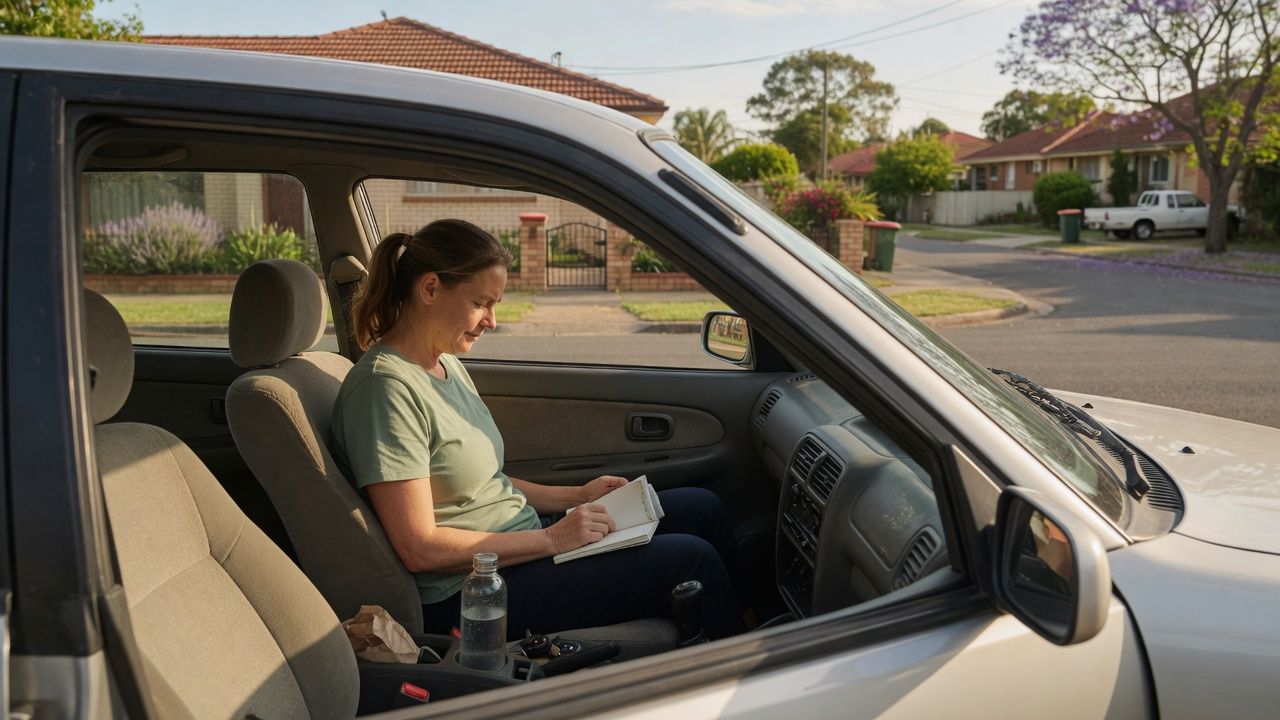
Write the note in the same shift as the visit, before leaving the participant's home where the service allows it. That is a practice standard rather than a deadline set in law, and it holds because the worth of a note is its closeness to the event it describes.
Memory fails in a predictable order: times first, then exact words, then the sequence things happened in. A note written three days later is a reconstruction and a reader can usually tell. Progress notes compliance is judged on timestamps as much as on content.
There is a regulatory reason behind the practice standard as well as a practical one. The Aged Care Quality and Safety Commission states, in the information management outcome of the strengthened Quality Standards, that information recorded about a person must be accurate and current, and accessible to the workers and health practitioners involved in that person's care. An entry written days later is neither current nor reliably accurate, and one still sitting in a worker's phone is not accessible to anybody. No published instrument sets a uniform hour count for a home care progress note, so your record keeping policy has to name the window.
Where the barrier is the tool rather than the worker, say so to your coordinator. Dictation and AI-assisted progress notes exist because the last five minutes of a visit are when the record has to be made and the worker has least time to make it.
How to Document a Declined Service
Record a declined service as a fact with a reason, never as a refusal to comply. A participant who declines a shower is exercising a right, so the note's job is to show the service was offered, that the decision was the participant's own, and that any consequence was handled. Four things belong in the entry:
- What you offered, in the words you used.
- What the participant said or did to decline, quoted where you can.
- Whether you explained the consequence, and how they responded.
- Who you told and when, where the decline carries clinical risk.
A pattern of declines matters more than any single one. Three declined showers in a fortnight is a care plan question, and the notes are where that pattern becomes visible. Avoid writing that a participant was non-compliant or difficult: both are judgements about the person rather than records of the event.
How to Document a No-Access Visit
A visit where nobody comes to the door needs a fuller note than a visit that went ahead, because the record has to show what the worker did about not knowing whether the participant was safe. Log the arrival time, every attempt and the time of each, what you could see or hear from where you were lawfully standing, who you rang and when, and the instruction you received.
Do not file a no-access visit as a cancellation. They are different events with different consequences, and merging them hides the welfare question; the guidance on managing missed visits and no-shows sets out the response ladder. The note's job is to make your part of that ladder readable afterwards.
What Happens to the Note When Care Is Escalated
Escalation does not change the note, it adds records alongside it. The visit note stays as the observation record in the worker's own voice, saying what was seen and when the clinician was contacted. The escalation, the clinical assessment that follows and any change to the care plan are separate entries made by the people accountable for each.
Three links have to be traceable afterwards: observation to escalation, escalation to instruction, and instruction to the action taken at the next visit. The third is the one that goes missing.
Keep the pathway itself out of the note. Who to call, how fast, and what counts as an emergency belong in your Clinical Handover and Escalation Policy Template, which a worker should read before the shift rather than work out at the door. Where a participant's condition has changed in a lasting way, the care plan has to be reviewed rather than annotated. The assessment and planning outcome of the strengthened Quality Standards requires care and services plans to be reviewed when a person's function, capacity or condition deteriorates or changes, and to be current and used by workers. Your note is what triggers that review, so it has to say plainly that something is different.
How to Self-Test One Note Against an Audit
The Commission describes its own method plainly: its staff visit homes and services to talk with people receiving care, interview managers and staff, watch how care is provided, and review evidence such as care records. Nobody reads every file. A small number of people are followed through their records, so any single note you write may be read in full by a stranger with no context. Support at Home providers claiming for service delivery are audited against the strengthened Quality Standards the Aged Care Quality and Safety Commission publishes.
Self-testing one note takes two minutes. Open something you wrote last week and read it cold:
- Can you tell what the care plan asked for, and whether it happened?
- Can you tell what the participant's condition was, in facts rather than adjectives?
- Can you tell what changed since the previous visit?
- Is there a time against every event, including the escalation?
- Would it make sense to somebody who has never met the participant?
- Is there anything in it you could not defend to the participant's family?
A note failing three or more of those is aged care audit evidence working against your own service. The fix is a habit rather than a system change, and the habit is writing while you are still in the home. Documenting a home care visit well also depends on the provider being clear about what it expects, which is where clinical governance joins the note to the organisation's accountability.
Related Resources
- Drafting support at the end of a visit: AI-assisted progress notes
- What a continence entry must capture: continence management in home care
- The highest-risk line in a note: medication safety in home care
- Who to call and what to record: Clinical Handover and Escalation Policy Template
- The note and provider accountability: clinical governance
- The ladder behind a no-access note: managing missed visits and no-shows
- The national regulator: Aged Care Quality and Safety Commission
Frequently Asked Questions
When must a Support at Home visit note be written?
In the same shift as the visit, and before leaving the participant's home where the service allows it. No single national deadline applies to every service, so your record keeping policy sets the window. Write it while the visit is still in front of you.
What must a home care visit note include?
Who attended and when, what services were delivered against the care plan, what the worker observed in factual terms, what the participant said, what was not delivered and why, and any action taken including who was contacted and at what time.
How do I write up a service the participant declined?
Record what was offered, how the participant declined, whether you explained the consequence, and who you notified. Declining is a right, so the entry should read as a fact with a reason rather than a judgement about the participant.
Is a no-access visit the same as a cancellation?
No. A cancellation is a known change to the schedule, while a no-access visit is an unresolved welfare question until somebody confirms the participant is safe. The note must show every attempt, every time, and who was told.
Do support worker notes get read in an audit?
Yes. The Commission reviews evidence such as care records, and a support worker's entry is usually the only record of a visit. It carries the same evidential weight as a nurse's.
Write It Before You Leave the Home
A visit note is written once and read by people who were not there: a nurse deciding whether to bring a review forward, a coordinator updating a care plan, a family member asking what happened, an assessor sampling files two years later. None of them can ask what you meant. Write it in the participant's kitchen, in facts, with times against them.


