

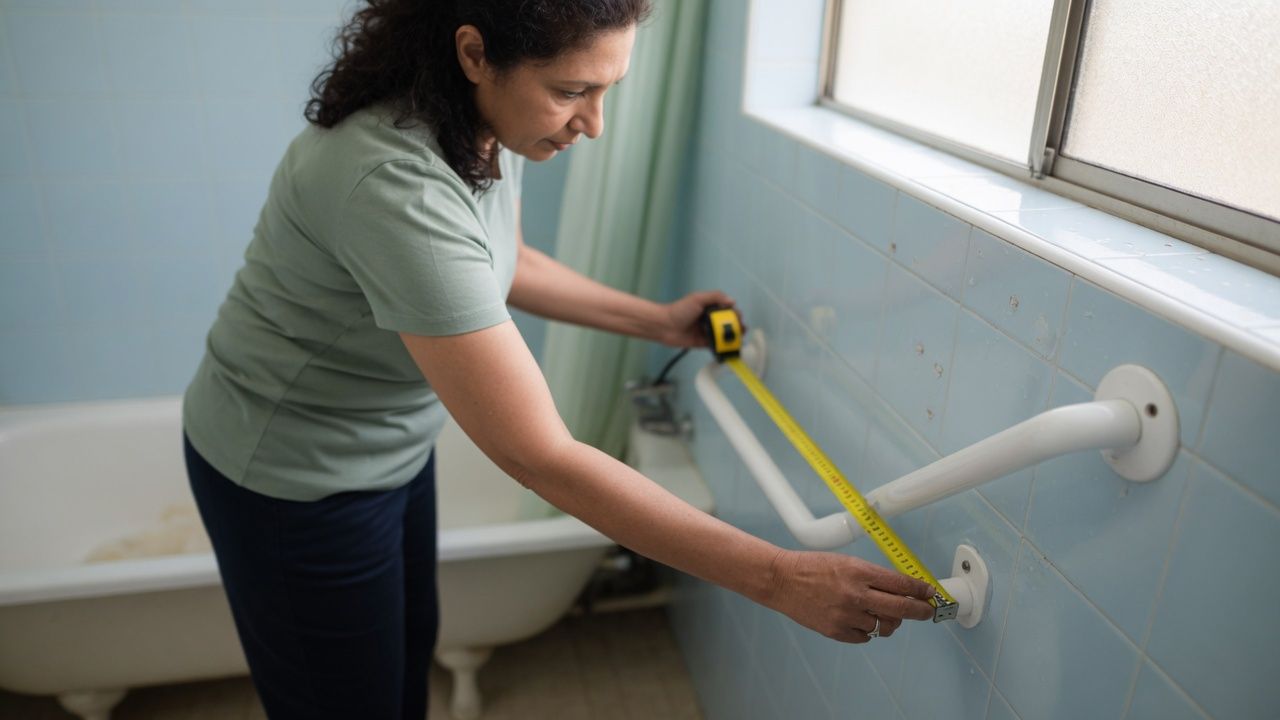


Assistive technology and home modifications are not funded from a participant's quarterly budget. Under the AT-HM scheme they draw on a separate allocation approved at assessment and recorded in the Notice of Decision and support plan, with its own approval trail, prescriber rules, charging caps and records. The Department is explicit that AT-HM cannot be paid from the quarterly budget even where funds remain in it.
Key Takeaways
- AT-HM funding runs through its own priority systems, so a participant can hold an equipment allocation before ongoing funding is released.
- Every home modification needs an occupational therapist prescription. Assistive technology needs one where the AT-HM list says so.
- Written homeowner approval is a precondition for modification works, and tenancy changes whose approval you need.
- Administration and coordination charges are capped and must be agreed before purchase.
- Repairs and maintenance come out of the AT-HM allocation, so plan the item's whole life.
Separate Funding Changes Your Approval Trail
Participants are assessed for AT-HM during their aged care needs assessment, and an assessor may approve an assistive technology tier, a home modifications tier or both. Allocations flow through the Assistive Technology and Home Modifications Priority Systems, run separately from the Support at Home Priority System, and open up once funding is allocated, a provider is chosen and that provider notifies Services Australia. A participant can reach you with equipment funding and no ongoing budget yet. Check what the AT-HM scheme covers against your intake checklist if it assumes otherwise.
Funding may only be spent on AT-HM list items that address an assessed clinical need in the support plan and either optimise functioning or help manage disability or age-related functional decline. An item that is clinically sensible but absent from the list is not fundable.
Assistive Technology Funding Tiers and Time Limits
The Department currently publishes three needs-based tiers per stream: low, medium and high. For assistive technology the published amounts are under $500, up to $2,000 and up to $15,000, with higher amounts where assessed need requires it. Home modifications use the same bands, the high tier capped at $15,000 per lifetime excluding supplements. Treat these as the Department's current AT-HM guidance rather than fixed amounts, and check the page before quoting a figure.
Allocations are time limited. Funding is generally available for 12 months and the expiry must appear on the monthly statement. Specified progressive conditions attract longer periods, and high tier modification funding can be extended where evidence of progress goes to Services Australia. Where a tier proves insufficient, the route is a Support Plan Review with evidence of need. Assistive technology above $15,000 has its own submission path through the My Aged Care Service and Support Portal, with a quote and valid prescription.
Prescriber Requirements Are Not Uniform
Providers must make sure all assistive technology and home modifications meet assessed needs, are safe and fit for purpose, and are used correctly where possible. All home modifications must be prescribed by an occupational therapist working within their scope of practice, with no low-risk carve-out. For assistive technology the AT-HM list sets an expected prescription category per item, and where one is required it must come from a suitably qualified health professional such as a nurse or allied health professional. Low risk daily living products need no clinical input.
The risk sits in the middle band, where staff assume an off-the-shelf purchase is fine for an item the list expects to be prescribed or supplied under advice. Build the list category into procurement approval, and make sure staff know how home modifications are defined so a fundable access change is not confused with general home maintenance.
Evidencing the Link Between Need and Item
An assessor will ask why this participant received this item. The prescription is the spine of that answer: it should identify the participant, specify the AT-HM list item with any customisation, justify the recommendation against functional need, and state the wraparound services required. Your file closes the loop with the assessed need, the quote, the agreed price in the care plan or individualised budget, the invoice and proof of delivery, and care notes.
Submitting evidence and keeping it are separate obligations. High tier AT-HM claims require a final itemised invoice including GST lodged with the claim. Otherwise you keep the records and produce them on request. Set this out once in an assistive technology and equipment management policy rather than per participant.
Consent, Landlord Permission and Tenancy
Before modification works begin, the Department's AT-HM scheme guidelines direct providers to confirm the participant has understood and agreed to the cost and any contribution payable, to document and agree the price of items, services, prescription, wraparounds and coordination in the individualised budget or care plan, to obtain the occupational therapist's prescription, to confirm the items are on the AT-HM list, and to get written approval from the homeowner.
That last step is where private dwellings get complicated. Where your participant owns the home, their consent and the owner's approval are one signature. Where they rent privately, live in public or community housing, or occupy a retirement village unit, the person who can authorise a structural change is not the person receiving care, and the tenancy or village contract may limit what is permitted or require works reversed on exit. Get approval on file before a trade is booked, record who gave it and in what capacity, and make reinstatement expectations explicit. Verify builder licensing through the relevant building authority.
Installation, Handover and Equipment Maintenance Records
Delivery is not the end of the obligation. Wraparound services make sure the item is set up, fitted, adjusted and usable, and they are funded alongside it. Record handover training against the participant rather than relying on a supplier's docket: safety in use is a provider responsibility, and an unfamiliar hoist is a hazard rather than a support.
Repairs and maintenance of assistive technology bought through the scheme are funded from the participant's AT-HM allocation. If it has expired and the item needs servicing, the Department's stated route is a referral for a Support Plan Review, with options discussed and documented in care notes. Equipment maintenance records therefore need service intervals, warranty terms and the applicable funding period, so nobody books a repair against money that lapsed. Rented or loaned items also carry a return obligation.
Registration Category 2 and When to Partner
AT-HM service types sit in registration category 2, assistive technology and home modifications, covering equipment and products and home adjustments. The scheme guidelines state that providers delivering AT-HM must be registered in category 2, and may also need registration covering allied health and therapy to source prescription and wraparound services, including where the work is subcontracted. Since you can only claim for a service you are registered to provide, a provider without category 2 must partner rather than supply directly. Confirm which registration category you need against the Commission's guidance on provider registration categories.
The guidelines also indicate that providers registered in category 2 only are not required to comply with the Quality Standards and are not audited against them at renewal, whereas categories 4 to 6 are. That does not reduce what a category 4 provider carries when brokering equipment through a category 2 partner, because obligations under the Aged Care Act 2024 still apply where delivery is subcontracted to an associated provider.
Charging Caps People Routinely Confuse
The price charged against a participant's AT-HM funding can be no more than the invoiced cost of the item or service, the prescription, the wraparound services, and administration or coordination within published caps. For assistive technology the administration cap is 10 per cent of the cost or $500, whichever is lower. For home modifications it is 15 per cent or $1,500, whichever is lower. All costs must be agreed and documented with the participant before purchasing.
Three different 10 per cent figures circulate in Support at Home and they are unrelated. The AT-HM administration cap applies to item cost. The care management deduction is 10 per cent of each participant's quarterly budget for ongoing services. The third-party worker loading of up to 10 per cent applies to the actual cost of a service where a self-managing participant sources their own worker. Care management cannot be claimed against AT-HM funding, though sourcing and wraparound costs can. Read the Department's pricing rules for Support at Home participants before finance builds a charging template.
AT-HM Evidence Is Built Before the Purchase
Nearly every AT-HM finding available to an assessor is a documentation finding: a modification without written owner approval, a prescribed item sourced without a prescriber, a repair billed against expired funding, a charge nobody agreed in advance. All are decided before the purchase order goes out, which makes procurement the control point rather than the claim. Give care partners one approval gate: is the item on the AT-HM list, do the tier and funding period cover it, who prescribed it, who owns the dwelling, was the charge agreed.
Related Resources
- Assistive Technology and Equipment Management Policy Template
- Manual Handling and Assisted Mobility Policy Template
- Falls Prevention and Management Policy Template
- Record Keeping Policy Template
- Running a Restorative Care Pathway Episode
- Governa Policy Mapping to Standards
- Aged Care Quality and Safety Commission
Frequently Asked Questions
Can a participant use their quarterly budget for equipment if AT-HM funding runs out?
No. The Department states AT-HM can only be funded through the AT-HM scheme, even where funds remain in the quarterly budget. The route is a Support Plan Review with evidence of need.
Does every assistive technology item need a prescription?
No. The AT-HM list sets an expected prescription category per item, and low risk daily living products generally need no clinical input. Items the list treats as prescribed need a suitably qualified health professional. All home modifications need an occupational therapist prescription.
Who signs off home modifications in a rental property?
The participant consents to their own care and costs, but written approval for the works must come from the homeowner, whether that is a landlord, housing provider or village operator. Get it on file before a trade is engaged.
What administration charge can we apply to assistive technology?
Within the published caps: for assistive technology, 10 per cent of the cost or $500, whichever is lower; for home modifications, 15 per cent or $1,500, whichever is lower. Both must be agreed before purchase.


