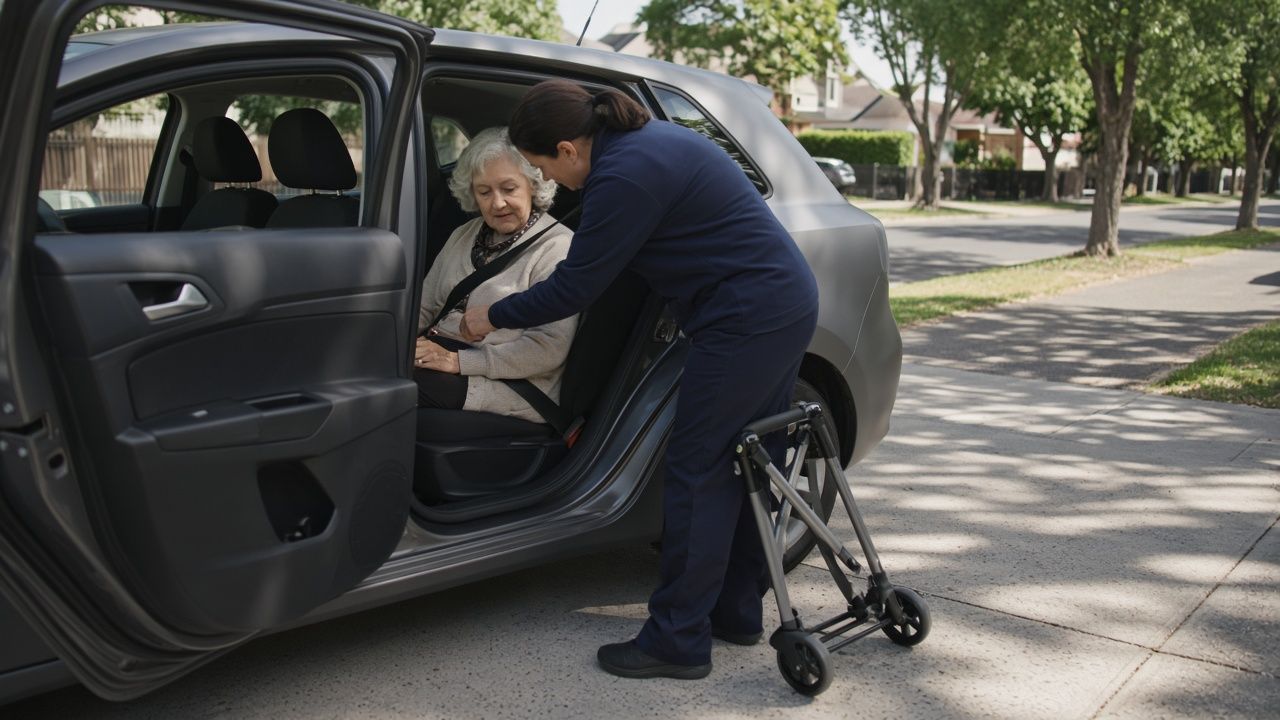


Transport services under Support at Home is a service type in the Independence category of the Department of Health, Disability and Ageing's service list. It funds individual or group trips that connect a participant with their usual activities, as direct transport (driver and car provided) or indirect transport (taxi or rideshare vouchers). It does not fund a worker's travel to the home, holidays or the cost of owning a car. This is general information, not legal advice.
Key Takeaways
- Transport is a separate service type in the Independence category, with two services: direct transport and indirect transport.
- It covers travel to a participant's usual activities. A worker's support during the activity is a different service.
- Transport can only be delivered if it is in the participant's approved services and the care partner has documented it in the care plan and individualised budget.
- Each one-way trip is one billable unit, so records must show each leg, who travelled and what was charged.
- Independence services attract participant contributions. Clinical supports do not.
What does transport mean on the Support at Home service list?
The Department's Support at Home service list sorts funded services into three participant contribution categories: clinical supports, independence and everyday living. Transport sits in independence, alongside respite, social support and community engagement, and therapeutic services for independent living.
The Department's page on services under Support at Home lists transport and support to attend appointments as examples of independence services. They are different services, so record and charge them separately. The transport services glossary entry gives the general term, but the Support at Home meaning is narrower.
What counts as transport, and what does not?
The list describes the in-scope activity as group and individual transport assistance to connect an older person with their usual activities. The Department's service list FAQs give examples: shopping centres, appointments, social clubs, events and visits to family and friends. What is usual is a judgment for provider and participant, considering whether the participant used to make the trip independently.
The list names these as out of scope, and says exclusions are examples, not exhaustive:
- purchase of a person's car and its running costs
- licence costs
- professional transit services, such as public transport, flights and ferries
- transport costs where a state or local government travel assistance program is available
- travel for holidays
The FAQs add two limits. A worker's or therapist's travel to the home belongs in the price of that service, not in a transport claim. And a state or local travel program that can meet the participant's needs must be used first. If it cannot, Support at Home funds can be used for an approved participant.
How is transport different from accompanied activities and health services?
The FAQs draw the line at what the worker does after the car stops. Transport is for a participant who cannot travel independently but does not need a worker's help during the activity. The Department's example is a participant driven to their regular GP clinic who walks in and attends alone.
If the worker walks in with them and stays for the visit, that is the accompanied activities service, under social support and community engagement. One outing can involve both, so records must show which was which.
Transport is not a clinical support and does not replace health services funded elsewhere, such as through Medicare. Whether someone can travel safely is a question for their clinician, recorded in the care plan.
How do you agree transport in the service agreement and care plan?
Providers choose which services they deliver, list them in their My Aged Care Find a Provider profile, and must document them in each Support at Home service agreement. If you do not run transport, say so.
Then follow the participant's approved services. The Notice of Decision and support plan set out an approved list of services. A care partner works with the participant to choose from it, including hours or units per month, and documents the choice in the care plan and individualised budget. Participants can change the mix at any time.
For transport, record:
- whether direct transport, indirect transport or both are approved and offered
- the usual activities the participant wants to reach, and any mobility aid
- whether a worker is needed during the activity, which points to accompanied activities
- whether a state or local travel program has been checked first, and how trips are booked and charged
Who can deliver transport services?
The service list does not give guidance on who delivers transport. For staffing, qualifications and scope of practice it points to the Aged Care Quality Standards, standards 2 and 5 in particular. The decision sits with you. The common options are:
- Your own workers. Worker-car risks are covered in our article on driving clients in a worker's car.
- A subcontracted driver or transport company. You may engage a third party for some services under the single provider model.
- A community or volunteer transport organisation. The list does not address volunteers. If one delivers trips on your behalf, treat it as a third-party arrangement and apply the same checks.
- Taxi or rideshare vouchers. This is indirect transport. The FAQs say it is a voucher, including Cabcharge, and does not allow direct payment to the driver.
Whichever route you use, you remain responsible as the registered provider for making sure third parties meet the Aged Care Act 2024 and the Quality Standards. If you cannot meet those obligations through the arrangement, you cannot agree to it. Our guide to third-party workers in Support at Home and the subcontractor management policy cover screening and oversight.
How should you record trips against the participant's budget?
The Department's Support at Home program manual sets the billable unit for transport as one trip, and a trip is one way. Driving a participant to their destination is one trip. Taking them home is a second trip.
For group travel, the provider must apportion the cost to each participant. If a voucher fails at the point of sale because of a technical system error, the participant may pay and seek reimbursement with evidence. Providers must keep records that support their claims.
A trip record should therefore capture:
- the participant, the date and each leg separately
- the service delivered: direct transport, indirect transport or another service
- the usual activity or destination, in words that link back to the care plan
- the driver or organisation, and whether it is a third party
- for group trips, the passengers and the cost split; for vouchers, the receipt
- the price charged and the contribution category
How do participant contributions apply to transport?
The Department says participants must contribute to the cost of everyday living and independence services, while the government pays the full cost of clinical supports. The level depends on an assessment of income and assets. Transport is an independence service, so a contribution applies.
Show transport on its own service line with the right category. See our guide to participant contributions for administration, and confirm current rates on the Department's pages.
What evidence will an audit look for?
A reviewer would reasonably expect a service agreement that states transport is offered and how it is charged, a care plan entry that matches the approved services, and trip records that reconcile to claims and statements. A monthly check of trips delivered against trips claimed catches duplicate legs, missing group splits and trips booked to the wrong service. For subcontracted drivers, keep the agreement, screening and oversight records.
Related Resources
- Support at Home service agreement policy template
- Third-party and subcontractor management policy
- Using the national price summary
- Client transport in home care
- Policy mapping to the Quality Standards
- Support at Home service list
- Services under Support at Home
Common Questions About Transport Services in Support at Home
1. What are transport services in Support at Home?
A service type in the Independence category of the service list, with two services: direct transport (driver and car provided) and indirect transport (taxi or rideshare vouchers). Both connect a participant with their usual activities.
2. Can transport be used to get to medical appointments?
Yes, where the appointment is one of the participant's usual activities. The Department's FAQs list appointments among the examples. If a worker must stay with the participant during the visit, that is accompanied activities instead.
3. Can a participant be reimbursed for a taxi they paid for directly?
Generally no. Indirect transport is for vouchers and does not allow direct payment to the driver. The manual allows one exception: if a voucher fails at the point of sale because of a technical system error, the participant can pay and seek reimbursement with evidence.
4. Does a participant pay a contribution for transport?
Yes. Transport is an independence service, and participants contribute to independence services based on an assessment of their income and assets. Clinical supports have no contribution.
5. Can we use a subcontractor or community transport organisation?
Yes, under the single provider model. You stay responsible for meeting the Aged Care Act 2024 and the Quality Standards through them, and if you cannot, you must not agree to the arrangement.
Write transport down before the first trip
Transport under Support at Home is only as defensible as the record behind it. The service list defines what is funded, but the service agreement, care plan and trip entries show you delivered it as agreed. Start by pulling last month's trips and checking that each one matches an approved service, a care plan entry and a charge.