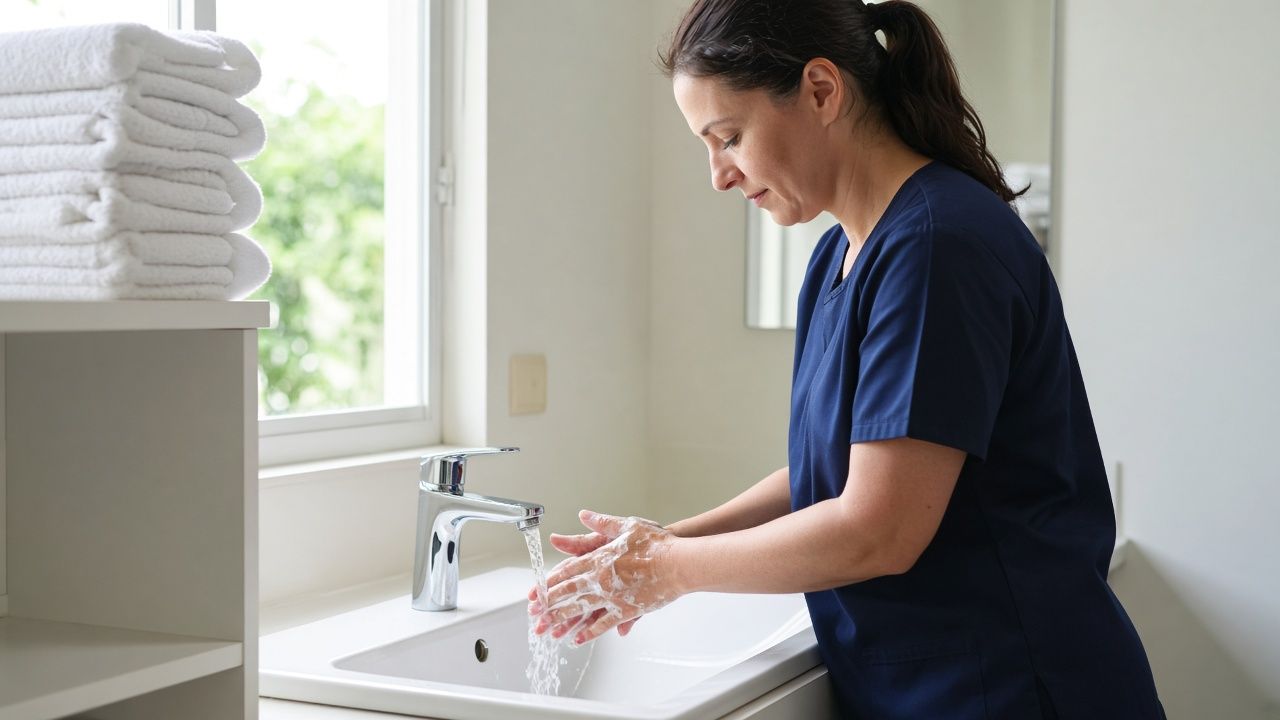


Dual incontinence care means looking after a person who has both urinary and faecal incontinence, and the safest approach is a fixed routine: clean hands, gloves, privacy, gentle cleansing from clean to dirty, skin protection as the care plan directs, a product change, careful disposal, clean hands again and a record. Changing the order or skipping a step raises the risk of skin damage and infection.
This guide is for care workers, supervisors and quality leads in residential and home care.
Key Takeaways
- Dual incontinence keeps skin in repeated contact with urine and faeces, so the risk of skin damage, infection and pressure injury is higher than with one type.
- The routine works because of its order: hand hygiene first and last, gloves changed between dirty and clean tasks, and cleansing that moves from clean to dirty.
- Workers observe and report skin changes; a nurse or continence clinician assesses and decides treatment.
- Providers need a current policy, trained and assessed workers, reliable PPE supply and records showing the routine is followed.
What is dual incontinence and why is the risk higher?
Dual incontinence is loss of control of both bladder and bowel. It usually means frequent episodes, more product changes and more time with skin exposed to moisture.
Continence Health Australia describes incontinence-associated dermatitis (IAD) as a common and often under-recognised form of skin damage that affects comfort, wellbeing and quality of life. It also notes that telling IAD apart from pressure injuries can be challenging, which is why workers should report what they see rather than name it.
Bowel leakage adds an infection concern because faecal material can spread organisms to surfaces, other people and the worker. The glossary entry on faecal incontinence defines the term.
There is also a dignity cost: people often feel embarrassed and avoid asking for help.
What is the correct hygiene routine, step by step?
Follow the person's care plan and your provider's procedures first. The order below is a general framework.
- Prepare. Gather clean products, cloths, the skin products named in the care plan, a waste bag, linen and fresh gloves before you start.
- Hand hygiene. Clean your hands before putting gloves on.
- Gloves and PPE. Put on gloves, and an apron or other PPE if your procedure calls for it.
- Privacy and consent. Close doors and curtains, explain what you are doing and wait for agreement.
- Gentle cleansing. Remove the soiled product, clean from the cleanest area to the dirtiest using the care plan method, then pat dry.
- Skin protection. Apply only what the care plan directs. Never substitute products or use another person's supply.
- Product change. Fit a clean, correctly sized product and dress the person comfortably.
- Disposal. Bag soiled products and cloths, remove gloves and dispose of them as your procedure directs.
- Hand hygiene again. Clean your hands before touching clean items, door handles or the call bell.
- Documentation. Record what was done, the condition of the skin and anything you reported.
Your continence management policy should say who sets the cleansing and skin protection plan, and that a nurse or continence clinician owns any change to it.
How do you prevent cross-contamination in continence care?
The Australian Commission on Safety and Quality in Health Care publishes infection prevention and control guidance, including material for aged care, standard precautions and hand hygiene. Your procedures should be consistent with it, and these rules apply every time:
- Clean to dirty. Never return to a cleaner area with a soiled cloth or glove.
- Change gloves between tasks. If gloves become soiled partway through, remove them, clean your hands and put on a fresh pair before touching clean skin, products or equipment.
- Keep soiled gloves off clean surfaces. That includes taps, door handles, bed controls and the person's belongings.
- Handle waste and linen at the point of care. Bag soiled items where they are used and do not shake linen.
- Clean shared equipment. Wipe commodes, shower chairs and bathroom surfaces between people using your cleaning procedure.
Your infection prevention and control policy is where these rules are written down.
What skin changes mean a worker should escalate?
Workers are not expected to diagnose. They look, notice and report. Check the skin at every change, including the buttocks, groin, skin folds and any area under a product. Report to a nurse straight away, following your clinical escalation procedure, if you see:
- new or worsening redness, rash, or weepy or broken skin
- the person reporting pain, burning, stinging or itching
- signs of infection such as heat, swelling, odour or a change in how the person seems
- blood in urine or stool, or a sudden change in continence pattern
Redness over a bony area may be a pressure injury rather than IAD, and the two need different assessment, so the pressure injury prevention in home care guide and your pressure injury prevention policy sit alongside the continence procedure. The National Continence Helpline (1800 33 00 66) is staffed by Nurse Continence Specialists and takes calls from carers and health professionals, Monday to Friday, 8am to 8pm AEDT/AEST.
This article describes provider process. It is not clinical or legal advice, and treatment decisions belong to the person's nurse, doctor or continence clinician.
How do you protect dignity and consent?
Under the Aged Care Act 2024, which commenced on 1 November 2025, the Statement of Rights includes the right to be treated with dignity and respect. In personal care, that shows up in small details:
- Ask before you start, every time, even when the person has dementia.
- Keep your tone neutral and never discuss the episode in front of others.
- Record and report a refusal so the care plan can be reviewed.
What changes between residential care and home care?
In residential care, shared bathrooms and equipment make cleaning between residents a major control, and PPE, wipes and linen should be within reach of the bathroom.
In a home, a client may have one bathroom, limited storage and no sluice. The order of the routine does not change, but the planning does. Bring spare gloves, a sealable waste bag and a way to clean your hands, check the client's supplies before the visit, and report shortages to the coordinator so a missing item never leads to a shortcut. Our guide to continence management in home care covers this setting further.
Product choice and sizing come from the care plan or a clinician, not worker preference. The Continence Health Australia website has information on continence products and aids.
What should providers have in place?
- Policy. A current continence and infection control policy that matches what workers actually do.
- Training and competency. A continence care training module with a practical check of hand hygiene, glove use and the clean-to-dirty order, refreshed on a schedule you set.
- Supplies. Gloves, aprons, hand hygiene products and waste bags at the point of care.
- Care plans. An individual plan naming the cleansing and skin protection approach and a review date.
- Escalation records and audit. Evidence that skin changes were reported and acted on, plus spot checks of observed practice.
- Incident and complaint links. A way for a skin injury, infection or dignity complaint to be investigated and used to update the routine.
The policy mapping to standards page shows how these policies line up with the Aged Care Quality Standards, which helps when you gather evidence.
Related Resources
- Continence management in home care
- Pressure injury prevention in home care
- Continence management policy template
- Infection prevention and control policy template
- Policy mapping to standards
- Infection prevention and control guidance from the Commission
- Continence Health Australia
Common Questions About Dual Incontinence Care
1. Why does dual incontinence cause skin problems?
Skin that is often in contact with moisture, urine and faeces can become irritated and break down. This is called incontinence-associated dermatitis, and it can be mistaken for a pressure injury, so any skin change should go to a nurse.
2. Should I wear gloves for every incontinence task?
Wear gloves whenever you may touch urine, faeces or soiled products, as your infection control procedure sets out. If you need to touch anything clean, remove them, clean your hands and put on a fresh pair.
3. Can care workers choose which skin products to use?
No. The products and cleansing method come from the care plan, set by a nurse or continence clinician. If something is not working or runs out, report it rather than substituting.
4. Who do I contact if I am unsure what I am seeing on the skin?
Tell the registered nurse or care coordinator straight away and follow your escalation procedure. For continence advice, carers and health professionals can also call the National Continence Helpline on 1800 33 00 66.
5. What evidence should a provider be able to show?
Policies, training and competency records, individual care plans, skin check and escalation records, and audit results. Together they show the routine is followed, not only written.
Consistent Routines Protect Skin and Dignity
Dual incontinence care is a short, repeatable routine with a clear point where the worker hands over to a nurse. When the steps are fixed, supplies are on hand and skin changes are reported the same day, the person stays more comfortable and the provider can show the evidence. Start by checking your current procedure against the ten steps above.