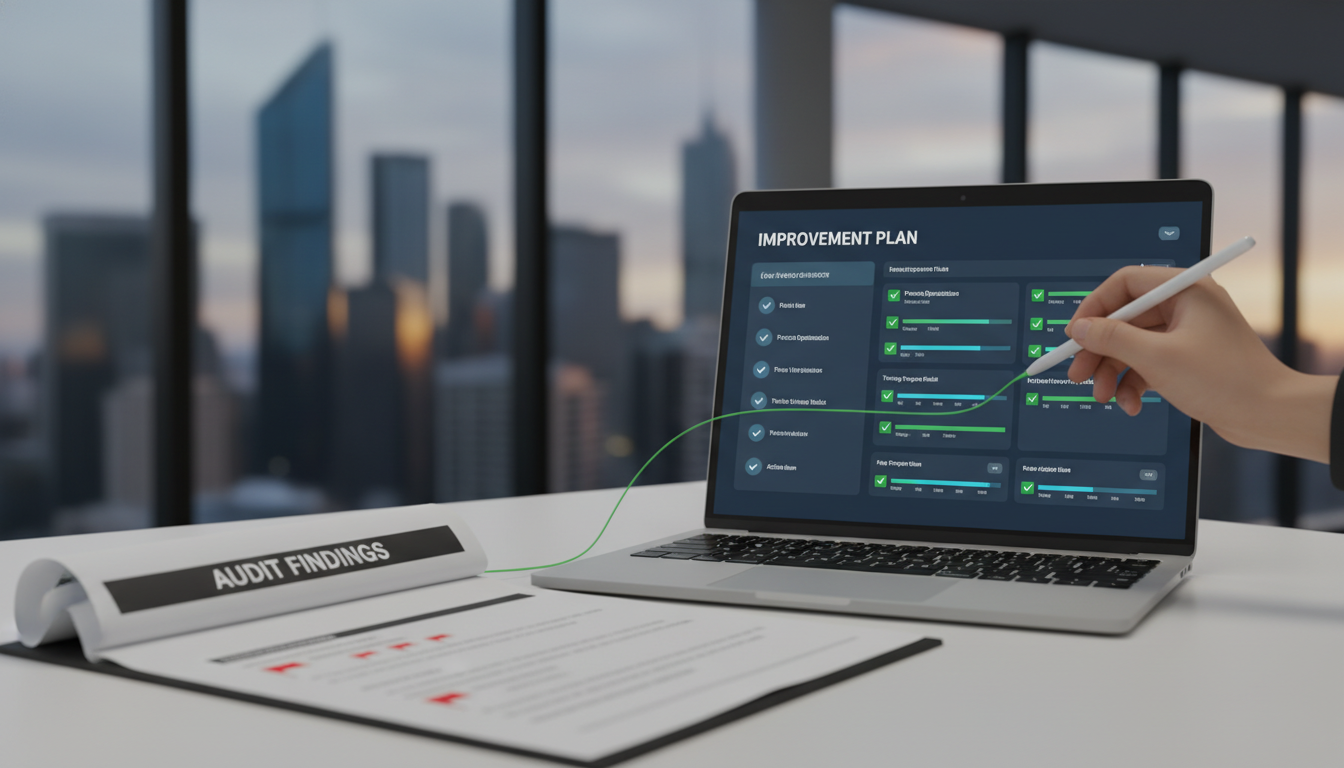


Audits are a necessary part of running any business in Australia. They help you understand where your business stands, pointing out both strengths and areas needing attention. However, simply getting an audit report is not enough. The real value comes from taking those findings and turning them into practical steps for continuous improvement. This often means integrating identified flags and opportunities directly into a manageable and trackable system.
Key Takeaways
- Audit findings are a starting point for making things better.
- Continuous improvement is an ongoing effort to make processes and results better.
- A clear Plan for Continuous Improvement (PCI) helps turn findings into actions.
- Effective action tracking is essential to see progress and complete tasks.
- Governa AI offers tools to help manage and track your improvement actions.
The Challenge of Audit Findings
Many businesses face a common problem: they receive an audit report that details various issues or areas where they can do better. These are often called "flags" or "opportunities for improvement." The challenge is not just in identifying these points, but in making sure they lead to real change. Without a clear system, these findings can sit in a report, never truly becoming part of your business operations. You need a way to move from a static report to dynamic, ongoing improvement.
What is Continuous Improvement?
Continuous improvement is a business approach that involves always looking for ways to make things better. It is not about one-time fixes, but about a steady, ongoing effort to improve processes, products, and services. For businesses in Australia, this means regularly reviewing how things are done and making small, consistent changes that add up to big results over time. It helps your business stay competitive and meet changing needs.
From Audit Report to Action Plan
Turning audit findings into a Plan for Continuous Improvement (PCI) involves several steps. This process makes sure that every identified issue or opportunity leads to a clear, measurable action.
Identifying Improvement Opportunities
The first step is to carefully review your audit findings. Look for specific areas where changes can be made. These might include:
- Processes that are not working as well as they could.
- Areas where resources are being wasted.
- Risks that need to be managed better.
- Chances to meet customer needs more effectively.
You should list each of these opportunities clearly.
Creating a Plan for Continuous Improvement (PCI)
Once you have identified the opportunities, you need to create a structured Plan for Continuous Improvement (PCI). This plan acts as a roadmap, guiding your efforts. For each improvement opportunity, consider:
- What needs to be done? Describe the specific action.
- Why is it important? Explain the expected benefit.
- Who is responsible? Assign a clear owner for the action.
- When will it be done? Set a realistic deadline.
Setting Clear Goals
Each action within your PCI should have a clear goal. Goals should be:
- Specific: Clearly state what you want to achieve.
- Measurable: You should be able to track progress and know when the goal is met.
- Achievable: The goal should be realistic given your resources.
- Relevant: The goal should align with your business objectives.
- Time-bound: Set a specific deadline for completion.
For example, instead of "improve customer service," a better goal might be "reduce customer complaint resolution time by 20% within three months."
Assigning Ownership and Resources
For any improvement action to succeed, someone needs to be responsible for it. Assign a specific person or team to each action. This helps with accountability and makes sure tasks do not get overlooked. Also, make sure they have the necessary resources, such as:
- Time
- Budget
- Training
- Tools or software
Implementing and Tracking Actions
Once your plan is ready, the next step is to put it into action and, most importantly, track your progress.
The Importance of Action Tracking
Action tracking is how you monitor the status of each improvement task. Without effective tracking, it is easy for actions to get delayed or forgotten. Good action tracking allows you to:
- See what has been completed.
- Identify actions that are falling behind.
- Understand if resources are being used well.
- Make informed decisions about adjustments.
- Show proof of your continuous improvement efforts.
This is where a system that helps you manage these actions becomes very valuable.
Using Governa AI for Action Management
Governa AI provides tools that can help your Australian business manage your continuous improvement actions. Our system helps you:
- Log audit findings: Easily record and categorize issues from your reports.
- Create specific actions: Turn findings into clear, assignable tasks.
- Assign responsibilities: Clearly state who is accountable for each action.
- Set deadlines: Keep actions on schedule with due dates.
- Monitor progress: Track the status of all actions in one place.
- Generate reports: Get insights into your improvement efforts.
By using a structured system like Governa AI, you can move away from relying on spreadsheets or manual notes. This makes sure that your improvement opportunities are not just identified, but actively worked on and completed.
Reviewing and Adapting
Continuous improvement is a cycle. After you implement actions and track their progress, you need to review the results.
- Did the actions achieve their goals?
- Are there new opportunities for improvement?
- What lessons did you learn from the process?
Use this information to adapt your plan and start the cycle again. This ongoing review makes sure that your business is always getting better.
Frequently Asked Questions
How do audit findings help with continuous improvement?
Audit findings provide clear information about what is working well and what needs attention in your business. They act as a starting point to identify specific areas for making things better.
What is a Plan for Continuous Improvement (PCI)?
A Plan for Continuous Improvement (PCI) is a structured document or system that outlines the specific actions, responsibilities, and timelines for addressing improvement opportunities identified in an audit or review.
Why is action tracking important for improvement?
Action tracking is important because it allows you to monitor the progress of each improvement task. It helps make sure that actions are completed on time, resources are used well, and that you can see the impact of your efforts.
Can Governa AI help manage improvement actions?
Yes, Governa AI offers tools designed to help businesses log audit findings, create specific actions, assign responsibilities, set deadlines, and monitor the progress of all their continuous improvement efforts in a single system.