

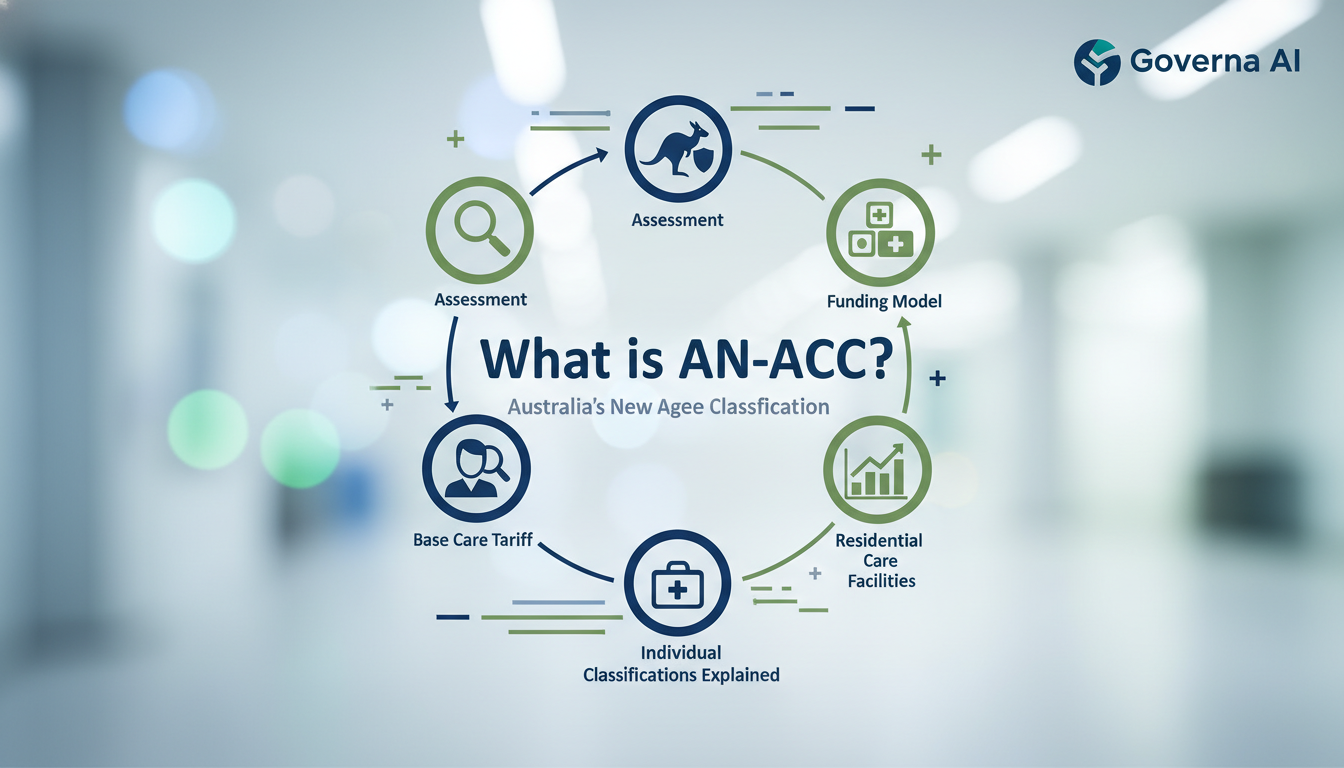


If you are involved in Australia's aged care sector, you have likely heard about the Australian National Aged Care Classification, or AN-ACC. This new funding model changed how residential aged care services receive government subsidies starting October 1, 2022. It replaced the Aged Care Funding Instrument (ACFI) to provide a fairer and more transparent way to fund care for older Australians. This guide will help you understand what is AN-ACC and its importance for residential care.
Key Takeaways
- AN-ACC is Australia's new aged care funding model, replacing ACFI from October 1, 2022.
- It aims for fairer and more transparent funding based on residents' individual care needs.
- Funding includes a base care tariff, a variable care component based on AN-ACC classification, and other fixed payments.
- Residents are assessed by an independent AN-ACC assessor to determine their care needs and classification.
- The model helps residential care providers match funding to the actual care required for each person.
Understanding the Shift to AN-ACC
The aged care sector in Australia has seen significant changes to ensure older Australians receive appropriate and high-quality care. The move to AN-ACC was a direct response to recommendations from the Royal Commission into Aged Care Quality and Safety. The previous ACFI model had limitations, often leading to inconsistent funding and a focus on documentation rather than direct care needs.
The main goal of AN-ACC is to:
- Provide funding that closely matches the actual care needs of residents.
- Offer a more accurate and consistent way to assess care requirements.
- Reduce the administrative burden on aged care providers.
- Support higher quality care outcomes for residents in residential care facilities.

This change impacts how aged care funding is calculated and distributed, affecting both care providers and residents.
How AN-ACC Works: A Breakdown
The AN-ACC model uses a different approach to determine funding for residential aged care. It focuses on the individual care needs of each resident, assessed by an independent team.
The AN-ACC Assessment Process
When a person enters residential aged care, or if their care needs change significantly, they will undergo an AN-ACC assessment. This assessment is carried out by trained, independent assessors who are not connected to the aged care facility where the person lives.
The assessment looks at various aspects of a person's care needs, including:
- Physical function: How well they can move and perform daily tasks.
- Cognitive function: Their memory, understanding, and decision-making abilities.
- Behavioral needs: Any behaviors that require specific care approaches.
- Complex health conditions: Any specific health issues that need ongoing medical or nursing care.
The assessor uses a standardized tool to gather this information. This ensures consistency across all assessments and helps to accurately determine the level of support a resident needs.
AN-ACC Classifications Explained
Based on the assessment, each resident is assigned an AN-ACC classification. There are 13 AN-ACC classifications, ranging from Class 1 (requiring minimal care) to Class 13 (requiring very high levels of care). These classifications group residents with similar care needs.
Each classification corresponds to a specific funding level. This means that facilities receive more funding for residents with higher care needs, allowing them to provide the necessary resources and staff. Understanding these classifications is key to grasping how aged care funding works under the new system.

Funding Components of AN-ACC
The AN-ACC funding model consists of several parts that make up the total subsidy paid to residential care providers:
- Base Care Tariff: This is a fixed daily payment per resident that covers general care costs common to all residents, regardless of their individual classification. This includes things like hotel services, capital costs, and some administration.
- Variable Care Component: This is the main part of the funding that changes based on a resident's AN-ACC classification. It provides funding for the direct care needs identified during the assessment. Residents with higher classifications receive a higher variable care component.
- Fixed Payments: These are additional payments for specific circumstances, such as:
- One-off adjustment payments: To help facilities transition to the new system.
- Specific care subsidies: For services like palliative care or to support residents with particular complex needs.
- Homelessness and hardship supplements: To assist facilities caring for vulnerable residents.
This layered approach helps to ensure that residential care facilities receive adequate funding to meet the diverse needs of their residents.
Benefits of the AN-ACC Model
The introduction of AN-ACC brings several benefits to the aged care sector:
- Fairer Funding: Funding is more closely tied to the actual care needs of residents, rather than administrative processes.
- Reduced Administrative Burden: The independent assessment process takes some pressure off facility staff, allowing them to focus more on care.
- Improved Transparency: The standardized assessment and classification system makes the funding process clearer and more consistent.
- Support for Quality Care: By providing more accurate funding, facilities are better equipped to deliver higher quality care and services.
- Focus on Residents: The model prioritizes the individual needs of older Australians, aiming to provide care that is tailored to them.
Governa AI helps aged care providers manage these changes efficiently, ensuring they can continue to deliver excellent care while meeting the requirements of the new funding model.
Preparing for AN-ACC: What You Need to Know
For residential care providers, understanding and adapting to AN-ACC is very important. This involves:
- Understanding the Assessment Process: Knowing how independent assessments are conducted and what factors influence classifications.
- Reviewing Your Care Delivery: Ensuring your care models align with the needs identified by AN-ACC classifications.
- Managing Data and Documentation: Keeping accurate records of resident care and classifications is still important for compliance and financial management.
- Training Staff: Educating your team on the new model and how it impacts their roles.
Governa AI offers solutions to assist aged care providers in managing the complexities of AN-ACC, from tracking resident classifications to optimizing funding.
Frequently Asked Questions
What does AN-ACC stand for?
AN-ACC stands for Australian National Aged Care Classification.
When did AN-ACC replace ACFI?
AN-ACC replaced the Aged Care Funding Instrument (ACFI) on October 1, 2022.
Who conducts AN-ACC assessments?
Independent AN-ACC assessors, who are not connected to the aged care facility, conduct the assessments.
How many AN-ACC classifications are there?
There are 13 AN-ACC classifications, which group residents based on their care needs.
Does AN-ACC affect the fees residents pay?
AN-ACC primarily affects the government subsidy paid to aged care providers. Resident fees are determined separately based on income and assets, though the overall funding environment can indirectly influence costs.


