

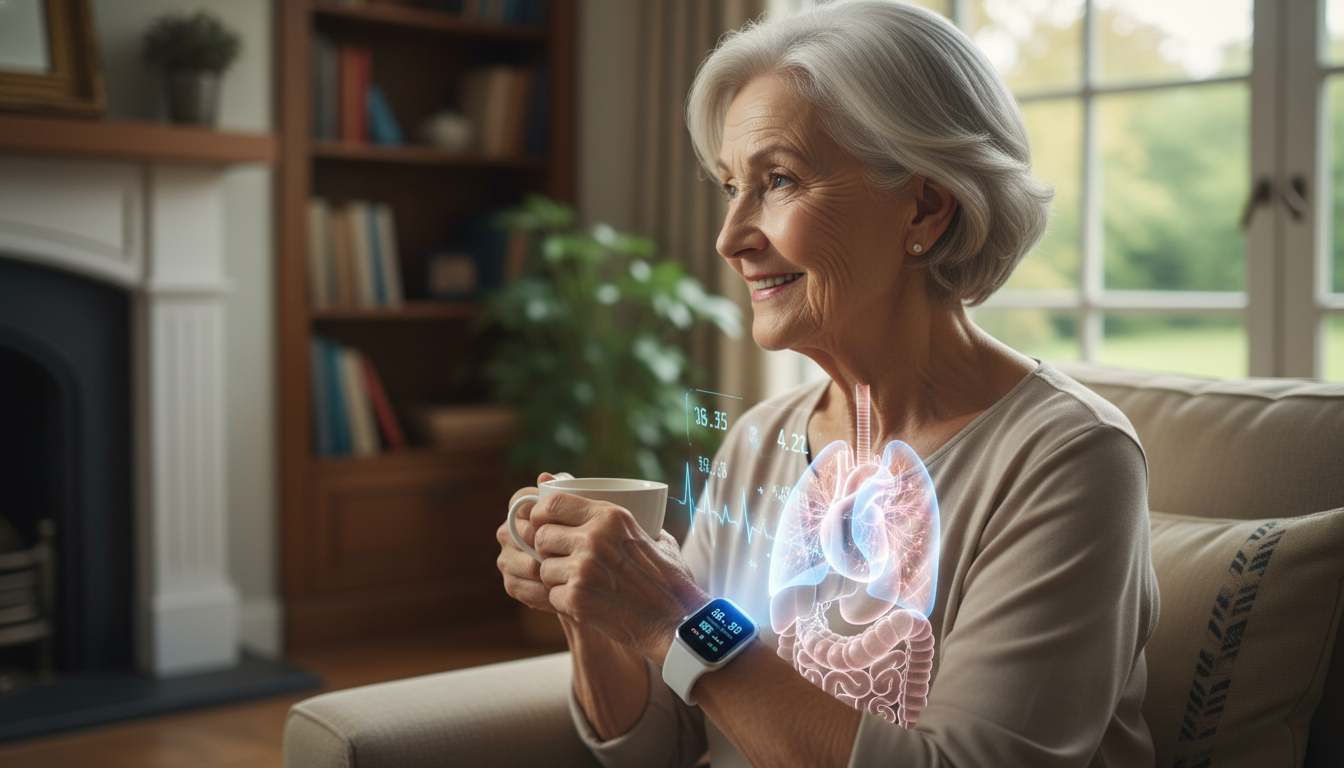


Wearable AI health technology has moved far beyond simply counting your daily steps. For seniors, these devices now offer advanced health monitoring capabilities, providing valuable insights into overall well-being. You can access detailed information about your body, helping you and your caregivers make more informed decisions about your health.
Key Takeaways
- Wearable AI health devices offer more than just step counting; they provide detailed health insights.
- Advanced metrics include heart rate variability, oxygen levels, and sleep quality.
- Smartwatches designed for seniors often feature ECG capabilities and continuous health tracking.
- These tools help in proactive health management and can offer peace of mind.
- Selecting the right device involves considering specific health needs and ease of use.
The Evolution of Wearable AI Health
Originally, many thought of wearables as basic fitness trackers. These early devices mainly focused on activity levels and basic calorie burn. However, with the integration of artificial intelligence (AI) and more sophisticated sensors, these tools have transformed. Today, wearable AI health devices can analyze complex biological signals, giving you a much deeper understanding of your body's functions. This shift means you can now monitor aspects of your health that were once only available in clinical settings.
Advanced Monitoring: Beyond Basic Tracking
Modern wearable AI health devices provide detailed data on several key health indicators. These metrics go beyond simple heart rate checks, offering a more complete picture of your physiological state.
Heart Rate Variability
Your heart rate variability (HRV) measures the time difference between your heartbeats. It is not just about how fast your heart beats, but how much the timing changes. A higher HRV often suggests your body is adaptable and less stressed, while a lower HRV can sometimes point to stress or other health issues. Wearables can track this consistently, giving you a trend over time.
Oxygen Saturation Levels
Monitoring your oxygen saturation, or SpO2, tells you how much oxygen your red blood cells are carrying. This is important for understanding your respiratory and circulatory health. Low oxygen levels can indicate various health concerns, especially during sleep. Wearables can provide continuous health tracking of these levels, alerting you to potential problems.
Sleep Quality Analysis
Sleep is fundamental to good health, especially for seniors. Advanced wearables do more than just record how long you sleep. They break down your sleep into different stages- light, deep, and REM sleep. They also look for disturbances, like waking up, and can even detect breathing irregularities. This detailed analysis helps you understand your sleep patterns and identify areas for improvement.
Smartwatches for Seniors: A Closer Look
Many modern smartwatches are designed with seniors in mind, offering features that prioritize health and safety. These devices combine convenience with powerful monitoring capabilities.
ECG Wearables for Heart Health
Some smartwatches for seniors come equipped with an electrocardiogram (ECG) function. This allows you to take an ECG reading directly from your wrist. An ECG measures the electrical activity of your heart and can detect certain heart rhythm problems, like atrial fibrillation. This feature provides peace of mind and allows for early detection of potential heart conditions.
Continuous Health Tracking Benefits
The ability of wearable AI health devices to offer continuous health tracking is a significant advantage. This means:
- Proactive Health Management: You can identify subtle changes in your health trends before they become serious problems.
- Emergency Alerts: Many devices can detect falls or sudden changes in vital signs and automatically alert emergency contacts.
- Medication Reminders: Some wearables can remind you to take your medications at the correct time.
- Activity Monitoring: While beyond step counting, they still track activity, encouraging you to stay active safely.
Choosing the Right Wearable AI Health Device
When selecting a wearable AI health device, consider your individual needs and preferences.
- Ease of Use: Look for devices with clear displays and simple interfaces.
- Specific Health Concerns: If you have a particular health condition, choose a device that monitors relevant metrics. For example, if you have heart concerns, prioritize ECG wearables.
- Battery Life: A longer battery life means less frequent charging.
- Comfort: The device should be comfortable to wear for long periods.
- Integration: Consider how well the device integrates with other health apps or your doctor's systems.
Frequently Asked Questions
What is wearable AI health?
Wearable AI health refers to electronic devices worn on the body that use artificial intelligence to monitor and analyze various health metrics. These devices provide insights into your physical well-being.
How do wearable AI devices help seniors?
These devices assist seniors by offering continuous health tracking, fall detection, medication reminders, and advanced monitoring of vital signs like heart rate, oxygen levels, and sleep quality.
Can wearable devices detect heart problems?
Yes, some advanced wearable AI health devices, often referred to as ECG wearables, can take an electrocardiogram (ECG) reading. This can help detect certain heart rhythm abnormalities, such as atrial fibrillation.
Are smartwatches for seniors easy to use?
Many smartwatches for seniors are specifically designed with larger screens, simpler menus, and fewer complex features to make them user-friendly.
What is continuous health tracking?
Continuous health tracking means the device constantly monitors your health metrics throughout the day and night. This provides a complete picture of your health trends rather than just snapshots.


