

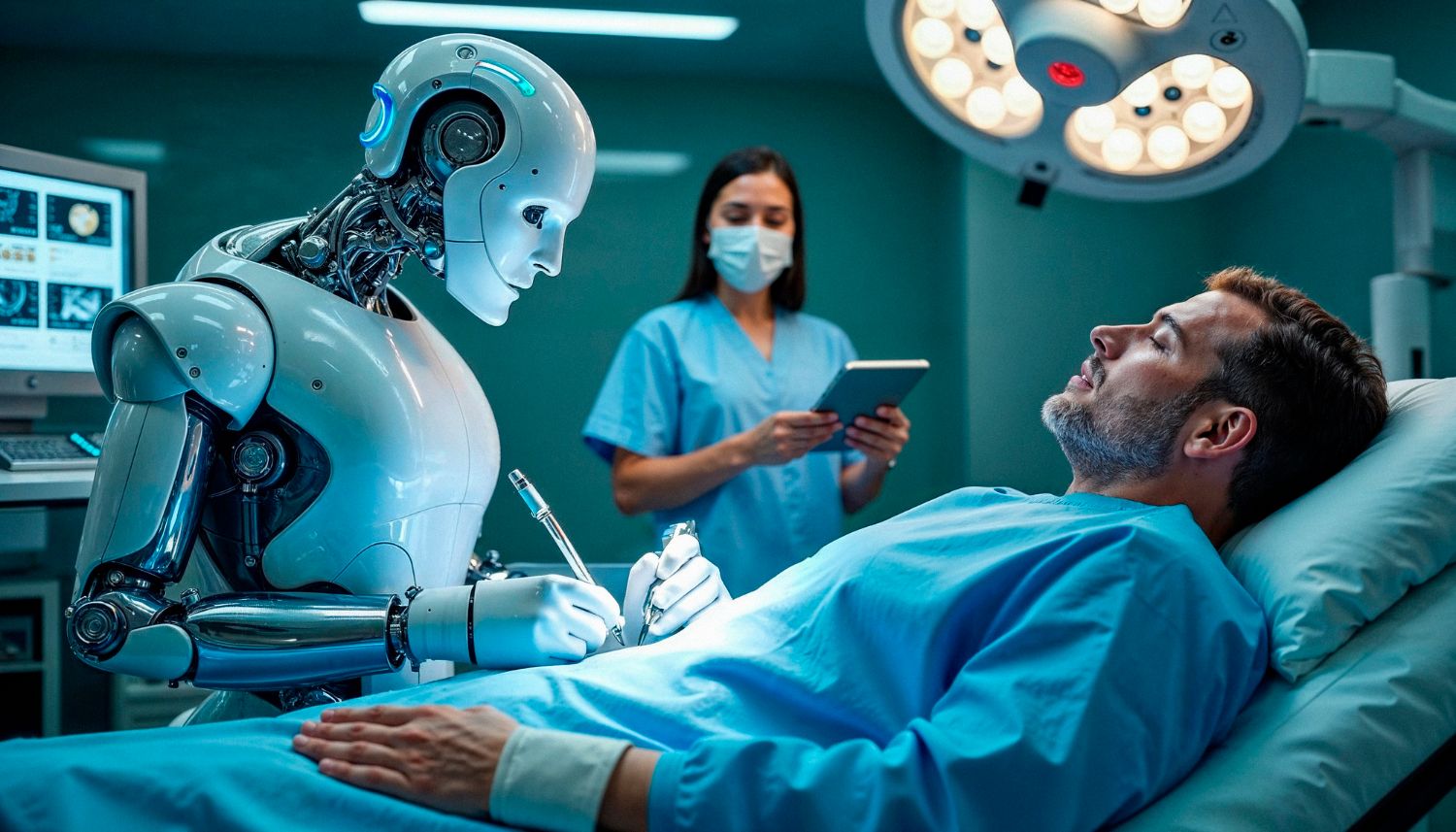


The landscape of healthcare is shifting dramatically. Technology is no longer a tool reserved for back-office operations; it is becoming an active participant in patient care. For university students training for careers in nursing and allied health, understanding and interacting with Artificial Intelligence (AI) and robotics is quickly becoming a foundational requirement, not just an advantage.
The future hospital setting will rely on collaboration between skilled professionals and sophisticated automated systems.
This transformation is particularly relevant in the context of On-the-Job Training (OJT) and practical skills development. Training programs must adapt now to prepare students for a world where robotic systems handle routine tasks, granting nurses more time for direct, high-value patient interaction.
🤖 The Rise of Nursing Robotics and Automation
Healthcare robotics refers to automated machines, often guided by AI, that support medical functions. These systems are moving out of science fiction and into everyday clinical settings. Their primary function is not to replace human caregivers, but to supplement their capabilities, reducing physical strain and improving operational quality.
One significant area of impact is automation. Many repetitive, sometimes tedious, and physically demanding tasks previously performed by nurses are now being delegated to robotic systems. This includes the transport of supplies, linens, and even laboratory samples across large hospital campuses. Robots equipped with advanced sensors can autonomously move through hallways, avoiding obstacles and delivering items precisely where they are needed.
The benefits of this type of automation are clear: better efficiency in hospital operations and a decrease in the amount of walking and physical effort required of nursing staff. This directly addresses issues of nurse burnout and job satisfaction, allowing professionals to dedicate their mental and physical energy to critical patient-centric duties.
🩺 Robots in Direct and Indirect Patient Support
While some robotic tasks are purely logistical, others directly impact the quality and safety of patient care.
Medication Administration
Medication Administration is a field seeing significant transformation. Automated systems can manage inventory and dispense medications with a high degree of accuracy, minimizing the chance of human error. Though a human nurse will always be the final checkpoint before medication reaches the patient, these robotic aids serve as crucial support in the complex process of dispensing and tracking pharmaceuticals.
Physical Assistance
Physical Assistance is another frontier. While full-scale patient interaction remains a human domain, robots are beginning to assist with tasks that require significant physical strength. This might involve supporting patient movement, repositioning individuals to prevent bedsores, or helping with rehabilitation exercises under a nurse's guidance. The goal is to lessen the physical burden on caregivers while maintaining patient comfort and safety.
Disinfection and Hygiene
Beyond direct support, the need for stringent hygiene means disinfection robots are a common sight. These systems, often using UV light or specialized cleaning agents, can systematically and thoroughly sanitize patient rooms and operating theaters. This provides a measurable improvement in infection control, adding another layer of patient security.

💡 Acquiring Future Skills: What Students Need to Master
The integration of AI and robotics means that the definition of "practical skills" for a nursing student must expand. It is no longer enough to be proficient only in traditional hands-on care. Students must develop Future Skills that allow them to work competently alongside advanced technology.
- Technological Fluency: Students must be comfortable interacting with various interfaces and operating systems. This involves learning how to program or task a robot, understand error messages, and perform basic troubleshooting. Their training should include simulated scenarios where they manage robotic equipment.
- Data Interpretation and AI Outputs: AI systems generate large amounts of data, whether it’s predicting patient deterioration or flagging deviations in vital signs. The modern nurse must be able to read, interpret, and respond quickly to these algorithmic outputs, merging them with their clinical judgment. Training should focus on critical thinking based on data provided by automated monitoring systems.
- Maintenance and Supervision: Nurses won't be robotics engineers, but they will be supervisors of technology. They must be trained on protocols for checking the functioning, calibration, and safety of the automated tools they work with. This includes knowing when a machine needs servicing and how to safely override or shut down a system in an emergency.
- Ethical and Communication Practice: The presence of robots changes the dynamics of patient interaction. Students must be trained to communicate clearly with patients about the technology—explaining what the robot does, ensuring patients are comfortable, and maintaining the human connection that is the core of healthcare. Ethical considerations around data privacy and automated decision-making must also be addressed in depth.
🎯 Redefining the Nurse’s Role
Some fear that automation diminishes the role of the human nurse. In reality, it refines and strengthens it. By taking over tasks that require only efficiency and repetition, AI and robotics allow nurses to focus on areas where human empathy, complex judgment, and emotional intelligence are irreplaceable.
The nurse becomes a coordinator of care, a critical thinker, and the primary source of comfort and human connection. The future of training is about teaching students to manage complex systems and dedicate their newly freed time to difficult diagnostic assessments, patient advocacy, and providing personalized, compassionate care.
In OJT settings, universities and hospitals should prioritize rotation placements that directly expose students to these technologies. Hands-on experience with medication delivery robots, sanitation units, and advanced monitoring systems during their schooling is the most direct path to graduating professionals who are ready for the hospital floor of the future. This preparedness will guarantee that graduates are not only competent caregivers but also technologically capable leaders in the modern healthcare profession.


