

Key Takeaways
- Hospital readmissions are a significant issue in Australia, affecting patient health and healthcare costs.
- Effective clinical communication is central to reducing these readmissions.
- Tools like ISBAR provide a structured way to share important patient information.
- Clear communication during clinical handover and patient transfer helps prevent adverse events.
- Governa AI offers solutions to improve communication within healthcare settings.
Introduction
Hospital readmissions are a serious concern in Australia's healthcare system. When a patient returns to the hospital shortly after being discharged, it often signals a problem with their initial care or the transition back home. One of the most powerful ways to cut down on these readmissions is through strong clinical communication. This article looks at how clear, consistent communication helps keep patients safe and healthy after leaving the hospital.
The Challenge of Hospital Readmissions in Australia
You might wonder why so many patients return to the hospital after they leave. Sometimes, it is due to complications from their illness. Other times, it is because they did not fully understand their discharge instructions, or there was a gap in communication between their care providers. These readmissions can lead to:
- Worse health outcomes for you and other patients.
- More stress for you and your family.
- Higher costs for the healthcare system.
The Australian Commission on Safety and Quality in Health Care provides guidance on how to improve these transitions. You can find more information on their work regarding transitions of care at their website.

Why Clinical Communication Matters
Good clinical communication means that all healthcare professionals involved in your care-doctors, nurses, specialists, and even allied health staff-talk to each other clearly and share the right information at the right time. When communication breaks down, it can lead to:
- Missed information about your condition.
- Errors in medication or treatment plans.
- A lack of understanding about your care instructions after discharge.
When communication is effective, you receive better, safer care, and your chances of needing to return to the hospital go down.
Tools for Better Clinical Communication
To make communication more reliable, healthcare teams use specific tools and methods. These tools create a standard way for information to be shared, reducing the chance of mistakes.
The ISBAR Tool for Clear Handovers
One widely used tool is ISBAR. This is a simple framework that helps healthcare professionals give clear and concise updates about a patient's condition. ISBAR stands for:
- Identification: Who are you, and who is the patient?
- Situation: What is the current problem?
- Background: What is the relevant history?
- Assessment: What do you think is happening?
- Recommendation: What do you suggest needs to happen next?
Using ISBAR helps make sure that during a clinical handover, no important details are missed.
Preventing Adverse Events Through Communication
Adverse events are unexpected incidents that cause harm to a patient. Many of these events can be prevented with good communication. For example:
- If a nurse clearly tells a doctor about a change in your condition, the doctor can act quickly.
- If a pharmacist explains medication side effects to you and your doctor, it reduces the risk of problems.
- If all team members understand your allergies, it prevents you from receiving harmful treatments.
Clear communication acts as a safeguard, protecting you from potential harm.
Improving Clinical Handover and Patient Transfer
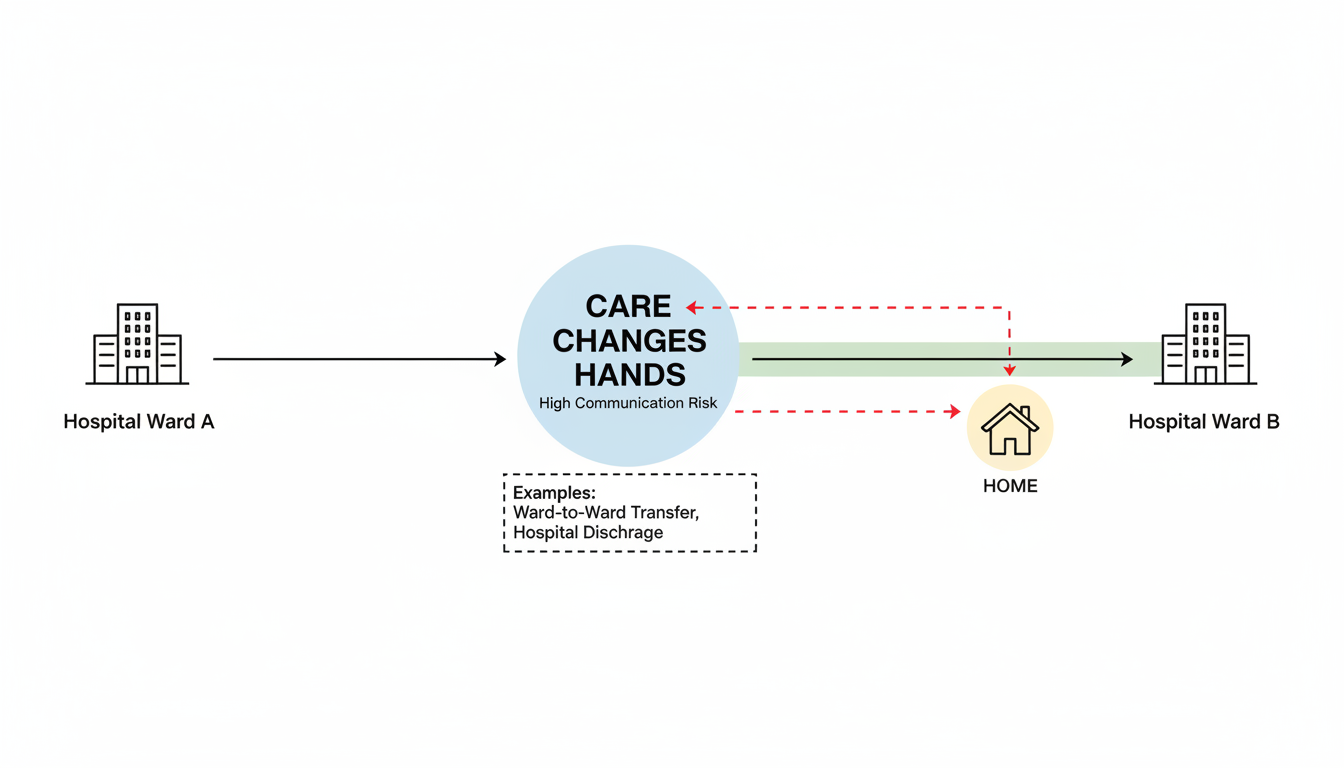
The points where your care changes hands are especially risky for communication breakdowns. These include when you move from one hospital ward to another, or when you leave the hospital to go home.
Structured Handover Processes
A clinical handover is when responsibility for your care passes from one healthcare professional to another. This often happens at the end of a shift or when you move to a different part of the hospital. Structured handover processes include:
- Using tools like ISBAR.
- Giving time for questions and answers.
- Making sure key information is written down and accessible.
These steps help ensure that the next person taking care of you has all the necessary facts.
Communication During Patient Transfer
When you are moved from one facility to another, or from the hospital to your home, this is called a patient transfer. During this time, it is vital that:
- Your medical records are sent ahead to the next care provider.
- Your family or carers receive clear instructions on how to look after you.
- You understand your follow-up appointments and medication schedule.
Poor communication during a patient transfer can lead to delays in care, wrong treatments, or you not knowing what to do next.
The Role of Governa AI
Governa AI understands the importance of effective clinical communication in reducing hospital readmissions. We offer solutions designed to:
- Make information sharing easier and more reliable for healthcare teams.
- Support structured communication methods.
- Help monitor patient progress after discharge.
Our tools aim to improve how healthcare professionals communicate, which in turn leads to better care for you.
Frequently Asked Questions
What causes hospital readmissions?
Readmissions can be caused by many factors, including complications from illness, not understanding discharge instructions, or problems with communication among healthcare providers.
How does ISBAR help in healthcare?
ISBAR provides a standard way for healthcare professionals to share important patient information clearly and quickly, especially during handovers. This helps prevent misunderstandings and errors.
What is a clinical handover?
A clinical handover is the process of passing responsibility for a patient's care from one healthcare professional to another, often at the end of a shift or when moving a patient to a different department.
Why is communication important during patient transfer?
Good communication during patient transfer makes sure that all your medical information moves with you, and that you and your carers know what to do next for your care, helping prevent problems.
Conclusion
Reducing hospital readmissions is a goal that benefits everyone-patients, families, and the healthcare system. Strong clinical communication is the foundation for achieving this goal. By using structured tools, improving handovers, and ensuring clear information during transfers, we can work towards a future where fewer patients return to the hospital unnecessarily. Governa AI is here to support healthcare organisations in making these vital communication improvements.