



Offline aged care policy access stops being a theoretical concern the first time a regional facility loses its connection mid-shift. Storms take out services. Fixed wireless degrades in bad weather. Rural exchanges fail and are restored on a timeline set by the provider rather than the facility. Meanwhile residents still need care, staff still need answers, and the obligation to follow documented procedure does not pause because the network did.
Metropolitan facilities plan for connectivity loss as an unlikely event. Regional and remote facilities know it as a recurring one. That difference should shape how policy access is designed, and often does not, because systems get specified by people working in well connected offices.
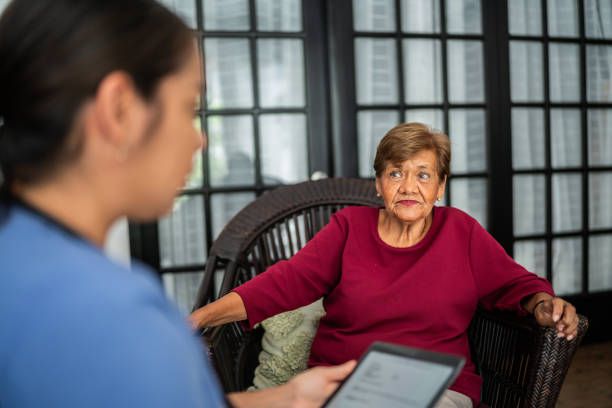
[IMAGE: offline aged care policy access - regional facility staff working with locally held policy documents during an outage, alt text "offline aged care policy access during connectivity loss"]
Be precise about what offline actually means
Vague reassurance about offline capability causes more harm than a clearly stated limitation, because staff plan around what they believe the system does.
Different systems behave very differently when a connection drops. Some retain full function against locally stored content. Some retain read access to material cached from recent use, which means a worker can reach what they happened to open that morning but not what they now need. Some simply display an error.
A facility should know exactly which of these describes its own system, established by testing rather than assumption. The answer determines what the contingency has to cover, and getting it wrong means planning for a gap that does not exist while missing one that does.
The realistic position for most cloud based assistants, Ask Norma included, is partial. Recently accessed material may remain reachable. Anything requiring a live query against the full policy library will not be. Planning should start from that honest position rather than from a hope that outages will always be brief. What Ask Norma removes is the everyday friction of finding policy when the connection is working, which is the overwhelming majority of the time. What it does not remove is the need for a deliberate plan covering the hours when it is not.
The short list that must never be unreachable
Facilities sometimes respond to this by printing everything, which produces a binder nobody maintains and nobody trusts within six months. A better approach is to accept that only a small number of documents are genuinely time critical during an outage.
Emergency and evacuation procedures. Clinical escalation contacts and criteria. Medication emergency protocols. Incident reporting requirements. Resident-specific critical information such as allergies, resuscitation status and behaviour support plans.
That is a short list, and keeping a maintained offline copy of a short list is achievable. Keeping a maintained offline copy of the full policy library is not, and attempting it produces stale documents that are more dangerous than an honest gap, because staff may follow a superseded procedure believing it current.
Whatever form the offline copy takes, it needs an owner and a review date. An unowned offline copy decays silently, and the moment it is needed is the worst possible time to discover it is two versions behind.
Connectivity loss is a continuity event
Losing the network is a business continuity matter, not an IT inconvenience, and treating it as the latter is why it so often goes unplanned for.
The same discipline applied to power failure or water loss applies here. What stops working. What is the workaround. Who decides to invoke it. How the facility returns to normal afterwards, including what has to be reconciled.
The broader framing is set out in business continuity planning, with a documented structure in the business continuity policy template. The specific addition worth making for a regional site is a named threshold: at what point does an outage stop being an annoyance and become an event requiring the contingency to be formally invoked and recorded. Without that threshold, staff improvise for hours and the event never enters the record at all.
The documentation problem is larger than the access problem
Losing access to policy during an outage is disruptive. Losing the ability to document is the greater risk, and it receives less attention.
Care continues during an outage, which means events occur that must be recorded. If the system is unavailable, staff write on paper, and paper entries are transcribed later or not at all. Transcription introduces delay, error and omission, and in practice some entries never make it across. The ones most likely to be lost are the small observations, which are exactly the entries that establish a pattern when something later goes wrong.
Three things reduce this materially.
Keep a paper form that mirrors the digital fields, so transcription is mechanical rather than interpretive. A worker filling a blank page will record different things than the system would have prompted for.
Timestamp entries as they are made, not when transcribed, and make the distinction visible in the final record. An entry recorded at 14:10 and transcribed at 19:30 should show both.
Assign transcription to a named person when service returns, as a defined task rather than something that happens if someone remembers at the end of a long shift.
Device realities in regional facilities
Regional sites are more likely to run older devices, fewer of them, and shared between staff. This compounds the connectivity problem. A device slow to sync holds less when the connection goes, and a shared device may hold material cached by a different worker for different residents.
Understanding how an assistant behaves on the hardware a facility actually has, rather than the hardware a vendor demonstrates on, is worth establishing before it matters. Norma on existing devices covers how this works on equipment already in use, which is the relevant question for a facility with no hardware refresh budget.
Test it before you need it
The only reliable way to know what happens during an outage is to simulate one. Disconnect during a quiet period, with the team informed, and observe what staff can and cannot reach.
The result is usually surprising in both directions. Something assumed unavailable turns out to work. Something assumed safe turns out to be unreachable. Either way the discovery costs nothing during a planned test and a great deal during a real event.
Run the test with the staff who will actually face it, not with a manager who knows the system well. The question is not whether the system can do something, it is whether the person on shift at the time can make it do that thing without help.
Connectivity is one element of a broader set of challenges regional providers face, alongside workforce access and distance from support services. Those interactions are explored in rural aged care compliance, and connectivity planning works best understood as part of that wider picture rather than as a standalone technical issue.
Frequently Asked Questions
Q: Can staff access facility policies without an internet connection?
It depends entirely on the system, and facilities should test rather than assume. Some retain access to recently viewed material, some retain locally stored content, some become unavailable. Establish which applies to yours before an outage rather than during one.
Q: What can Ask Norma do during a connectivity outage?
Live querying of the full policy library requires a connection. Recently accessed material may remain reachable depending on the device. The practical approach is to treat Ask Norma as removing everyday friction when connected, while maintaining a deliberate offline plan for the hours when it is not.
Q: Which documents should be kept available offline?
A deliberately short list: emergency and evacuation procedures, clinical escalation contacts and criteria, medication emergency protocols, incident reporting requirements, and resident-specific critical information. A short maintained list beats a complete stale one.
Q: How should care be documented during an outage?
On paper forms mirroring the digital fields, timestamped as events occur, with transcription assigned to a named person once service returns. Recording the actual time of the event rather than the time of transcription matters for the integrity of the record.
Q: Is connectivity loss a business continuity matter or an IT matter?
Business continuity. It affects care delivery and documentation obligations, so it warrants the same planning discipline as any other service interruption, including a defined threshold for invoking the contingency.
Q: How often should offline arrangements be tested?
At least annually, and after any change to systems or devices. Test with the staff who will face a real outage rather than with a manager who knows the system well.


