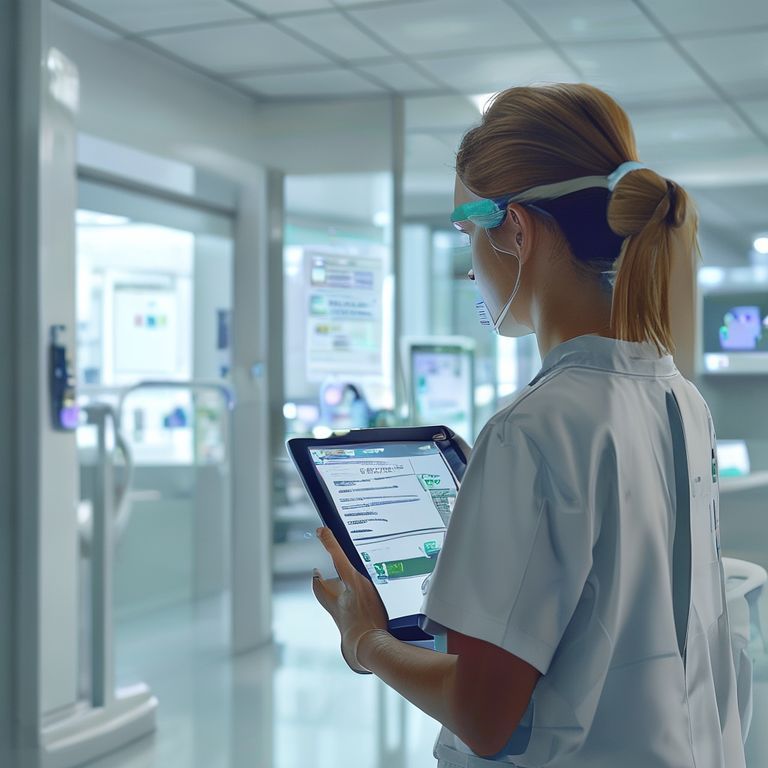


You have likely spent countless hours in a classroom memorizing anatomy, pharmacology, and care models. The textbooks are logical, and the case studies have clear answers. However, walking onto a hospital ward or into an aged care facility for the first time feels very different. The environment is loud, the pace is fast, and real patients rarely match the textbook descriptions perfectly.
This disconnect is known as the theory-practice gap. It is one of the biggest challenges you will face as a nursing student or educator. Fortunately, modern nursing education tools are advancing rapidly to help solve this problem. Artificial Intelligence (AI) is no longer just a futuristic concept; it is a practical resource that helps you connect academic concepts to real-world application before you ever touch a patient.
Key Takeaways
- The Gap is Real: Transitioning from classroom learning to clinical environments creates anxiety and confusion for many students.
- AI is the Bridge: New technology translates abstract regulations into practical, daily care tasks.
- Safe Failure: Digital tools allow you to practice decision-making without risking patient safety.
- Standards Matter: Understanding the "why" behind compliance is easier when AI maps policies to specific care standards.
- Confidence Builder: Familiarity with documentation and reasoning tools reduces stress during actual placements.

The Reality of the Theory-Practice Gap
The theory-practice gap happens when the idealized version of nursing taught in schools does not match the complex reality of healthcare settings. In the classroom, you learn the "gold standard" of care. In a clinic, you face staffing shortages, time constraints, and complex patient needs that force you to adapt.
This gap creates several specific challenges for students:
- Idealism vs. Realism: You learn strictly defined procedures, but clinical staff often use shortcuts or modified techniques.
- Abstract Concepts: Regulations and standards sound like legal jargon until you see how they affect a resident's breakfast or shower routine.
- Fear of Error: The pressure to be perfect makes students hesitant to act, which hinders learning.
Bridging theory and practice is not about lowering standards. It is about helping you understand how to apply high standards in a messy, real-world environment.
How Nursing Education Tools Are Changing
Historically, nursing education relied heavily on lectures, textbooks, and static mannequins. While these are necessary, they lack the interactive nature of human healthcare. You might know how to insert a catheter, but do you know why a specific patient might refuse it, or how to document that refusal according to the law?
Technology has moved through three distinct phases:
- Passive Learning: Books and diagrams.
- Simulation: Low-fidelity mannequins and role-playing with peers.
- Intelligent Interaction: AI-driven platforms that respond to questions, simulate scenarios, and provide feedback.
The latest tools do not just test your memory. They test your judgment. They allow you to ask questions that you might be too afraid to ask a busy preceptor.
Connecting Abstract Standards to Real Care
One of the hardest parts of nursing is understanding compliance and regulatory standards. In aged care, for example, the Strengthened Aged Care Quality Standards are the rules that govern every action a facility takes. Reading these standards in a PDF document can feel dry and disconnected from daily work.
This is where AI becomes a powerful translator. Specifically, using the "standards version" of platforms like Governa helps you see the connection between a boring rule and a human being.
Making Compliance Click
When you use an AI tool trained on specific quality standards, you can move from "what is the rule" to "how do I do this."
Imagine you are studying Standard 1, which focuses on consumer dignity and choice. In a textbook, this is a definition. In practice, it is a negotiation.
Using the standards version of an AI assistant, you can input a scenario: "A resident with dementia is refusing their morning medication. How does Standard 1 apply here?"
The AI helps you bridge the gap by explaining:
- The Right to Risk: The resident has the right to make choices, even bad ones.
- The Responsibility of Care: You must document that you explained the risks to the resident.
- The Evidence: You need to show you tried alternative approaches before accepting the refusal.
This turns a vague concept like "dignity" into a clear set of clinical actions. It helps you understand that compliance is not just paperwork; it is the framework for safe care.
Enhancing Clinical Placement Readiness
Clinical placement is often the most stressful part of a nursing degree. You are entering a professional workplace where your actions have real consequences. Clinical placement readiness is about more than just having a clean uniform and a stethoscope. It is about mental and professional preparation.
AI tools help prepare you for the unpredictable nature of the floor.
Simulating Documentation
Documentation is a massive part of nursing, yet it is often the skill students practice the least. Poor documentation can lead to legal issues and poor patient outcomes.
AI tools can simulate the reporting process. You can practice writing progress notes and receive instant feedback on whether your language was objective, accurate, and compliant.
- Objective vs. Subjective: Learning to write "Patient was observed crying" instead of "Patient was sad."
- Connecting to Standards: valid notes often need to reference specific care plan goals.

Accessing Information Quickly
On the floor, you do not have time to flip through a textbook. You need answers fast. Learning how to query digital systems is a skill in itself.
When students practice withAI for aged care, they learn to navigate complex resident scenarios without risking patient safety. This familiarity with digital assistance means that when you eventually encounter electronic health records (EHR) or clinical decision support systems in a hospital, you will not be overwhelmed. You will already know how to ask the right questions to get the data you need.
Developing Critical Nursing Skills
Technical skills, like giving an injection, are important. However, critical thinking skills are what keep patients safe. Nursing skills involve taking in information, analyzing it, and deciding on a course of action.
AI supports this development by acting as a Socratic tutor. Instead of just giving you the answer, advanced nursing education tools can guide you through the reasoning process.
Scenario-Based Learning
Consider a scenario where a patient's blood pressure drops. A static case study asks, "What do you do?" and you select "Call the doctor."
An AI interaction goes deeper:
- Assessment: The AI might ask, "What other signs are you looking for before you call?"
- Intervention: It might prompt, "Is there a standing order you should check first?"
- Reflection: After the scenario, it reviews your steps against clinical best practices.
bridging Theory and Practice in Aged Care
Aged care is a highly regulated environment. The theory teaches you to treat every resident as an individual. The practice often feels like an assembly line due to time pressure.
AI helps bridge this by showing how efficiency and person-centered care can coexist. By using tools that map policies to standards, you learn that following the policy is the way to deliver person-centered care efficiently.
For example:
- Theory: Provide individualized meals.
- Gap: Kitchen is busy; everyone gets the same tray.
- Bridge: AI tool explains how to quickly check a resident's care plan for preferences and allergies, ensuring the "individualized" standard is met even during a rush.
Overcoming Anxiety with Safe Practice
Anxiety is a major barrier to learning. When your brain is in "fight or flight" mode, it is hard to absorb new information. Clinical placements are high-anxiety environments.
AI offers a "safe sandbox." It is a place where you can be wrong.
- No Judgment: You can ask "stupid" questions without fear of a facilitator rolling their eyes.
- Repetition: You can run through a complex wound care procedure mentally ten times in a row until you feel steady.
- Immediate Feedback: You do not have to wait for a grade. You know instantly if your approach was correct.
This psychological safety allows you to enter your clinical placement with a foundation of confidence. You are not seeing these scenarios for the first time; you have already worked through them virtually.
Improving Communication Skills
Talking to patients and families is intimidating. What if they ask a question you cannot answer? What if they are angry?
AI role-playing can help you practice these conversations. You can simulate explaining a care plan to a confused relative or de-escalating a situation with an upset resident. The AI can analyze your responses for empathy, clarity, and professionalism.
Frequently Asked Questions
What are the most effective nursing education tools today?
The most effective tools combine simulation with feedback. This includes high-fidelity mannequins, virtual reality (VR) headsets for anatomy, and AI-driven platforms that help with clinical reasoning and compliance mapping.
How does AI help with clinical placement readiness?
AI helps by familiarizing students with decision-making processes and documentation before they reach the hospital. It reduces the shock of the new environment by allowing students to practice handling realistic scenarios on a screen first.
Can AI replace nursing educators?
No. AI is a tool that supports educators. It handles the repetitive practice and basic knowledge retrieval, allowing human educators to focus on teaching complex emotional intelligence, physical techniques, and professional ethics.
Why is the theory-practice gap a problem?
It causes stress for students, can lead to high dropout rates, and may result in errors during the first year of practice. Closing this gap makes sure that new nurses are safe, competent, and confident from day one.
How do I access standards-based AI tools?
Many educational institutions are beginning to partner with software providers that offer educational licenses. Check with your facility's library or clinical simulation center to see what digital resources are available to you.
Preparing for the Future of Healthcare
The healthcare landscape is shifting. Technology is becoming a team member, not just a tool. By embracing nursing education tools that utilize AI, you are doing more than just studying for a test. You are preparing for a career where collaboration with technology will be the norm.
The ability to bridge the gap between classroom theory and clinical reality is what separates a student from a professional. Tools like the standards version of Governa allow you to see the invisible lines connecting a textbook policy to a smiling resident.
You have the opportunity to enter the workforce with a deeper understanding of compliance and care than any generation before you. Use these tools to ask questions, test your knowledge, and build the confidence you need to provide exceptional care. The gap is closing, and you are ready to cross it.