



Key Takeaways
- Medication errors in aged care facilities are a serious concern that requires effective management.
- Manual incident reporting processes can lead to delays and inaccuracies.
- Automated Incident Classification improves the speed and accuracy of incident response.
- Advanced Incident Management systems provide a structured approach to prevent future errors.
- Systematic Significant Incident Reports (SIRs) are essential for compliance and continuous improvement.
Introduction
The reality of medication errors in aged care facilities across Australia presents a significant challenge. These errors can have serious effects on residents' health and well-being. When an error happens, the immediate goal is to minimize its impact and learn from the event to prevent future occurrences. This requires a robust system that can quickly and accurately classify incidents.
This article explains how Automated Incident Classification and Advanced Incident Management systems, like those offered by Governa AI, help streamline your response and reporting after a medication error. These tools are designed to reduce human error and improve safety in aged care settings.
The Problem with Manual Incident Management
Traditional, manual methods for managing incidents in aged care often come with several risks.
- Risk of Human Error: When staff must manually record, classify, and report incidents, there is a higher chance of mistakes. This can include incorrect details, missed steps, or delays in reporting.
- Delayed Response and Reporting: Manual processes are often slower. This means that critical information about a medication error might not reach the right people quickly enough, which can delay necessary actions.
- Importance of Accurate Significant Incident Reports (SIRs): Australian aged care providers must submit accurate and timely Significant Incident Reports (SIRs). If your manual system is slow or inaccurate, it can affect your ability to meet these important reporting requirements. This can lead to compliance issues.
Introducing Advanced Incident Management (Governa's Solution)
Advanced Incident Management refers to a modern, systematic approach to handling all types of incidents within your facility. Governa AI offers solutions that move beyond basic reporting to provide a complete framework for incident handling.
Key features and benefits of an Advanced Incident Management system include:
- Centralized Reporting: All incidents, including medication errors, are recorded in one place. This makes it easier to track and analyze data.
- Structured Workflows: The system guides your staff through each step of the incident response process, from initial reporting to resolution.
- Improved Communication: Information is shared quickly and accurately among relevant staff members and departments.
- Data Analysis: The system collects data that helps you identify patterns and root causes of incidents, allowing you to address systemic issues.
- Compliance Support: It helps you meet regulatory requirements for incident reporting and management. Our AI compliance assistant can further support your facility in understanding and adhering to complex regulations.
Eliminating Human Error with Automated Incident Classification
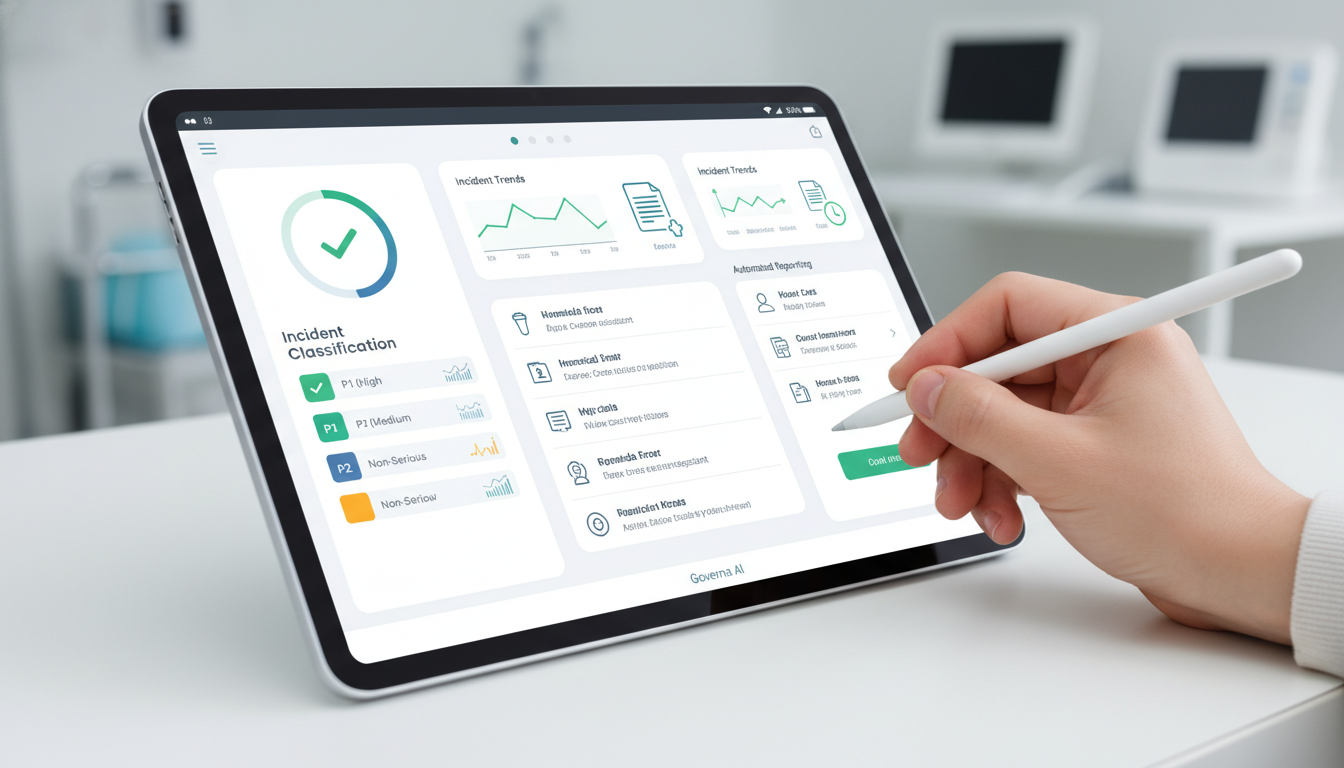
Automated Incident Classification is a core part of Advanced Incident Management. This technology uses smart algorithms to assess reported incidents and assign them a classification level automatically.
Here is a breakdown of how it works:
- Detailed Explanation: When an incident is reported, the system analyzes the provided information. It uses predefined rules and learning models to decide the severity and type of the incident without human intervention.
- Breakdown of Classification Levels: Incidents are typically classified into categories such as:
- P1 (High Priority): Serious medication errors requiring immediate action, potentially involving harm to a resident.
- P2 (Medium Priority): Errors that did not cause severe harm but require investigation and corrective action.
- Non-Serious: Minor errors or near misses that still need to be recorded for learning purposes.
- How Automation Ensures Rapid, Accurate Response:
- Speed: Classification happens instantly, meaning your team knows the severity of an incident right away.
- Accuracy: The system applies consistent rules, reducing the chance of human judgment errors that can happen in manual classification. This also contributes to the security of your incident data.
- Resource Allocation: High-priority incidents are flagged for urgent attention, helping you allocate your resources effectively.
Systematic Significant Incident Reports (SIRs)
Significant Incident Reports (SIRs) are a critical part of maintaining compliance and safety standards in Australian aged care. They provide official documentation of serious incidents and are used by regulatory bodies to monitor the quality of care.
- Role of SIRs: SIRs are not just about reporting; they are about accountability and continuous improvement. They help identify areas where practices need to change to prevent similar incidents.
- How Automated Systems Support Systematic and Timely SIRs:
- Structured Data Collection: Automated systems guide staff to collect all necessary information for a SIR, making sure no important details are missed.
- Automated Reminders: The system can send alerts for upcoming SIR deadlines, helping you submit reports on time.
- Pre-filled Forms: Much of the information for a SIR can be automatically pulled from the incident report, reducing manual data entry.
- Audit Trails: Automated systems keep a clear record of all actions taken, which is helpful for audits and investigations.
- Minimizing Risk Through Comprehensive Reporting: By ensuring that SIRs are complete, accurate, and submitted on time, you minimize the risk of non-compliance and demonstrate your commitment to resident safety. This also integrates well with broader hazards management strategies.
Conclusion
Preventing and managing medication errors in aged care is a complex but essential task. By adopting Advanced Incident Management systems with Automated Incident Classification, you can significantly reduce human error and improve your facility's response capabilities. These systems help you streamline incident reporting, ensure accurate Significant Incident Reports (SIRs), and ultimately create a safer environment for your residents.
This systematic approach empowers your staff to focus on resident care, knowing that your incident management processes are efficient and reliable.
Book A Demo Ready to see how Governa AI can transform your incident management and help prevent medication errors in aged care? Book A Demo


