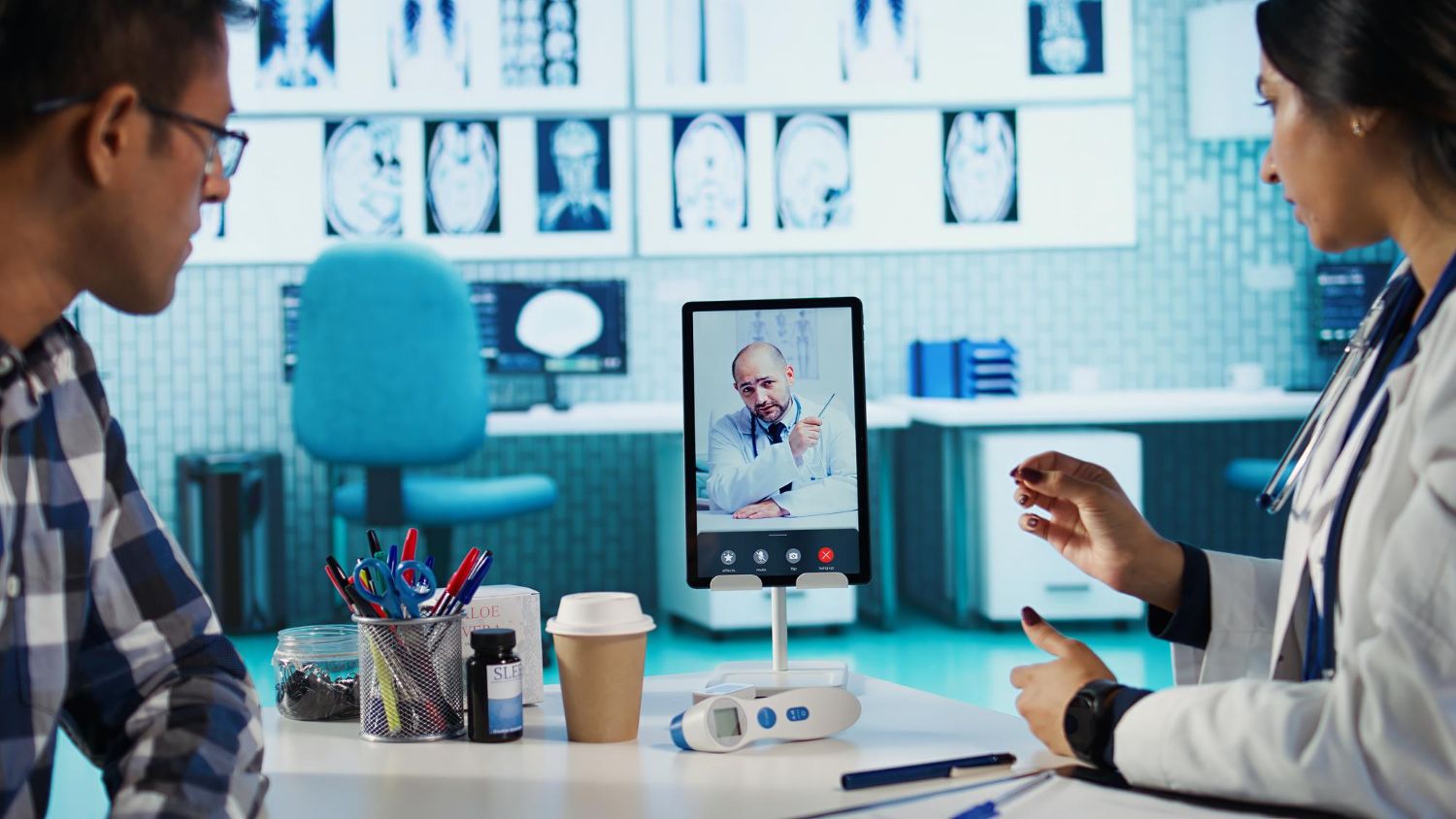


The way future doctors and nurses are trained is changing. Gone are the days when medical education relied solely on textbooks and limited hands-on opportunities. Today, Artificial Intelligence (AI) is transforming clinical skill acquisition by introducing highly realistic, adaptive training environments. This shift centers around the growing application of AI-powered Virtual Patients (VPs).
These sophisticated digital entities offer a safe, repeatable setting for students to practice a wide range of medical procedures and interpersonal skills. They bridge the gap between theoretical knowledge and real-world application, giving learners confidence before they interact with actual people needing care.
What Are Virtual Patients?
A Virtual Patient is essentially a computer simulation designed to represent a person with a specific medical condition. Unlike static case studies, AI makes these patients dynamic. They react realistically to a student's input, much like a person would in a clinic or hospital setting.
The training experience can come in many forms:
- High-Fidelity Simulations: These typically involve detailed, graphic representations, sometimes using Virtual Reality (VR) or Augmented Reality (AR) technology. Students can practice physical tasks, such as inserting an IV line or performing a physical assessment, with feedback on their technique. Haptic technology might even be included to mimic the feel of tissue resistance.
- Interactive Scenarios: These focus heavily on clinical reasoning. Students are presented with a patient scenario and must decide on the next steps-ordering diagnostic tests, interpreting results, and deciding on a treatment plan. The AI patient’s condition evolves based on the correctness and timing of these decisions. If a student makes a mistake, the VP’s health status may worsen, showing the immediate consequences of their actions in a protected environment.
- Communication Practice: Perhaps one of the biggest benefits is the ability to train communication skills. VPs equipped with natural language processing allow students to hold genuinely conversational interactions. Students practice history-taking, explaining diagnoses, discussing sensitive topics, and showing compassion. The AI responds to natural speech patterns and evaluates the student not just on clinical facts, but also on clarity and emotional understanding, often called empathy.
The Benefits of AI in Clinical Practice Education
The integration of AI brings several specific advantages that traditional teaching methods struggle to match:
- Safety and Repeatability: In traditional training, errors can be costly or dangerous. VPs allow students to make mistakes, learn from them immediately, and try again until mastery is reached-all without risk to anyone. The ability to repeat complex or rare scenarios is invaluable.
- Adaptability and Customization: AI-driven VPs can be programmed to change their condition dynamically. If a student performs poorly, the VP can respond with signs of distress. If the student performs well, the case may introduce a complication, raising the complexity. This makes the session uniquely suited to the individual learner’s progress. The systems also allow instructors to quickly adjust settings to address specific learning gaps across a group of students.
- Objective Feedback and Assessment: One common challenge in traditional clinical education is subjective assessment. AI changes this by providing measurable, objective feedback. After a session, the system generates a detailed report. This structured analysis breaks down performance across several dimensions:
- Communication clarity and effectiveness.
- Accuracy of clinical knowledge applied.
- Appropriateness of diagnostic and treatment choices.
- The degree of compassion demonstrated during interaction.
This level of detail helps students understand exactly where they went right and, more importantly, where they need further practice.
- Accessibility and Scalability: Cloud-based VP platforms mean that high-quality, standardized learning materials can be accessed anywhere, anytime. This is especially helpful for distance learning programs or institutions with limited physical simulation facilities. It permits thousands of students to practice the same quality scenarios simultaneously.

Key Clinical Skills Developed
AI-powered simulations are designed to develop core competencies required for healthcare professionals:
- Clinical Judgment: Students learn to think systematically under pressure, interpreting patient data and arriving at correct decisions quickly.
- Critical Thinking: By presenting incomplete or misleading information, VPs teach students to dig deeper, ask the right questions, and weigh evidence before concluding.
- Communication Skills: This goes beyond simple facts. It includes listening actively, presenting information clearly to the patient, and managing challenging conversations (e.g., discussing end-of-life care or delivering a difficult diagnosis).
- Team-Based Learning: Some systems support multiplayer functionality, allowing a team of students (for example, a medical student, a nursing student, and an EMS trainee) to work together on one complex VP scenario, training interdisciplinary cooperation.
How VPs Fit into Medical Curricula
The structure of medical training can benefit from VPs at almost every stage:
- Early Years: Students can practice basic history-taking and communication skills before entering a clinical setting.
- Mid-Program: VPs introduce complex diagnostic puzzles and procedure training (like simulated surgery or emergency response scenarios) where time is a critical factor.
- Residency and Continuing Education: VPs can be used for reviewing rare conditions or ethical decision-making processes. They serve as a mechanism for maintenance of certification by requiring practitioners to stay current with medical protocols.
In summary, AI-driven virtual patients are quickly becoming a necessary component of modern medical schooling. They offer a controlled, data-driven methodology for building the competence and confidence required to serve people needing medical attention. The technology respects the learner’s need for safety while providing uncompromising realism, resulting in medical professionals who are truly ready for the demands of their occupation.