

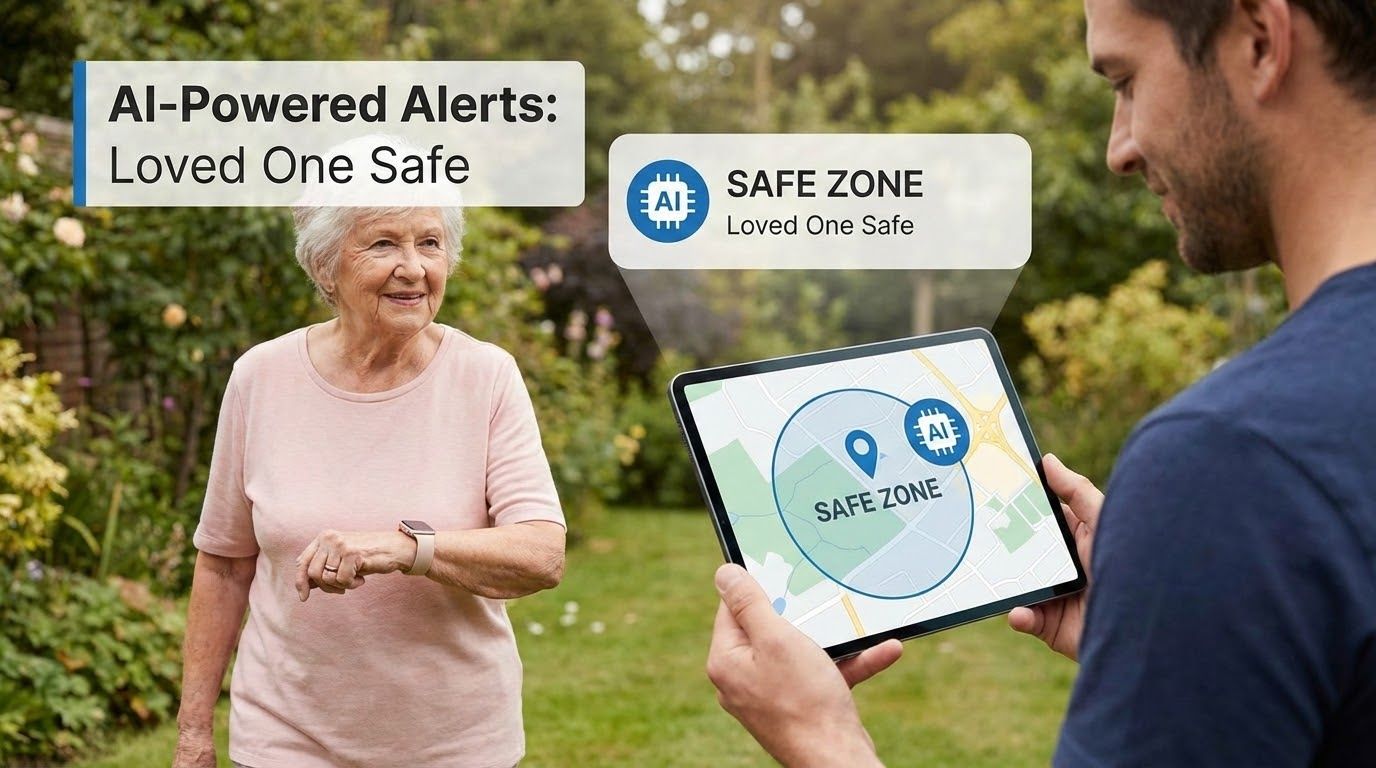


Wandering is a serious concern for families and professional caregivers of people living with Alzheimer’s disease and other forms of dementia. When a person with memory loss leaves a safe area unsupervised—often called elopement—the situation can quickly become dangerous. It is one of the most stressful challenges in dementia care, demanding constant vigilance from care staff and family members alike.
Fortunately, technology is stepping up to meet this challenge. Advances in Artificial Intelligence (AI) and location monitoring systems, like geofencing and GPS tracking, are revolutionizing how senior living communities and home caregivers maintain resident safety. These tools provide an added layer of protection, offering quicker response times and much-needed peace of mind.
Understanding the Risk: Why People with Dementia Wander
For many people, wandering isn’t a goal-oriented activity but a symptom of their condition. Confusion, restlessness, and a desire to return to a familiar place or previous routine often trigger these movements. A person may be searching for an old job, a former home, or just trying to find the restroom, but their impaired judgment makes them susceptible to harm once outside a secure location.
The statistics are sobering: up to 60% of people with dementia will wander at some point. If not found within 24 hours, up to half of those missing individuals can suffer serious injury or death due to exposure, accidents, or disorientation.
This makes preventing wandering, or intervening immediately when it starts, a priority for caregivers.
AI Wandering Detection: A Proactive Approach to Safety
Traditional methods of preventing wandering—like locked doors or physical restraints—can restrict independence and quality of life. Modern AI technology offers a respectful, non-invasive alternative that focuses on active monitoring and early warning.
AI systems work by continuously monitoring and analyzing resident movements and behaviors using specialized camera technology or sensors. These systems learn what constitutes "normal" movement patterns for an individual or within a community setting.
How AI Recognizes Risk Patterns
Instead of simply detecting a person near an exit, AI systems are trained to spot subtle behavioral changes that precede a wandering event. This might include:
- Pacing or increased restlessness: Spending unusual amounts of time walking back and forth.
- Approaching restricted areas repeatedly: Lingering near a door or window more often than usual.
- Unusual nighttime activity: Being out of bed during times when they are typically asleep.
By identifying these patterns, the AI can issue a "pre-alert" to staff before the resident even attempts to leave. This proactive capability allows caregivers to intervene gently, redirecting the person or addressing their needs (like hunger or confusion) before a full elopement attempt occurs.
This predictive power significantly reduces response time, making staff assistance timely and effective, ultimately improving the safety and well-being of seniors.
Geofencing Technology: Defining the Safe Zone
Complementing AI detection are location-based services, most notably geofencing and GPS tracking. Geofencing defines a virtual boundary around a specific physical area—like a home, a floor of a care facility, or an entire community campus.
Real-Time GPS Tracking for Dementia Patients
The foundation of geofencing is GPS (Global Positioning System) technology, often housed in wearable devices such as specialized watches or pendants with lockable straps. These devices continuously communicate the wearer’s location.
- Setting the Boundary: Caregivers use an app or monitoring station to draw a digital perimeter on a map—the geofence. This zone is the designated "safe area."
- Continuous Monitoring: The GPS tracker consistently checks if the wearer is inside this boundary.
- Instant Alerts: If the individual crosses the geofence boundary, the monitoring app immediately sends a notification to the designated caregiver or family member’s phone.
This instant alert system cuts down on search time, giving families the confidence that they will be notified right away if their loved one steps outside the safe zone. This allows for quick action, often bringing the person back to safety within minutes.
The Synergy of AI and Geofencing
While GPS and geofencing are crucial tools, they traditionally only tell you where the person is relative to the boundary. AI adds the critical element of when and why a wandering attempt might happen.
When AI and geofencing systems are integrated, they create a robust security network:
- AI for Early Warning: The AI component identifies concerning behavior before the individual reaches the door, enabling redirection and comfort.
- Geofencing for Boundary Crossing: If the individual successfully leaves the building, the GPS and geofencing system immediately trigger an alert, providing real-time location data for a rapid retrieval.
This dual system ensures a high degree of protection, addressing both the interior risk factors and the exterior safety challenge of being outside.
Benefits Beyond Safety: Independence and Quality of Life
The primary benefit of these technologies is, without a doubt, safety. However, they also play a significant role in improving the quality of life for residents and reducing the stress on caregivers.
Promoting Freedom of Movement
With reliable monitoring in place, caregivers do not need to constantly worry about restricting movement. Instead of relying on locked units, seniors can often be given access to secure outdoor courtyards or gardens within the defined geofence, fostering a sense of autonomy and well-being. This balance of security and freedom is a hallmark of person-centered care. Caregivers can feel comfortable letting residents continue their routines, knowing they will be warned if they move too far.
Reducing Caregiver Burden
The stress of continuous supervision can lead to exhaustion and burnout for both professional staff and family members. Knowing that an intelligent system is constantly watching and ready to send an alert frees up caregiver time and mental energy. Staff can spend less time on anxiety-driven observation and more time engaging in meaningful activities with residents, improving overall resident interaction.
Data Collection for Better Care
The data collected by AI systems about movement patterns can offer caregivers important insights into a resident’s health. Changes in wandering behavior, for instance, might indicate an underlying issue like a urinary tract infection, pain, or increased anxiety. Analyzing this behavioral data aids in early detection and better understanding of how cognitive abilities may be changing over time, leading to adjustments in the care plan for maximum comfort.
Choosing the Right Technology
For families or facilities considering these solutions, several factors come into play:
- Accuracy and Reliability: The system must deliver accurate location data and minimize false alarms.
- Ease of Use: Caregivers need user-friendly interfaces for setting boundaries and receiving alerts.
- Wearable Comfort: If choosing a GPS tracker, the device must be comfortable, subtle, and durable. Many devices today include lockable straps to prevent the wearer from removing them.
- Integration: For care facilities, choosing a system that integrates smoothly with existing security and monitoring infrastructure is beneficial.
AI wandering detection and geofencing represent a fundamental shift in dementia safety. They substitute constant, stressful human vigilance with precise, proactive, and respectful technological monitoring. By protecting vulnerable individuals while respecting their dignity, these modern tools help create safer, calmer, and more supportive environments for people living with memory loss.
❓ Frequently Asked Questions About Geofencing and AI in Dementia Care
Q1: Is the GPS tracking device uncomfortable or restrictive?
Modern GPS trackers designed for dementia patients are typically small, light, and look like standard watches or pendants. Many are water-resistant and feature lockable straps to keep the person from removing them accidentally. The goal is to be discreet and comfortable, so the wearer can maintain their routine without feeling confined.
Q2: What happens if the power goes out or the Wi-Fi fails?
Dependable systems include redundancy. GPS devices rely on satellite signals, not Wi-Fi, for location tracking, so they continue to work outdoors even during a power outage. Furthermore, these wearable devices have their own batteries, often lasting several days, and monitoring companies typically have protocols for alerting users if the battery is critically low or if communication with the device is lost.
Q3: Does this technology violate the resident's privacy?
These systems are designed purely for safety and monitoring within defined areas. Data collection is usually focused on movement and location, not detailed surveillance of activities. Transparency and consent are crucial; families and residents must understand that the technology is strictly a safety measure to prevent harm, allowing for greater freedom within a protected environment.
Q4: Can geofencing work inside a multi-story building?
Yes. While GPS is best for outdoor, open-sky tracking, many indoor geofencing systems rely on Bluetooth beacons or other localized indoor positioning systems to monitor movement within a specific structure, such as a wing or floor of a care facility. Integrated AI camera systems also function perfectly indoors to detect high-risk behavior near internal exit points.
Would you like me to format another piece of content, or perhaps focus on optimizing this text for a different primary keyword?


