



The conversation around artificial intelligence (AI) often focuses on robotics or big data, but one of its most meaningful applications is happening quietly within elderly care. As populations worldwide age, the demand for quality, attentive, and consistent care grows more intense. AI is stepping into this space not as a replacement for human warmth, but as a powerful aid, fundamentally changing how care providers operate and how older adults live.
This introduction of smart technology marks a significant moment in health and social support, offering methods to manage resources better and personalize support like never before. AI offers a path toward safer, more dignified aging experiences, giving care staff more time to concentrate on what matters most: human connection.
AI and Human Connection: A Partnership, Not a Replacement
The most common concern about introducing AI into care settings is the potential loss of the human element. Will a machine replace a conversation, a comforting touch, or genuine empathy? The current reality of AI in elderly support suggests the opposite. It functions best in a Human-AI Partnership, where technology takes over routine, time-consuming tasks, freeing up human professionals to focus on genuine interaction and person-centred care.
Care staff frequently deal with heavy workloads and administrative burdens, which can contribute to staff burnout. By automating tasks such as logging data, scheduling checks, and monitoring vital signs, AI tools grant caregivers the gift of time. This allows them to allocate more time to relational activities—sitting with a resident, listening to their needs, and building relationships—thereby improving the empathy and dignity of the care provided. The goal is to make sure that AI extends human interaction rather than limiting or replacing it.
For instance, smart sensors and ambient monitoring systems can keep tabs on an individual's daily patterns without requiring constant physical checks. If a person wakes up later than usual, or if their movement is slower, the system flags a potential issue, allowing a human carer to intervene quickly and purposefully. This targeted intervention is far more effective and less intrusive than constant manual monitoring.
Forecasting Health: The Power of Data
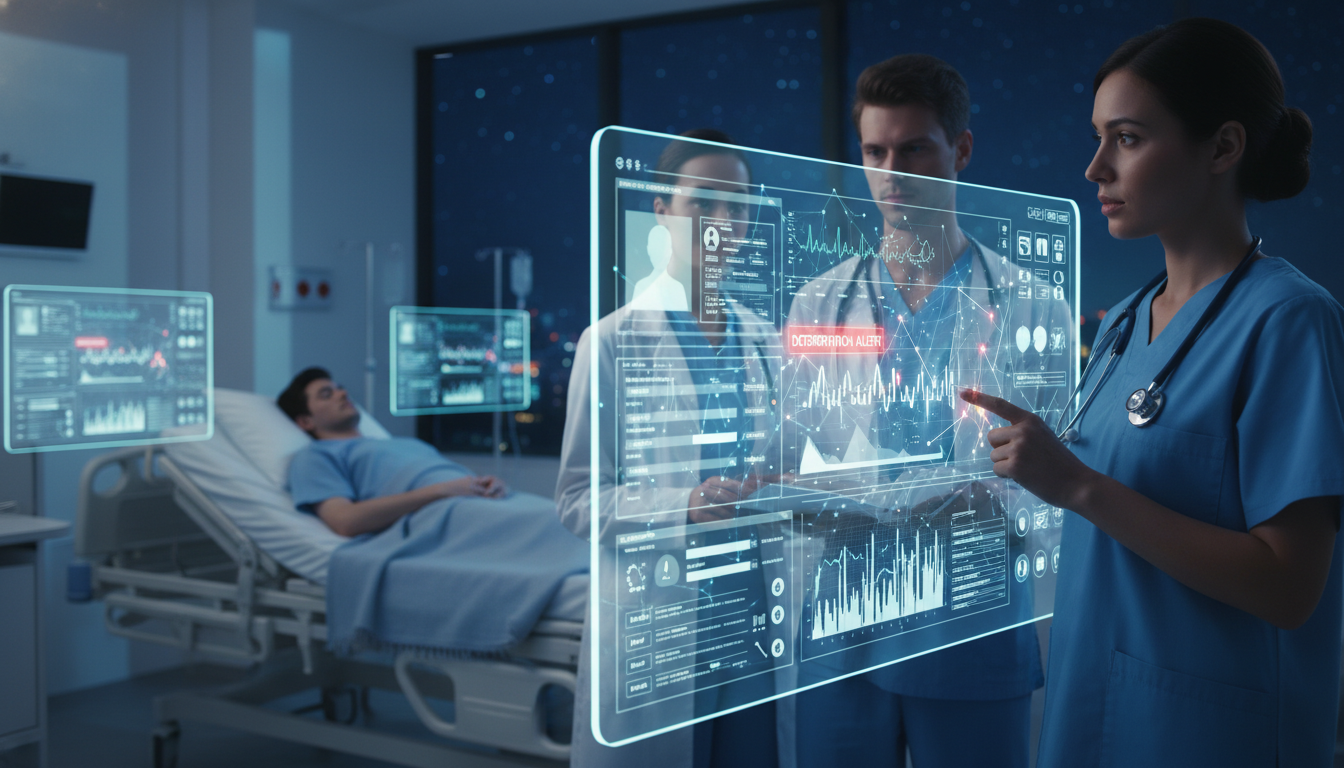
One of the most valuable aspects of AI in clinical settings is its ability to look ahead. Predictive Analytics uses large volumes of historical data and statistical algorithms to forecast health outcomes and identify potential crises before they become critical. These systems employ machine learning to find subtle patterns in data that a human observer might miss.
Consider a patient who has been stable, but whose subtle changes in vital signs—blood pressure fluctuation, heart rate variability, or slight changes in mobility data—suggest an impending problem. Predictive analytics can detect these slight deviations and raise an alert, warning staff about unexpected changes hours or even days before a medical emergency occurs.
A well-known example in this field is the use of systems that help predict sudden patient deterioration. By tracking a mix of physiological and behavioral data, these systems calculate a risk score. This forward-looking approach dramatically changes care from being reactive (responding to a fall or an acute illness) to being proactive (preventing the fall or mitigating the illness severity). This capability directly impacts patient outcomes by allowing clinicians to adjust care plans promptly, moving toward truly preventative medical support.
Ambient Monitoring and Smart Home Settings
AI is not confined to clinical environments; it is proving invaluable in supporting independence within an older adult's own home. Ambient Assisted Living (AAL) technologies integrate AI sensors into the home environment. These devices monitor activity, sleep, walking patterns, and interaction with the home without requiring the individual to wear anything obtrusive.
For an older adult living alone, AAL systems provide a safety net. If an individual suffers a fall or remains inactive for an unusual length of time, the system automatically alerts caregivers or emergency services. These systems learn the normal daily rhythms of the person—when they usually eat, sleep, and move—making deviations immediately apparent. This kind of discrete monitoring respects the privacy and autonomy of the individual while providing peace of mind to family members and care professionals.
Furthermore, AI-driven personal assistants can:
- Manage medications
- Remind individuals of appointments
- Connect them with family via voice command
These functions simplify complex daily routines and reduce the cognitive load on the individual. This support is crucial for maintaining independence and delaying the need for institutional care.
The Role of Robotics and Social Support
Robotics, powered by AI, represents another frontier. While full-scale nursing robots are still developing, companion robots are already finding a place, especially for individuals dealing with loneliness or cognitive decline. These social robots can engage in simple conversations, play games, and provide emotional support.
While they do not replace human interaction, they supplement it, providing consistent engagement that can be particularly helpful during periods when human staff are occupied. For those with dementia, some robots are programmed to guide individuals through calming activities or recall past memories, serving as therapeutic aids. The combination of gentle interaction and consistent presence can contribute to an improved quality of life.
Ethical Considerations and Data Responsibility
As AI systems become more prevalent, addressing the ethical and data responsibility implications is paramount. The systems rely on collecting and processing vast amounts of personal health and behavioral data. Strong safeguards must be in place to protect this sensitive information, adhering to strict privacy regulations.
Fairness and transparency in AI algorithms are also critical. Care decisions based on AI recommendations must be explainable, and the system must avoid introducing biases that could lead to unequal treatment based on demographics or past health data. Human oversight remains essential. Caregivers must be trained not just to use the technology, but to interpret its outputs and exercise professional judgment when making decisions. AI serves as a powerful tool for suggestion and analysis, but the ultimate responsibility for care rests with trained human professionals.
The Future Outlook
The integration of intelligent technology into support services for older adults is not a fleeting trend, but a fundamental shift. It is a necessary evolution to meet rising care needs while upholding the principles of high-quality, individualized, and compassionate support. By managing the routine, predicting the unseen, and making life at home safer, AI gives care providers and older adults a powerful means to focus on what truly defines well-being: connection, safety, and a sense of belonging. The synergy between human judgment and artificial intelligence promises a future where aging is approached with greater support and fewer uncertainties.
❓ Frequently Asked Questions
1. Does AI reduce the need for human caregivers?
No. AI is designed to automate routine tasks and provide advanced warnings of health issues, which actually frees up human caregivers to spend more quality time on personal care, emotional support, and relationship-building. AI supports caregivers; it does not replace them.
2. How exactly does predictive analytics improve patient safety?
Predictive analytics uses statistical algorithms and machine learning to analyze historical and real-time patient data (like vital signs and activity patterns). It identifies subtle indicators of potential health decline—such as the Ainsoff Deterioration Index (ADI) which forecasts sudden patient worsening—allowing care staff to intervene proactively before a serious medical event occurs.
3. Are AI-powered systems in elderly care secure?
Reputable AI health systems are subject to strict data governance and privacy laws (like HIPAA or GDPR). Protecting sensitive health data is a primary concern, and developers must build security and privacy into the systems from the ground up, typically relying on encrypted and anonymized data processing.
4. What is 'ambient monitoring'?
Ambient monitoring involves using non-intrusive sensors (in floors, walls, or appliances) within an older adult’s home to track activity, sleep, and movement patterns. It allows for continuous safety monitoring without requiring the individual to wear devices, thus maintaining their comfort and independence while flagging unusual events like a fall or prolonged inactivity.
5. How will caregivers receive training to use AI tools?
Training focuses on two main areas: operational use of the new tools (like dashboard navigation and data entry) and, critically, critical thinking regarding AI outputs. Caregivers are trained to interpret the data, understand the system's limitations, and apply professional judgment to the AI's predictions and suggestions.


