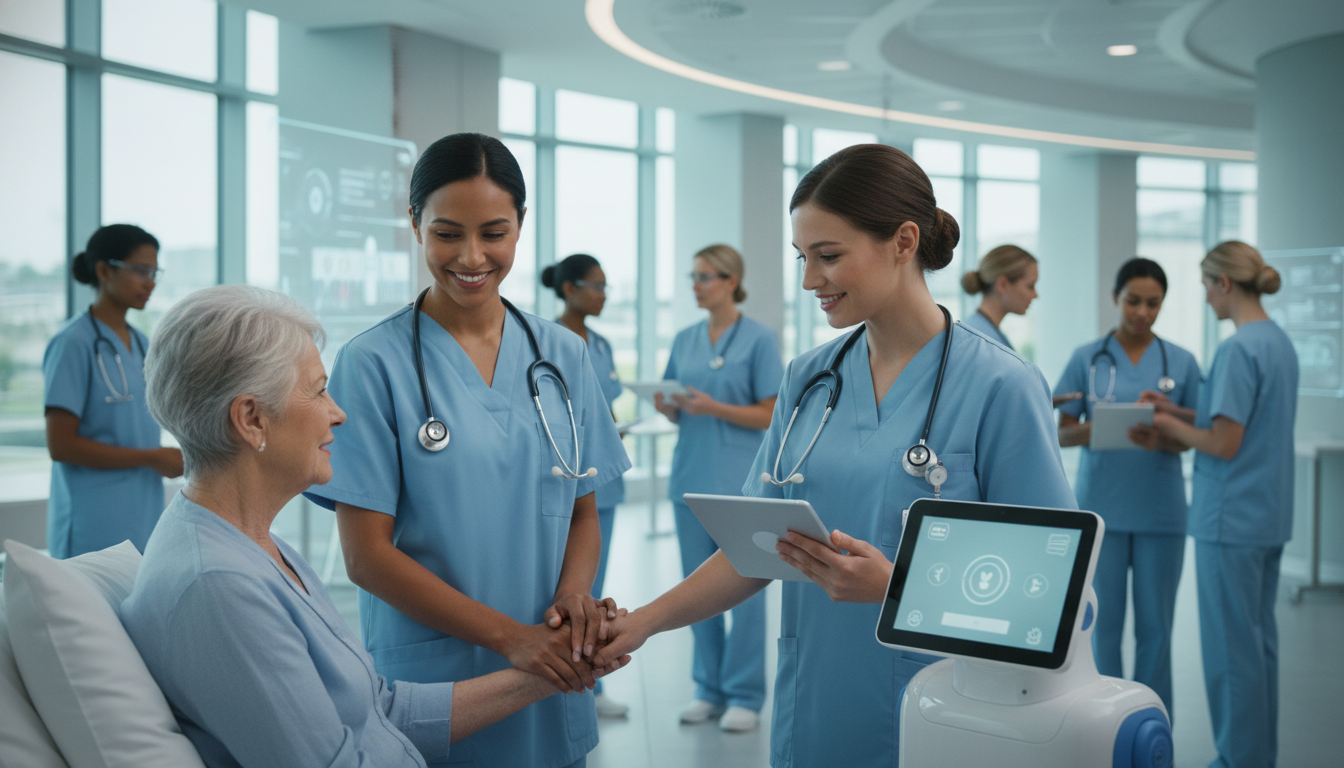


The population of seniors is growing worldwide, presenting significant challenges and opportunities for care systems. Technology, specifically Artificial Intelligence (AI), offers powerful tools for supporting this growing demographic. From automated monitoring systems to robotic assistants, these innovations promise greater efficiency and safety.
However, as these systems become more prevalent, a critical question remains: Can AI truly replace the human caregiver?
The answer, definitively, is no. While AI is becoming a powerful assistant, the core of aged care rests on human connection, intuition, and sensitivity—qualities that machines simply do not possess. The most effective path forward is what experts call a "human-centric AI" approach, placing the caregiver at the center of the technological ecosystem.
Understanding Human-Centric AI in Aged Care
Human-centric AI refers to the design and application of AI systems where the needs and capabilities of human users—both caregivers and care recipients—are the primary focus. In aged care, this means designing technology that supports nurses and aides, reducing their administrative burden and assisting with routine tasks, thereby freeing them up to focus on direct patient interaction.
This model views AI not as a replacement for staff, but as sophisticated equipment in a caregiver's toolkit. For instance, AI algorithms can predict falls based on movement patterns or alert staff to changes in vital signs long before a human might notice them. These predictive insights make nurses more effective, allowing for preventative action rather than reactive intervention.
The Irreplaceable Role of Empathy in Care
The defining feature of excellent aged care is empathy. Empathy is the ability to understand and share the feelings of another. This quality is crucial when dealing with the complex emotional and psychological needs of older adults, especially those facing chronic illness, cognitive decline, or the emotional difficulty of aging.
A machine can be programmed to recognize sadness based on vocal tone or facial expressions. It can even suggest a list of comforting phrases. But it cannot genuinely feel or relate to a resident's grief, fear, or loneliness. The power of a comforting touch, a knowing look, or an intuitive adjustment to a care plan based on non-verbal cues requires human understanding.
A significant part of a caregiver’s job is providing emotional support and establishing rapport. This nurse-patient relationship builds trust and dignity, contributing significantly to a resident’s mental well-being and overall quality of life. AI systems, no matter how advanced, cannot replicate this deep, personal bond.
The Limits of Technology: Intuition and Interpretation
Caregiving is rarely a matter of following a simple checklist. It demands flexibility, quick judgment, and intuition—often based on years of experience. A senior's subtle change in behavior might signal anything from a minor annoyance to a serious health crisis.
- Intuitive Diagnosis: A nurse might observe a resident's slight hesitation while walking and instantly know that their balance is declining, prompting an immediate assessment. An AI might only flag the issue after a measurable deviation from a baseline. Human intuition often acts faster than algorithm-driven alerts in recognizing subtle, complex cues.
- Contextual Interpretation: AI systems rely on data, but they lack the ability to interpret data within the full, messy context of human life. For example, a sleep monitoring system might report poor sleep. A human caregiver, knowing the resident just received a difficult family phone call, understands the cause is emotional distress, not a physical ailment requiring medication. The solution is human comfort, not a technological fix.
Hybrid Care Models: Working Together
The future of aged care is a hybrid care model, where technology and human expertise coexist and complement one another. This partnership allows organizations to deliver safer, more efficient, and more personalized care without sacrificing the human element.
AI’s Primary Contributions
- Administrative Relief: AI can automate burdensome tasks like charting, data entry, and scheduling, giving nurses back hours each shift to spend at the bedside.
- Continuous Monitoring and Safety: Smart sensors, wearable devices, and computer vision can watch for immediate risks (like falls) and track long-term trends (like hydration or sleep quality), providing objective data points 24/7.
- Personalized Logistics: Algorithms can help construct truly individualized care plans, recommending adjustments based on a resident's response to specific therapies or activities.
The Human’s Primary Contributions
- Emotional and Psychological Support: Providing comfort, facilitating social engagement, and addressing existential fears.
- Complex Decision-Making: Interpreting conflicting data, making ethical judgments, and applying clinical reasoning in ambiguous situations.
- Hands-On Assistance: The physical tasks of dressing, feeding, bathing, and moving residents require skilled, gentle human contact that robotic systems are still mastering.
By intelligently assigning tasks—machines handle the repeatable data collection and number crunching, while humans focus on relationship building and complex situational judgment—aged care facilities achieve superior outcomes.
Addressing Concerns: Ethical Use and Data Trust
The inclusion of AI brings important ethical considerations, particularly in a vulnerable setting like aged care. Data security, privacy, and algorithmic bias must be carefully managed. If an AI system consistently misinterprets data for a specific demographic group, it could lead to unequal care outcomes.
Establishing strong protocols for data handling and maintaining transparency about how technology is used is paramount. Furthermore, caregivers must be adequately trained to work alongside these new systems, understanding how to use the information provided by AI to better inform their human judgment, not override it. The ultimate accountability for a resident’s well-being must always remain with the human care team.
Conclusion: The Essential Ingredient
The dream of fully automated care services overlooks a simple, fundamental truth: humans need humans. While technology can profoundly improve the mechanics of care—making it safer, faster, and more informed—it cannot replicate the essential ingredient of compassion.
The most enduring innovation in aged care is not the next algorithm or robot, but the successful integration of powerful technology with the deep, irreplaceable sensitivity and intuition of the human caregiver. The future of elderly support is not AI instead of nurses, but AI with nurses, ensuring dignity, connection, and quality of life remain the central goals.
Frequently Asked Questions
Q1: Is AI a threat to caregiving jobs?
No, AI is not expected to replace human caregivers. Instead, it changes the nature of the job. AI takes over repetitive, data-heavy tasks, allowing nurses and aides to focus their time and energy on direct resident interaction, relationship building, and complex, person-centered care. Technology acts as a powerful support system, making the human caregiver more effective and less burdened by administrative work.
Q2: How does AI specifically help prevent falls?
AI systems use sensors and monitoring devices (often non-wearable or embedded in floors) to track gait speed, posture, and movement patterns. By establishing a normal baseline for a resident, the AI can detect slight, often imperceptible, deviations over time. These changes can signal weakening muscles or declining balance before a fall occurs. The system alerts staff, who can then intervene with physical therapy or walking aids.
Q3: What is meant by "algorithmic bias" in aged care?
Algorithmic bias occurs when the data used to train an AI system does not adequately represent the entire population, leading to inaccuracies or poor performance for certain groups (e.g., specific ethnicities, genders, or those with rare conditions). In aged care, this could mean an AI system accurately predicts needs for one group of residents but misses critical signs for another, resulting in unequal quality of care. Continuous data review and testing are needed to address this.
Q4: Does the use of AI systems erode patient privacy?
Protecting patient privacy is critical. AI systems in care settings handle sensitive health information, so they must meet stringent security and data protection regulations (like HIPAA). Most AI tools used for monitoring focus on aggregated data or non-identifiable movement patterns rather than personal communication. Facilities must maintain clear policies about data collection, storage, and who has access to the insights generated by the AI.