

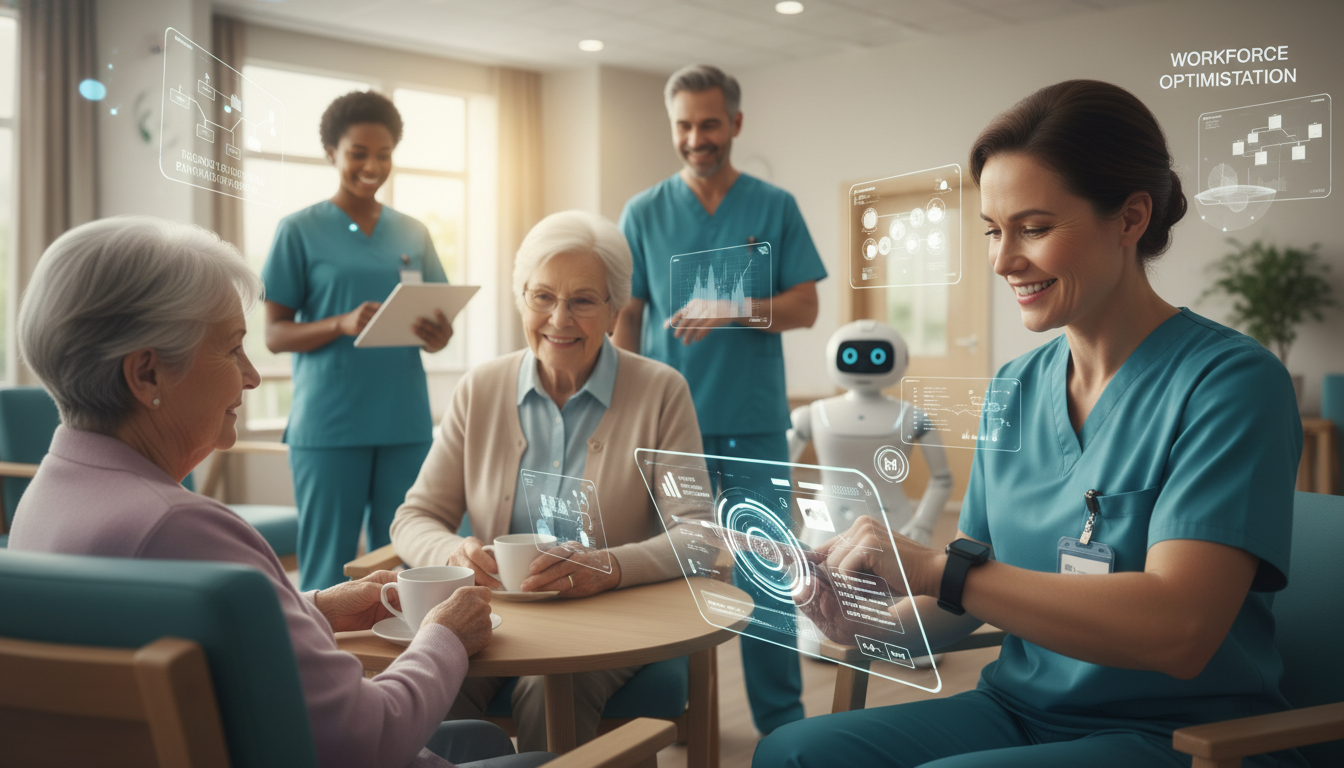


The global population is aging, presenting a growing demand for compassionate, high-quality care for older adults. Meeting this demand requires innovation, and Artificial Intelligence (AI) is rapidly becoming a key component in modern aged care facilities.
AI is not replacing the human touch; instead, it is supporting carers and improving the lives of residents by managing routine tasks and predicting needs. This transformation is about making care more personalized, efficient, and focused on human connection.
AI and the Future of the Care Workforce
Caregiving is demanding work, and staffing shortages are a serious issue across the aged care sector. AI offers practical solutions to make the care workforce more sustainable and less prone to burnout.
Improving Staff Operations
AI systems excel at data analysis, which is fundamental for good operational management. These systems can process information about resident needs, staff availability, and task duration to develop effective scheduling. For example, AI helps facilities with Workforce Optimisation by constructing staff rosters that balance workload fairly and meet regulatory requirements. By automating this complex task, managers free up time that can be spent focusing on staff support and quality of care.
Reducing Carer Fatigue
Caregiver burnout often stems from excessive overtime and tasks that detract from direct resident interaction. AI addresses this by prioritizing tasks based on immediate resident needs, meaning staff can concentrate their efforts where they matter most. This ability to streamline operations and assign tasks intelligently reduces staff overtime and helps alleviate carer fatigue, which directly contributes to better staff retention. Resources detailing how AI is applied in elderly care confirm these benefits for workforce management.
The Human-AI Partnership: Focusing on Person-Centred Care
One of the most important aspects of AI integration is its role in strengthening the bond between carers and residents. AI handles the mundane, allowing human carers to focus on what only they can provide: empathy, relationship building, and genuine connection.
Automating Routine and Predicting Risk
Many tasks in aged care—such as monitoring movements, checking room temperatures, or processing data—are repetitive but necessary. AI systems can manage these routine functions automatically, providing continuous, unobtrusive supervision. Crucially, AI’s ability to analyze patterns allows it to predict risks such as falls or sudden health changes before they become emergencies. This predictive capacity is a game-changer, moving care from reactive to proactive.
Prioritizing Empathy and Dignity
By automating surveillance and routine data collection, AI frees up human carers. This time saved is time gained for person-centred care. Staff can dedicate their focus to relationship-building, therapeutic activities, and addressing the emotional needs of residents. When AI takes on the role of predicting risks and flagging concerns, staff are given the ability to concentrate on empathy and dignity, making sure technology truly extends human interaction rather than replacing it.
Real-World Applications of AI in Aged Care
The practical applications of AI are already visible in care homes and residences globally.
Smart Monitoring and Fall Detection
Falls are a major concern for older adults, often leading to serious injuries. AI-powered monitoring systems, including wearables and smart room sensors, can track subtle changes in movement or gait. These systems learn a resident’s normal behavior and immediately flag deviations that may indicate a fall risk or an actual fall. This immediate alert system significantly reduces response times, improving health outcomes.
Medication Management
Mistakes in medication administration are a frequent issue in health settings. AI can assist in creating personalized medication schedules, cross-referencing prescriptions for potential conflicts, and even verifying that the correct dose is given at the correct time. Automated dispensing systems, governed by AI, reduce errors and improve patient safety.
Cognitive Support and Social Connection
AI is showing promise in applications that support cognitive health.
- Robot companions and digital assistants can engage residents in cognitive games, conversation, and scheduled activities.
- For those with dementia, specialized AI programs can provide structured stimulation tailored to their current abilities.
These tools are becoming commonplace in modern aged care environments.
Data Analysis for Service Improvement
Beyond day-to-day operations, AI is constantly analyzing large amounts of data collected across the facility—from resident health metrics to staff efficiency data. This constant feedback loop helps administrators refine services and operational practices, leading to higher standards of care and smarter resource allocation. Information on these real-world applications highlights how computerised compassion is being applied in aged care settings.
Addressing the Ethical Questions
While the benefits of AI are clear, its introduction into care settings must be handled responsibly. Concerns about privacy, consent, and the potential for technological over-reliance are paramount.
Privacy and Data Security
AI systems rely on collecting sensitive resident data. It is incumbent upon providers to guarantee that this data is protected using the highest standards of security and that its collection adheres strictly to privacy regulations. Transparency about what data is collected and how it is used is essential for maintaining trust.
Maintaining the Human Element
The primary goal of AI in aged care is support, not substitution. Policies must clearly state that AI tools are there to augment human capabilities. Carers must remain central to the decision-making process, using AI insights as tools, not as final directives. The focus remains on making sure that AI serves the goal of dignified, personal care.
Conclusion
Artificial Intelligence is making a profound contribution to the aged care sector. By helping facilities run more efficiently through smart rostering and task prioritization, and by freeing up carers to focus on meaningful person-centred care, AI is addressing the most pressing challenges of an aging population. The partnership between human skill and artificial intelligence promises a future where older adults receive the attentive, compassionate, and high-quality support they deserve.
Frequently Asked Questions (FAQs)
1. Is AI meant to replace human caregivers?
No. The consensus within the sector is that AI is a supporting technology designed to automate routine tasks, predict risks, and help staff focus their efforts. AI's purpose is to extend human interaction, not substitute for the critical roles of empathy and personal relationship-building that only human carers can provide.
2. What are the main benefits of AI for staff?
AI primarily helps staff by addressing workforce shortages and reducing burnout. It achieves this by:
- Performing complex scheduling (rostering).
- Prioritizing tasks based on immediate need.
- Reducing the time spent on administrative and monitoring duties.
This makes workloads fairer and more manageable.
3. How does AI improve resident safety?
AI improves safety by offering continuous, unobtrusive monitoring. Systems can detect subtle changes in movement or health status that might indicate a fall risk or an emerging medical issue. This capability allows staff to intervene sooner, often preventing minor issues from escalating into major health crises. More details on how AI improves outcomes can be found via sources like Tunstall Healthcare.
4. Are AI systems expensive for facilities to implement?
Initial investment in AI technology can be significant, but facilities often find that these costs are offset by long-term savings. The savings come from:
- Reduced staff turnover (due to lower burnout).
- Fewer critical incidents (due to risk prediction).
- Improved operational efficiency.
The return on investment is often seen in higher quality of care and reduced regulatory issues.
5. How is privacy managed with all the data AI collects?
Privacy is a serious consideration. Reputable AI systems are built with strong data security protocols that comply with health information regulations. Providers must obtain clear consent from residents or their families for data collection and be transparent about how the data is used solely to refine the resident's care and safety.


