

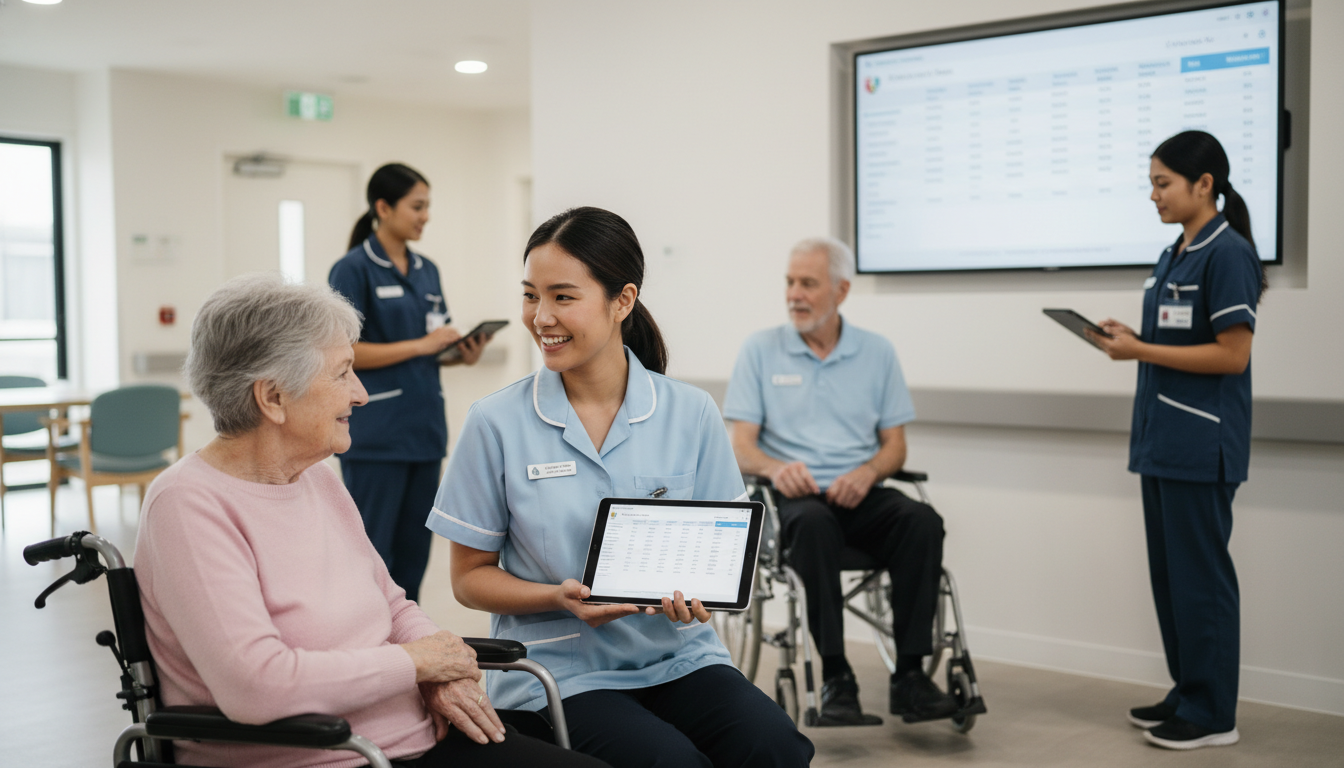


The aged care sector faces an ongoing challenge: delivering high-quality, person-centered services while managing significant operational pressure. At the heart of this struggle often lies an unexpected culprit—disconnected technology and reliance on manual, paper-based workflows.
Many aged care facilities continue to struggle with inefficient daily processes, such as paper charting and double data entry, which consume valuable staff time and introduce risks. The solution isn't just about adding new software; it's about connecting those systems for true digital transformation. Failing to do so carries a high, often unseen, cost.
The Aged Care Workflow Inefficiency Trap
Think about a typical day in an aged care facility. Staff spend countless hours on administrative duties that have little to do with resident interaction. These manual processes create an "aged care workflow inefficiency trap."
When data resides in separate silos—one system for rostering, another for clinical notes, a third for billing—staff must manually move information between them. This practice, often called "double data entry," is a significant drain on resources.
In a setting where minutes matter, paper charting and redundant administrative work divert staff away from providing direct care. This diminishes the quality of service and contributes to burnout among dedicated caregivers.
Time is Money: Quantifying the Manual Load
The direct financial implications of manual workflows are sobering. Calculating the true hourly cost of a caregiver writing notes on paper, searching for files, or inputting the same information into multiple databases quickly shows that disconnected systems are not "saving money" but actively costing it. This expense manifests as:
- Increased Overtime: Staff stay longer to complete documentation they couldn't finish during their shift.
- Hiring Needs: Facilities staff up to cope with the sheer volume of administrative work.
- Error Correction: Time spent investigating and correcting mistakes caused by misplaced papers or transcription errors.
Compliance Reporting: Turning Stress into Simplicity
Compliance and regulatory reporting are non-negotiable in aged care. However, when resident data is scattered across files, spreadsheets, and different digital systems, generating accurate reports becomes a significant burden.
Preparing for audits or fulfilling mandatory reporting requirements often turns into a marathon data-gathering exercise. Staff must pull information from various sources, compare notes, and consolidate figures manually—a taxing process that requires clinical expertise but uses it for low-value administration.
Connected workflows fundamentally change this dynamic. When systems communicate seamlessly, resident data is collected and recorded once, in real time. This single source of truth makes compliance reporting less stressful and far more accurate. Reports that once took days to compile can be generated almost instantly, freeing up clinical leaders to spend their energy on care governance and quality improvement.
Real-Time Data: The Foundation of Care Coordination
Perhaps the greatest drawback of disconnected systems is the lack of real-time data access, which severely hampers effective care coordination.
Imagine a scenario where a resident experiences a change in condition. If the recorded observations are on a clipboard or in a back-office computer that other staff cannot immediately access, there is a delay in critical decision-making. Nurses and doctors rely on current, precise information to adjust care plans, administer medications safely, and communicate changes to families.
Digital, connected workflows support care coordination by offering:
- Immediate Insight: Any authorized staff member, from any location in the facility, can view the resident’s current status, medications, and care history on a secure device.
- Proactive Intervention: Trends in vital signs or behavior can be flagged automatically by the system, allowing caregivers to intervene before a minor issue becomes a crisis.
- Effective Handover: Shift changes become faster and more accurate because the handover discussion is based on verified, up-to-the-minute digital records rather than subjective paper notes.
This shift from delayed, fragmented information to immediate, shared real-time data transforms safety and responsiveness in the facility.
Digital Transformation: More Than Just Replacing Paper
Digital transformation in aged care is not merely digitizing existing inefficient methods. It means fundamentally redesigning workflows to be intuitive, accurate, and focused on the resident.
Connected systems provide a holistic view of the resident's journey, from intake and initial assessment through daily care delivery and billing.
The Power of Integration
When various systems—such as electronic health records (EHRs), resident management software, and scheduling tools—are integrated, they speak the same language. Data entered into the EHR can automatically populate the billing system, the rostering tool can reflect resident care requirements, and clinical notes can inform care planning without manual transfer.
This integration removes friction points. Staff spend less time on system management and more time building relationships and addressing resident needs.
Improving Staff Satisfaction and Retention
The connection between outdated technology and staff satisfaction is profound. Caregivers join the aged care profession because they want to care for people, not perform endless paperwork.
When systems are cumbersome, slow, or constantly require repetitive data entry, it creates frustration and contributes significantly to job dissatisfaction. In an industry battling high turnover rates, providing modern, intuitive, and efficient tools is a strong retention strategy.
When facilities embrace connected digital tools, they send a clear message: "We respect your time, and we want you focused on resident care." This leads to a more engaged and stable workforce, which directly correlates with higher quality outcomes for residents.
Steps to Success in Digital Transition
Moving away from the paper chase requires a strategic approach. Aged care providers should consider these steps when pursuing digital transformation:
- Audit Current Workflows: Document every manual process—from charting to scheduling—to identify the most significant time sinks and areas of error.
- Prioritize Integration: When selecting new technology, prioritize solutions that offer open APIs (Application Programming Interfaces) and demonstrate a commitment to seamless data exchange with existing or future systems.
- Invest in Training: Technology is only as good as the team using it. Dedicate resources to thorough and ongoing training to ensure staff are comfortable and confident with the new digital methods.
- Adopt a Phased Rollout: Instead of attempting a massive overhaul overnight, implement connected systems in phases, allowing staff to adapt and providing opportunities to refine new workflows based on real-world feedback.
By addressing the underlying issue of disconnected systems, aged care providers can unlock enormous efficiencies, improve compliance, and, most importantly, dedicate more attention to the individuals they serve. The path forward is digital, integrated, and focused squarely on person-centered care.
Frequently Asked Questions (FAQs)
1. What is the biggest risk of relying on paper charting?
The main risks include delayed information access, which can impede prompt clinical response; increased likelihood of errors due to illegible handwriting or misfiling; and making compliance reporting a prolonged, difficult task.
2. How does digital transformation improve compliance?
Connected digital systems create a single, verifiable record of all resident interactions and care events. This immediate access to accurate, standardized data greatly simplifies the process of generating mandatory reports and preparing for external audits.
3. Will switching to connected systems require downsizing staff?
The goal of digital transformation is not to reduce staffing levels but to redistribute staff time from low-value administrative tasks to high-value resident care. It aims to make existing teams more productive and reduce staff burnout.
4. What should we look for in new aged care technology?
Seek solutions that prioritize user-friendliness, offer strong security and data protection features, and most importantly, possess robust integration capabilities to communicate effectively with your existing software platforms.


