

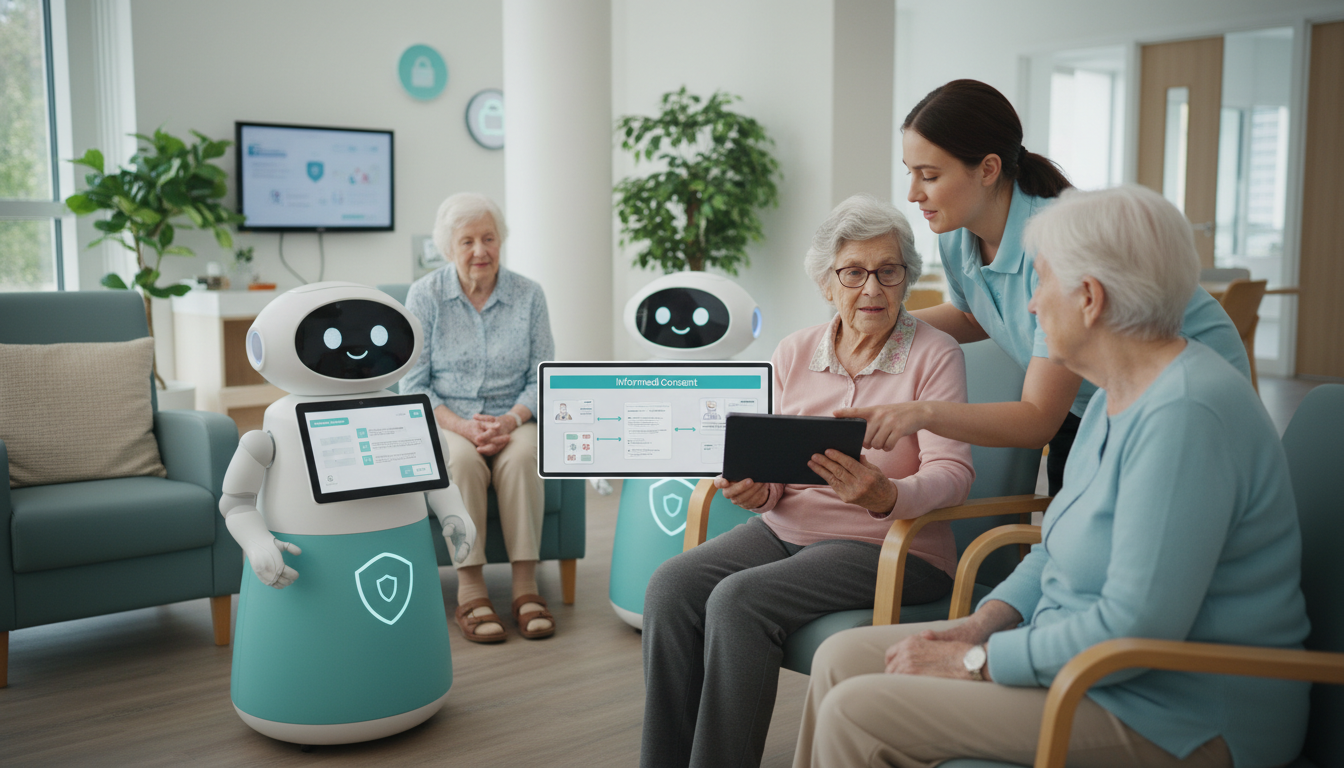


As our population ages, the demand for quality aged care services continues to grow. Technology, particularly artificial intelligence (AI), is stepping in as a powerful support system. When thoughtfully implemented, AI can profoundly improve the safety, connection, and quality of life for older adults, while also aiding the dedicated staff who look after them.
The discussion isn't about replacing human care, but rather about creating a strong Human-AI Partnership that puts the person at the center of all services.
AI: A New Kind of Partnership in Aged Care
The best way to think about AI in this setting is as a tool that works alongside human caregivers. By automating routine tasks and predicting potential risks, AI frees up staff so they can dedicate more time to what truly matters: person-centred care, relationship-building, and offering empathy.
AI systems can monitor movement and behavior patterns, identifying subtle changes that might indicate a health concern before it becomes an emergency. For example, a system might notice a senior is taking longer to get out of bed or walking slightly less steadily. By alerting staff early, they can intervene quickly. This ability to predict risks and augment human capabilities allows staff to focus their attention and compassion where it is needed most, directly addressing issues like staff burnout and improving job satisfaction.
Instead of the robot taking over, AI extends the reach of human interaction, ensuring that dignity and individual needs remain the priority. This is the foundation of a modern care strategy where technology supports humanity.
🛡️ Upholding Ethical Standards: Privacy, Consent, and Trust
The introduction of technology, especially surveillance or data collection tools, raises natural and important questions about AI Ethics. For any AI system to be beneficial, it must be built on a foundation of trust, data security, and transparency.
The top concern of privacy in aged care AI is non-negotiable. Systems must be transparent about how data is used and protected. This means having robust cybersecurity measures in place to guard sensitive information. Furthermore, obtaining informed consent from the older adults receiving care (or their authorized representatives) is essential. They must clearly understand what data is being collected and why.
User autonomy must also be respected. Technologies like camera-based monitoring systems can be developed to provide essential context and wellness status to caregivers while preserving the visual privacy of the person under surveillance. This technical approach respects the dignity and self-respect of the elderly person.
Key Ethical Pillars in Aged Care AI:
- Transparency and Disclosure: Care providers must be open and honest about when and how AI is used in their practices. If AI is assisting in decision-support, staff and residents should be aware.
- Accountability: Mechanisms must exist to review and correct AI outputs. A human must assess all AI outputs to confirm accuracy, as current policy, such as that by the Australian Government Department of Health, confirms AI will not be used for final decision-making purposes.
- Adherence to Standards: AI implementation should adhere to national and regional frameworks, legislation, and policies, such as the Australian Government’s Aged Care Data and Digital Strategy.
A commitment to responsible AI use means continuously auditing models to reduce biases and refining algorithms to maintain fairness, ensuring the technology serves all individuals equitably.
💡 Practical Applications of AI in Daily Living
AI is already making tangible differences in the lives of older adults, shifting from theoretical promise to practical support.
- Safety and Monitoring: AI-powered sensors and wearables can monitor vital signs, track movement, and detect falls, providing quick alerts to caregivers. This reduces the risk of serious injury from unattended falls and gives residents a greater sense of security.
- Personalized Support: AI can analyze health data and daily routines to suggest truly person-centred care plans. This could range from scheduling medications to recommending activities based on known preferences and energy levels.
- Reducing Isolation: Conversational AI, or digital companions, can offer therapeutic interaction and combat loneliness, especially for those who are socially isolated. While these systems don't replace human contact, they provide immediate, round-the-clock interaction.
- Operational Efficiency: For care homes, AI helps with staffing allocation, inventory management, and anticipating resource needs, which directly contributes to better quality of care by keeping operations running smoothly.
The Human Element: Staying in Control
Despite the sophisticated nature of AI, the success of this technology depends entirely on keeping the human being in charge. Human oversight and control are crucial. Staff must validate any generated responses and be involved in setting the guardrails for how the technology operates.
The core message remains clear: the purpose of AI is to free human caregivers to be more human—to provide the empathy, relationship-building, and hands-on support that machines cannot. The future of care is a thoughtful partnership where technology safeguards the physical and mental wellbeing of older adults, allowing human carers to focus on nurturing their dignity and happiness.
The move toward digital eldercare is certain, but safety cannot come at the cost of agency or privacy. By designing systems with ethics at their core, we can ensure that AI truly supports the right to age with self-respect and excellent care.
❓ Frequently Asked Questions (FAQs)
Q: Does AI replace the need for human caregivers?
A: No. AI serves to augment the capabilities of human caregivers by taking over routine monitoring and data analysis. This automation allows staff to spend more time on meaningful, personal interactions and relationship-building, directly improving the quality of person-centred care.
Q: What are the main ethical concerns regarding AI in aged care?
A: The main ethical concerns center around data security, user privacy, and obtaining informed consent. Systems must be transparent about how they collect and use personal data, and robust cybersecurity must be maintained to protect sensitive health information.
Q: How does AI actually improve the safety of older adults?
A: AI improves safety primarily through continuous, non-intrusive monitoring. It can detect subtle changes in behavior, like altered walking patterns or unusual sleep cycles, that may indicate an emerging health issue or an increased risk of falls. This early warning capability allows caregivers to respond much faster than traditional checks.
Q: How are governments regulating the use of AI in this sector?
A: Governments, like the Australian Government, are developing specific strategies and transparency statements to govern AI use. These policies stress that AI must be used safely, responsibly, and ethically, and that human oversight is required to validate all AI outputs to protect the public and people receiving care. The Aged Care Quality and Safety Commission uses AI responsibly, adhering to digital policies and legislation.
Q: What is meant by ‘augmentation’ in the context of AI in care?
A: Augmentation means that AI tools add to or expand the abilities of human staff, rather than replacing them. For example, AI might analyze records 100 times faster than a human, but a human must apply their judgment and empathy to the resulting data to decide the best care path. The technology is a support system, not a substitute.


