

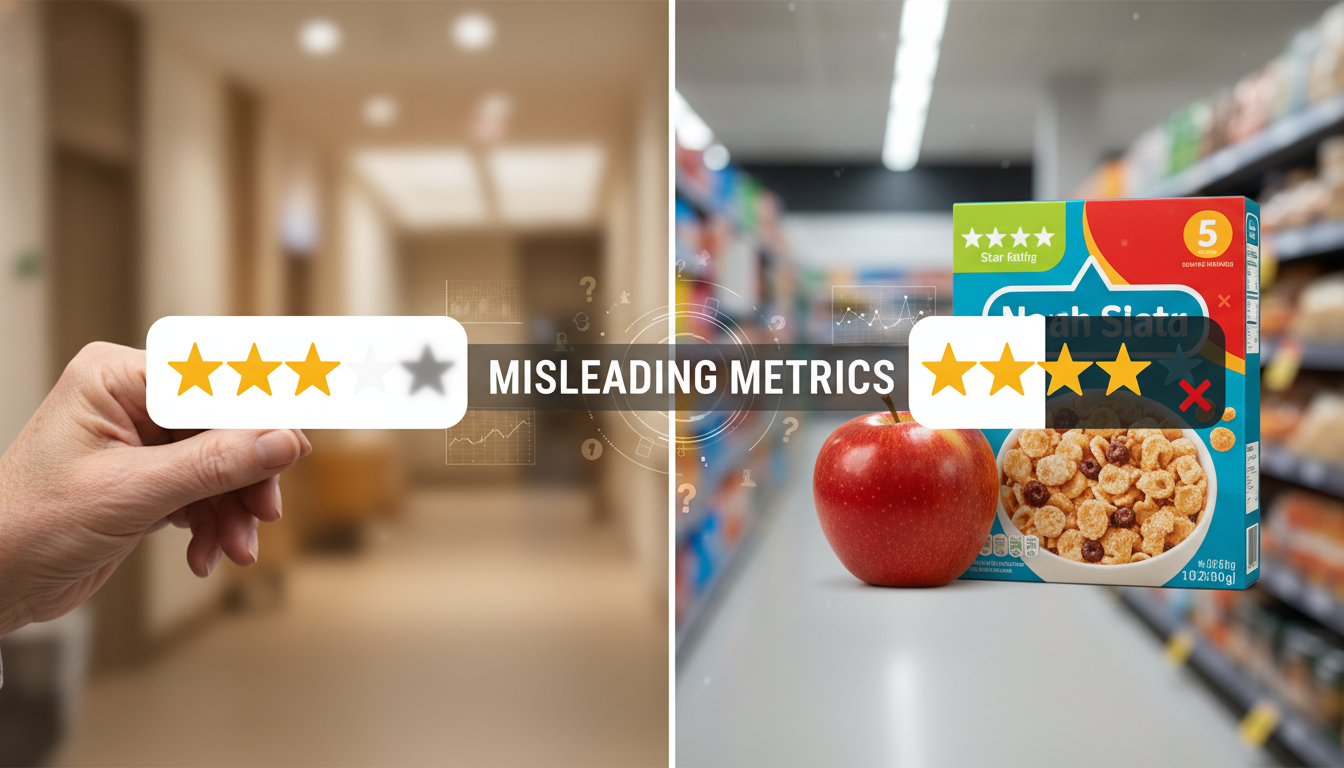


When you make important choices, like selecting an aged care facility for a loved one or deciding what food to buy, you often rely on quick guides. In Australia, star rating systems are designed to help you. However, these systems, including those for aged care and the Health Star Rating on food, have faced criticism for their potential to provide misleading consumer information. Understanding the flaws in Australian Star Rating Systems is important for making informed decisions.
Key Takeaways
- Australian star rating systems, like those for aged care and food, aim to simplify complex information for consumers.
- These systems can be misleading due to their simplified nature and lack of nuance.
- The aged care star rating system has specific metrics, but these may not always reflect the full quality of care.
- The Health Star Rating system for food has been criticized for how it calculates healthiness, potentially leading to poor food choices.
- Both systems use a numerical scale that can hide important details about quality or nutritional value.
- Governa AI works to provide clearer insights into complex data, helping you make better decisions.
The Aged Care Star Rating System: A Closer Look
The Australian aged care star rating system was introduced to give you a clearer picture of the quality of care homes. It rates facilities based on several factors, aiming to help you compare options easily. These factors typically include:
- Compliance with standards: How well a facility meets government regulations.
- Resident experience: Feedback from people living in the facility.
- Staffing levels: The number of care staff available.
- Quality measures: Specific indicators of care quality.
While these measures are important, they may not always capture the full experience or the true quality of care. For example, a high rating might not fully reflect the warmth of staff interactions or the variety of social activities offered.

Comparing Aged Care to the Food Health Star Rating System
To understand the problems with the aged care system, it helps to look at a similar system you might already know: the Health Star Rating (HSR) system on packaged foods. This system uses a 0.5 to 5-star rating to indicate the overall nutritional profile of food products. The system analogy highlights similar issues.
Consider these points of comparison:
- Simplification of complex data: Both systems take many different factors and condense them into a single star rating.
- Potential for misleading information: Just as an aged care home with a moderate star rating might offer excellent personal care, a food product with a high Health Star Rating might still contain high levels of sugar or processed ingredients.
- Focus on specific metrics: Both systems rely on defined metrics that might not always align with what you value most. For food, it might be the presence of whole ingredients, not just nutrient ratios. For aged care, it might be the emotional support provided, not just the number of registered nurses.
Why Star Ratings Can Be Misleading
The core problem with many star rating systems is their inherent need to simplify. While simplification can be helpful, it often leads to misleading consumer information. Here's why:
- Aggregation of diverse factors: Many different elements are combined into one score. This can hide weaknesses in one area if strengths in another area compensate for them.
- Limited context: A star rating rarely provides the full story. For instance, a food item might get a good rating because it is low in fat, but it could be very high in sugar.
- Subjectivity in weighting: The way different factors are weighted to create the overall score can be subjective and may not always reflect what consumers consider most important.
The Lack of Nuance in Simple Ratings
One of the most significant flaws in Australian Star Rating Systems is the lack of nuance. A single star rating cannot truly represent the complexity of aged care quality or the nutritional value of food.
For example:
- Aged Care: A facility might excel in clinical care but fall short in resident engagement or dining options. A single star rating may not show these individual strengths and weaknesses clearly.
- Food Health Star Rating: A breakfast cereal might receive a high rating due to being low in saturated fat, but it could still be highly processed and lack fiber. This lack of nuance means you might choose a product thinking it is healthier than it truly is.
These systems are designed for quick decisions, but they often sacrifice detailed understanding for simplicity.
Improving Consumer Understanding
To overcome the challenges of misleading consumer information, it is important to look beyond just the stars. You should:
- Review detailed reports: For aged care, look at the full quality reports and visit facilities.
- Read food labels carefully: For food, examine the nutrition information panel and ingredients list, not just the star rating.
- Ask questions: Do not hesitate to ask providers or manufacturers for more information.
Understanding the limitations of these systems allows you to make more informed choices.
Governa AI's Role in Clarity
Governa AI understands the need for clear, accurate information when making important decisions. While we do not directly rate aged care facilities or food products, our approach focuses on providing tools and insights that help you cut through complexity. We believe in presenting data in ways that allow you to understand the full picture, avoiding the pitfalls of oversimplified ratings. Our goal is to help you analyze information more effectively, leading to better outcomes for you and your family.

Frequently Asked Questions
What does the Health Star Rating system measure on food?
The Health Star Rating system measures the overall nutritional profile of packaged foods. It considers factors like energy, saturated fat, sugar, sodium, protein, fiber, and the presence of fruits, vegetables, nuts, and legumes.
Can a high star rating guarantee quality in aged care?
A high star rating in aged care indicates that a facility meets certain benchmarks, but it does not guarantee every aspect of quality. It is important to consider other factors, such as personal visits, resident feedback, and detailed reports, for a complete understanding.
Why are star rating systems used if they can be flawed?
Star rating systems are used because they offer a quick and easy way for consumers to compare products or services. The intention is to simplify complex information, even though this simplification can sometimes lead to misunderstandings.
How can I get more detailed information about aged care facilities?
You can get more detailed information about aged care facilities by reviewing their full quality reports, visiting the facilities in person, speaking with staff and residents, and consulting with independent aged care advisors.
Does Governa AI offer star rating services?
Governa AI focuses on providing tools and insights for data analysis and clarity. We help you understand complex information, but we do not offer star rating services for aged care or food products.


