



Key Takeaways
- Restoring Normalcy: Special dining events help residents reconnect with past social habits.
- Atmosphere Matters: Music, table settings, and service style create a distinct break from routine.
- Dignity First: Dressing up and receiving table service validates the resident's worth.
- Consistent Scheduling: Regular events give residents something to look forward to.
One resident in a care facility recently shared a startling fact: she had not experienced fine dining in 54 years. This admission sparked a major initiative to change how meals are perceived in aged care. It is not just about nutrition; it is about the feeling of the event. This is the core of Experience Design.
You have the power to turn a standard meal into a memorable occasion. By adding specific elements like music, waitstaff, and formal dress codes, you create a "Fine Dining Program." This program does more than feed people; it restores a sense of occasion and normalcy that many residents miss dearly.
The Power of Occasion in Care
Routine is necessary in aged care, but it can also become monotonous. The Fine Dining Program breaks this cycle. It introduces a planned disruption that brings excitement. The goal is to make residents feel like they are going out to a restaurant without leaving their home.
You must focus on the details that define a special occasion:
- Anticipation: Residents know the event is coming.
- Preparation: Getting ready for the dinner becomes an activity in itself.
- Execution: The meal flows differently than a standard Tuesday lunch.
Planning Monthly Events for Impact
Consistency is key for this program to work. Hosting Monthly Events allows you to build a rhythm. It gives residents something to mark on their calendars. If the event happens too often, it loses its special feeling. If it happens too rarely, the momentum is lost.
To set this up, you should consider the following steps:
- Select a Fixed Date: For example, the last Friday of every month.
- Create Invitations: Send physical invites to residents to make it official.
- Design a Menu: Offer options that are distinct from the daily menu rotation.
By treating these dinners as monthly highlights, you help residents track time in a positive way. It shifts the focus from medical appointments to social celebrations.
Implementing White-Glove Service Standards
The service style is the biggest differentiator between a cafeteria and a fine dining restaurant. To achieve this, you need to introduce White-Glove Service. This does not mean every staff member needs actual gloves, but the level of attention must rise.
You should train your team on specific service protocols for these nights:
- Table Service: Food is brought to the table; no queuing or trays.
- Course Structure: Serve appetizers, mains, and desserts separately.
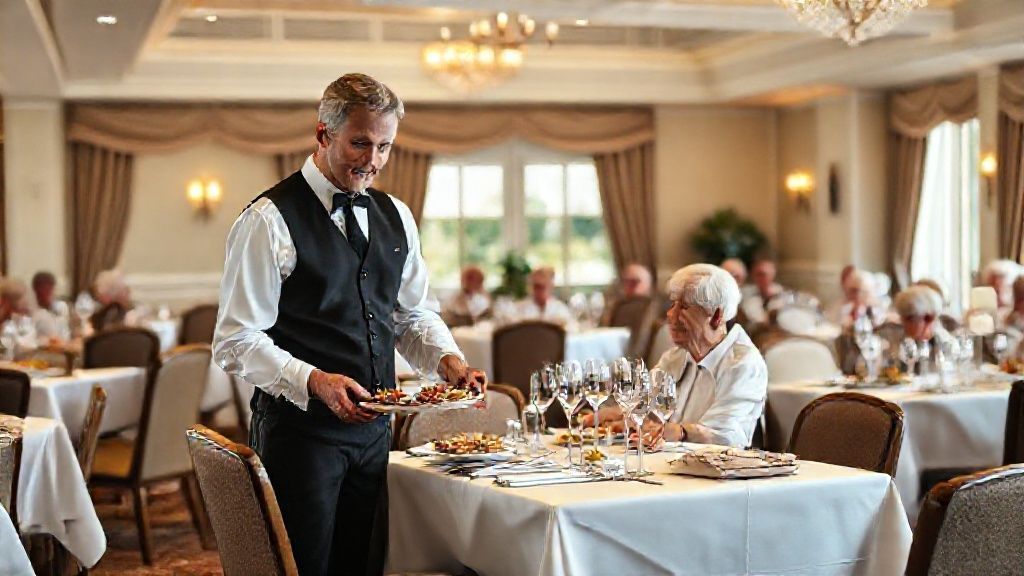
- Professional Attire: Staff should wear specific uniforms, such as black and white formal wear, to distinguish themselves from their daily care roles.
This shift in service changes the dynamic between staff and residents. It moves from "carer and patient" to "waiter and patron." This is a powerful shift in perspective. For insights on how operational changes affect the dining experience, you can listen to Dinesh Subramani on Transforming Food Service in Aged Care.
Restoring Resident Dignity Through Atmosphere
The resident who had not dined out in over five decades highlighted a gap in dignity. Eating is a biological need, but dining is a social act. Resident Dignity is supported when you treat them as capable adults who appreciate refinement.
You can support this by encouraging residents to dress up.
- Wardrobe Assistance: Help residents select their best clothes or jewelry.
- Grooming: Offer extra time for hair and makeup on the day of the event.
- Compliments: Train staff to notice and validate the effort residents put into their appearance.
When a resident looks in the mirror and sees themselves dressed for an occasion, it boosts their self-esteem. It reminds them of who they were and who they still are.
Boosting Social Engagement with Ambience
The environment must match the dress code. Social Engagement increases when the setting invites conversation. A noisy, bright cafeteria does not encourage deep talk. A dimly lit room with soft music does.
You should adjust the physical space to match the theme:
- Music: Play jazz, classical, or hits from the residents' younger years at a low volume.
- Lighting: Use dimmer switches or battery-operated candles to soften the room.
- Table Settings: Use real tablecloths, folded napkins, and floral centerpieces.
These sensory cues signal to the brain that this is a time to relax and socialize. Residents are more likely to stay at the table longer and talk with their neighbors when the environment is comfortable.
Conclusion
The Fine Dining Program is more than a fancy dinner. It is a strategic tool to improve the lives of those in your care. By focusing on Experience Design, you address the emotional and social needs of residents. You take the simple act of eating and turn it into a tool for connection.
From the resident who waited 54 years to the staff member who puts on a vest to serve, everyone benefits. The facility becomes a place of living, not just existing.
Frequently Asked Questions
How much does this program cost to run?
The cost is often low. You are serving food you would already serve, just plated differently. The main investment is in reusable decor like tablecloths and perhaps some staff training time.
Do we need to hire external waiters?
No. Your existing care or kitchen staff can act as waiters. Using existing staff in a different role can actually build stronger bonds between them and the residents.
What if a resident cannot dress themselves?
Care staff should assist residents in getting ready as part of their daily care routine. This becomes a special activity for the carer and resident to do together before the event.
Can families attend these events?
Yes. Inviting family members can increase the success of the night. It turns the dinner into a broader community event and helps families see their loved ones in a positive, social setting.


