

Aged care providers face increasing pressure to deliver quality services while managing financial constraints. While Electronic Health Records (EHRs) have brought significant improvements to clinical documentation, many organizations stop there, assuming "clinical" is the only system that matters. This oversight hides a significant drain on resources and a barrier to truly person-centered service: the lack of connectivity between clinical, financial, and Human Resources (HR) systems.
The core challenge in aged care is managing a complex, interconnected operation. A resident's journey is not just a series of clinical notes; it involves billing, staffing, meal preparation, maintenance, and communication across many departments. When these functions operate in silos—a clinical system here, an accounting program there, and a spreadsheet for staffing—the true cost is far more than just administrative inefficiency. It directly impacts the quality of life for residents and the long-term financial health of the business.
Beyond the Clinical Record: Why Integration Matters
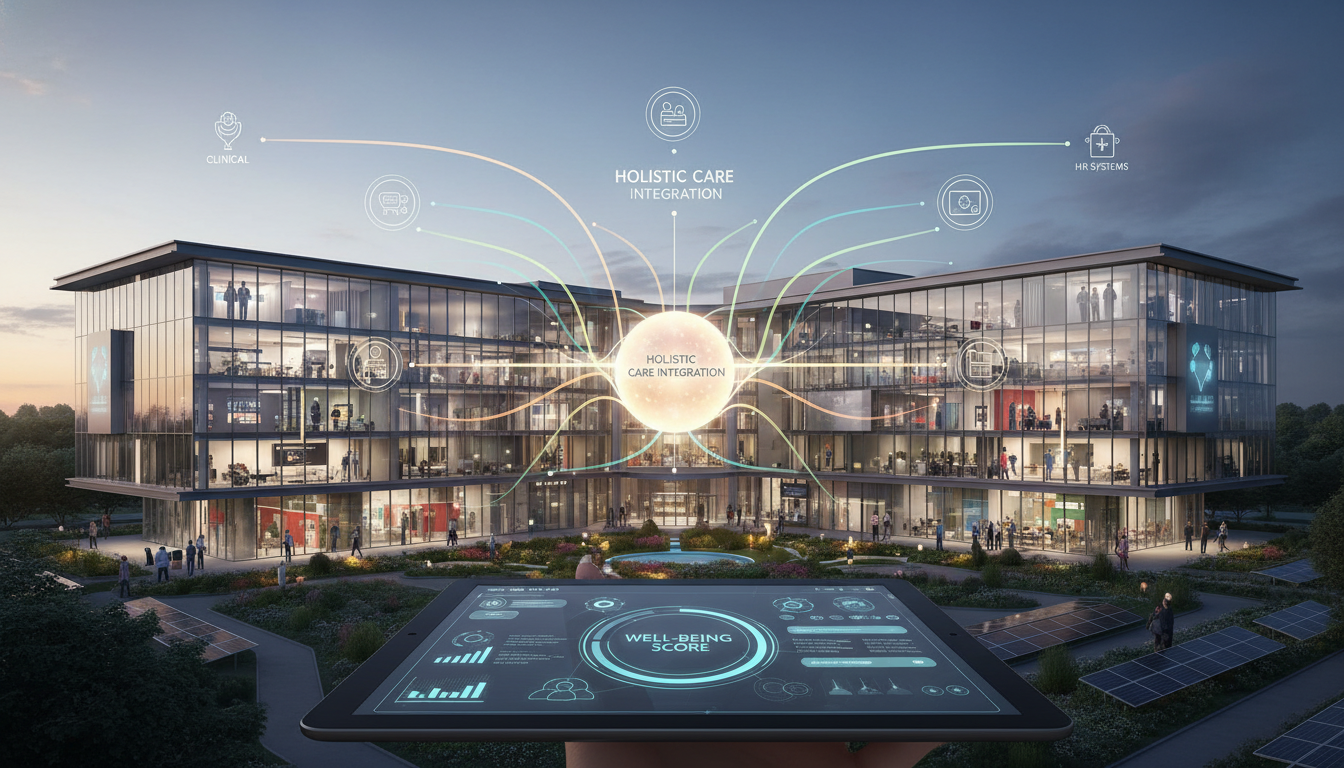
Holistic care—a model that considers the complete individual, focusing on the mind, body, and spirit—is the standard for quality aged care. However, delivering this requires a holistic business structure. The table data [1] states that Holistic Care Integration requires linking Clinical software, financial systems, HR systems, resident experience, and cross-departmental communication.
When systems are unconnected, information must be manually transferred, duplicated, or sought out, creating "information gaps" that compromise care coordination.
Staff Strain and Operational Inefficiency
A significant hidden cost is the time staff spend hunting for data or correcting errors. In unconnected environments:
- Clinical staff may not see up-to-date financial information about a resident's service package, leading to misallocation of time or non-billed services. They may also spend hours inputting the same resident details into multiple systems.
- HR staff struggle to schedule and pay caregivers accurately if the time-and-attendance system is separate from the clinical scheduling tool, leading to compliance risks and payroll disputes.
- Financial teams face delays in billing because they must wait for clinical documentation to confirm services rendered. This slows down cash flow and requires staff to spend valuable time reconciling disparate reports.
This manual workload burdens employees, leading to frustration and burnout, which directly contributes to higher staff turnover—a major financial and operational burden in aged care.
The Financial Fallout of Fragmentation
Disconnected systems make it difficult to get an accurate, real-time picture of the business's bottom line. The search results discuss how disconnected systems lead to higher insurance premiums due to inefficient care [6] and how costs decrease when integrated care models are adopted [3].
Three primary financial costs arise from system fragmentation:
1. Missed Revenue and Leakage
When clinical services are delivered but not accurately recorded in the billing system, revenue leakage occurs. This is common when service packages are complex or when staff are responsible for manual data entry. For example, if a resident receives assistance with daily activities [5], but the clinical system doesn't immediately inform the financial system, that billable service might be missed entirely. A unified system makes certain that services documented at the point of care are automatically translated into revenue items.
2. Regulatory Risk and Compliance Penalties
Aged care is a heavily regulated sector. Audits require providers to show proof of service delivery, staffing levels, and financial transparency. When data resides in disparate systems, compiling audit trails is time-consuming and prone to error. Non-compliance often results in fines and loss of accreditation. Integrated systems provide a single source of truth, making reporting faster and more reliable, thus mitigating these significant risks.
3. Inaccurate Business Insight
Without connected data, leaders cannot effectively monitor key performance indicators (KPIs). For example, it is hard to accurately determine the true cost of delivering a specific type of care package if labor costs (from HR) are separate from supply costs (from Finance) and resident needs (from Clinical). This lack of insight prevents informed decision-making regarding pricing, staffing, and expansion potential [6].
Creating the Resident Journey: Holistic Care and Technology
The ultimate goal of connecting systems is improving the resident experience [1]. Holistic health is a comprehensive approach that addresses the physical, emotional, and spiritual needs of older adults [2].
Disconnected data inhibits truly personalized care. Consider an older adult whose care plan requires specific dietary adjustments (Clinical) and activities tailored to their preferences (Resident Experience). If staff scheduling (HR) fails to account for the necessary time for specialized assistance, or if supply ordering (Financial) runs out of necessary items, the care quality declines.
Empowering Staff, Improving Outcomes
Integrated technology makes it easier for staff to focus on people, not paperwork. A modern, integrated platform allows information flow that supports better outcomes:
- Proactive Safety: AI-powered sensors and technology, as noted in the search results, can monitor activity and detect hazards like falls [7]. Integrating this data directly into the care plan allows for faster staff response and preventative adjustments to the resident's environment or care routine.
- Personalized Service: When resident preferences, clinical requirements, and social engagement history are available in one view, staff can tailor support to meet individual needs, promoting dignity and comfort [2].
- Communication Flow: Cross-departmental communication becomes instant and accurate [1]. For instance, if a resident's mobility changes (Clinical), the maintenance team (HR/Operations) is automatically notified to adjust the height of their bed or install new supports, leading to a smoother, safer experience.
Integrated care models have been shown to improve quality of care, increase patient satisfaction, and improve access to care [4].
Making the Shift to Connected Operations
The transition away from siloed systems is a strategic undertaking, but the benefits—reduced administrative overhead, decreased revenue leakage, improved staff satisfaction, and superior resident outcomes—outweigh the initial effort.
Aged care providers should consider platforms that allow for true data integration across the full spectrum of their business:
- Clinical-to-Financial Linkage: Ensure that services documented at the point of care automatically populate the billing system, securing revenue and decreasing manual reconciliation.
- HR-to-Clinical Connection: Use scheduling and HR software that is informed by resident acuity and clinical requirements, helping inform staffing decisions [8] and ensuring the right skill mix is available at the right time.
- Data Centralization: Move away from disparate databases and spreadsheets toward a unified platform that acts as a central repository for all business and resident data.
By linking all parts of the business—not just care records—providers can achieve the smooth, end-to-end resident journey and the healthier bottom line that modern aged care demands [1].
Frequently Asked Questions (FAQs)
1. What is the biggest hidden cost of disconnected systems in aged care?
The biggest hidden cost is inefficient labor, particularly staff time spent on manual data entry, reconciliation between different programs, and searching for accurate resident information. This inefficiency contributes to staff burnout and high turnover, which is financially taxing and detrimental to service quality.
2. How does system integration help with financial performance?
Integration improves financial performance by preventing revenue leakage (making sure all billable services documented clinically are automatically captured financially), speeding up billing cycles, and reducing regulatory risk by making compliance reporting accurate and fast.
3. What does "holistic care integration" mean in terms of business systems?
Holistic care integration means linking technology systems across the entire organization—including clinical software, financial systems, and HR systems—so that data flows freely between departments. This unified view supports the delivery of care that addresses a resident's complete physical, emotional, and spiritual needs, not just their medical requirements.
4. Can technology integration reduce staff turnover?
Yes. By reducing the frustration associated with administrative burdens, repeated data entry, and hunting for information, integrated systems allow caregivers to spend more time directly supporting residents. This shift improves job satisfaction and retention rates among personnel.
5. Is a fully integrated system the same as an EHR?
An EHR (Electronic Health Record) focuses primarily on clinical documentation and patient history. A fully integrated system goes beyond the EHR by connecting the clinical data with non-clinical systems like finance, billing, scheduling, and HR, providing a complete operational view of the business.
References
- [1] Table Context: Beyond the EHR: Connecting Clinical, Financial, and HR Systems for Holistic Care.
- [2] Friendship Centers (https://friendshipcenters.org/holistic-health-approaches-for-elderly-care/)
- [3] Elderly Care Healthcare Integration (https://www.meegle.com/en_us/topics/elderly-care/elderly-care-healthcare-integration)
- [4] What are the Clinical and Social Outcomes of Integrated Care for Older People? (https://pmc.ncbi.nlm.nih.gov/articles/PMC9504020/)
- [5] Beware of Hidden Fees in Assisted Living Facilities (https://www.aarp.org/caregiving/financial-legal/unexpected-costs-assisted-living/)
- [6] The Hidden Costs of Disconnected Care in Behavioral Health Care (https://bluebrix.health/blogs/the-hidden-costs-of-disconnected-care-in-behavioral-health-care/)
- [7] AI-Powered Senior Living: Enhancing the Resident Experience (https://cliniconex.com/resources/articles/ai-enhancing-resident-experience/)
- [8] How Senior Living is Embracing Technology Innovation (https://www.argentum.org/how-senior-living-is-embracing-technology-innovation/)