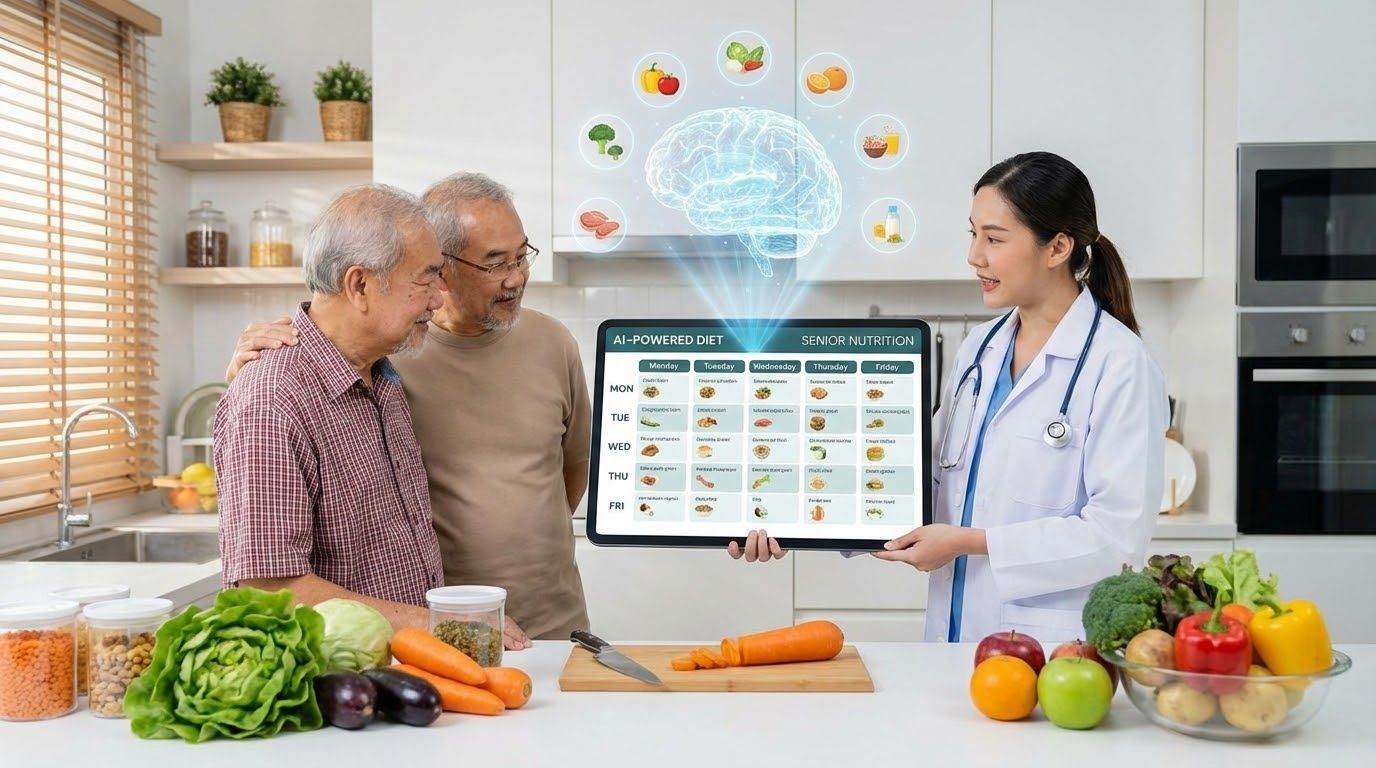


The way we care for our seniors is changing. As technology advances, new tools are becoming available to address complex challenges in aged care, one of the most serious being nutrition. Malnutrition in older adults is a widespread issue, often worsened by existing health conditions, medication interactions, and changing dietary needs.
Today, machine learning—a form of Artificial Intelligence (AI)—is stepping in to provide solutions that were once impossible. These applications analyze health data to create individualized, safe meal plans, moving beyond generic advice to truly customized care. This article examines the function of AI nutrition for elderly care and how it is revolutionizing senior diet planning for better health outcomes.
⚠️ Understanding the Malnutrition Problem in Aged Care
A senior's body has unique nutritional requirements. Metabolism slows down, nutrient absorption changes, and chronic conditions frequently require careful dietary management. What might be a healthy diet for one person could be dangerous for another, especially when multiple medications are involved.
Traditional nutritional advice often falls short because it relies on broad recommendations. Dietitians and caregivers do their best, but manually tracking every health variable, medication dosage, and potential food interaction for a large number of seniors is time-consuming and prone to error. This gap leads to two major issues:
- Undernutrition: Not getting enough calories, protein, or specific micronutrients.
- Drug-Nutrient Interactions: Certain foods can weaken or dangerously strengthen the effect of common medications, such as blood thinners or diabetes drugs.
The goal is malnutrition prevention through precise, data-driven diet strategies. This is where machine learning proves its worth.
🧠 Personalized Nutrition Plans via Machine Learning
Machine learning systems are particularly suited for complex data analysis tasks. When applied to nutrition, these systems do much more than calculate calories; they become sophisticated data processors that account for a senior’s entire medical profile.
How AI Applications Analyze Health Conditions
The core function of these AI tools is health data analysis. They ingest and process several critical data streams:
1. Medical Records and Biometrics
The AI starts by collecting essential medical information. This includes:
- Current diseases (like diabetes, kidney disease, or cardiovascular issues)
- Recent lab results
- Weight, height, body mass index (BMI)
- Specific health goals (e.g., maintaining stable blood sugar or regaining strength)
The system uses this initial profile to set foundational dietary rules, such as sodium limits for hypertension or protein requirements for muscle maintenance.
2. Medication and Interaction Screening
This is arguably the most valuable contribution of AI in senior diet planning. Many seniors take five or more prescription medications daily. The AI cross-references every active ingredient with a massive database of food-drug interactions.
- Example: If a senior is taking Warfarin (a common blood thinner), the AI recognizes that Vitamin K intake must be kept consistent, not eliminated, to prevent dangerous fluctuations in the drug’s effectiveness. The meal plan is then built to keep Vitamin K-rich foods steady.
- Example: If a medication requires it to be taken on an empty stomach, the AI schedules meals around the necessary dosing time.
3. Allergies, Preferences, and Texture Needs
Beyond medical safety, the AI ensures the diet is actually consumable and enjoyable. It accounts for:
- Known food allergies
- Cultural preferences
- Texture modifications (e.g., soft or pureed diets) required due to difficulty chewing or swallowing (dysphagia)
A diet, no matter how healthy, fails if the senior refuses to eat it.
The Process of Automated Meal Planning
Once the data is processed, the machine learning algorithm creates an automated meal planning schedule. This process is dynamic and responsive, meaning the plan changes as the senior’s health data changes.
Step 1: Generating the Core Menu
The AI generates a preliminary menu for the day or week, selecting recipes that meet the caloric, macronutrient (protein, fat, carbohydrates), and micronutrient goals while adhering to all medical restrictions. It uses the supporting keywords like "senior diet planning" and "automated meal planning" to focus on recipes appropriate for the demographic.
Step 2: Refining for Safety and Consistency
The system then runs the menu through its safety checks, specifically focusing on the medication interaction data. If a generated meal conflicts with a prescribed medication or pushes a nutrient (like sugar or sodium) past a safe limit, the AI automatically substitutes the meal or adjusts the serving size.
Step 3: Integrating Real-Time Data
For maximum benefit, these applications often connect to smart devices or electronic health records. If a senior's blood sugar readings are consistently high, the AI recognizes the trend and slightly modifies the next day's carbohydrate intake before a human caregiver intervenes, offering truly proactive care.
✅ Benefits of AI Nutrition for Elderly Care
The adoption of these technologies brings about several concrete benefits for seniors, caregivers, and facilities.
Improved Health Outcomes
By precisely controlling nutrient intake and consistently avoiding dangerous interactions, AI meal plans significantly reduce the risk of re-hospitalization due to malnutrition or medication-related complications. Seniors experience better physical recovery and maintain cognitive function more effectively when their bodies are properly fueled.
Reduced Burden on Caregivers
Automated meal planning takes the guesswork and significant administrative load off human caregivers and dietitians. Instead of spending hours calculating macros and checking drug-food lists, staff can focus on the human side of care: serving meals, monitoring consumption, and providing emotional support. The AI handles the complex computations.
Waste Reduction and Cost Savings
In institutional settings, AI can predict ingredient needs with much greater accuracy based on the customized plans for all residents. This precision helps facilities order only what is necessary, resulting in less food waste and better inventory management, leading to significant cost savings over time.
Promoting Independence
These tools can also be designed for seniors living independently. An app functioning as a personal nutritionist allows an older adult to maintain control over their food choices while receiving instant feedback on safety and nutritional adequacy. This preserves a sense of autonomy while providing a vital safety net.
🔒 Addressing Concerns: Data Privacy and the Human Touch
While the potential of personalized AI nutrition is clear, two major considerations must be addressed for wide acceptance: data privacy and the need for human oversight.
Data Security
Since these applications process highly sensitive medical and personal information, robust security measures are mandatory. Facilities must use platforms that comply with all health privacy regulations (like HIPAA in the US) to protect the data used for health data analysis. Transparency about how data is stored and used is essential for building trust.
The Role of the Dietitian
AI is a tool, not a replacement for human expertise. A machine learning model excels at processing large datasets and maintaining consistency, but a human dietitian brings empathy, culinary knowledge, and the ability to troubleshoot complex, non-standard cases. The most effective systems position AI as an assistant to the dietitian, not a substitute. The dietitian reviews the AI-generated plans, ensuring they fit within the senior's lifestyle and cultural context, and intervenes when a plan needs subjective adjustment.
🚀 The Future of Senior Diet Planning
The current applications of machine learning in personalized nutrition are just the beginning. The future will likely see even deeper integration:
- Genomic Nutrition: AI will one day factor in an individual’s genetic markers to adjust nutrient recommendations for optimal long-term health, moving beyond current conditions to address predispositions.
- Ambient Monitoring: Sensors and wearables will feed passive, real-time data (like activity levels and sleep quality) directly into the AI, allowing meal plans to adjust dynamically throughout the day. If a senior is less active, caloric intake automatically decreases slightly.
- Automated Food Preparation: Robotics connected to the AI plan could eventually prepare and deliver meals perfectly portioned and formulated according to the machine learning instructions, ensuring absolute accuracy from data to plate.
The shift toward AI nutrition for elderly care represents a commitment to providing safety and quality of life in later years. By making sure every meal is precisely tailored to the individual’s medical reality, technology is setting a new standard for thoughtful, effective aged care.
❓ Frequently Asked Questions About AI Nutrition for Elderly Care
1. Are AI meal plans safer than traditional methods?
Yes, in many ways, they offer a higher degree of safety. AI systems can cross-reference thousands of food and drug interactions instantly and continuously, a task that is nearly impossible for humans to do manually and consistently. This drastically reduces the risk of dangerous medication conflicts or nutritional deficiencies caused by human error.
2. Is this technology only for people in nursing homes?
Not at all. While aged care facilities are quickly adopting automated meal planning due to the high volume of residents, these AI tools are also being developed into user-friendly apps for seniors living independently at home. The goal is to provide personalized nutrition plans to anyone who needs them, regardless of their living situation.
3. Does the AI make the food taste better?
The AI’s primary function is safety and nutritional balance. However, by factoring in a senior’s known food preferences and cultural background, the AI helps dietitians and chefs select and prepare meals that the individual is more likely to enjoy, thereby improving intake and adherence to the plan.
4. How often does the AI meal plan change?
The frequency of change depends on the setup and the senior's health status. The AI continuously monitors incoming health data analysis (e.g., blood sugar, weight fluctuations). If a significant change is detected or a medication is adjusted, the plan can update immediately. Otherwise, plans are often reviewed and subtly adjusted daily or weekly to maintain freshness and compliance.