

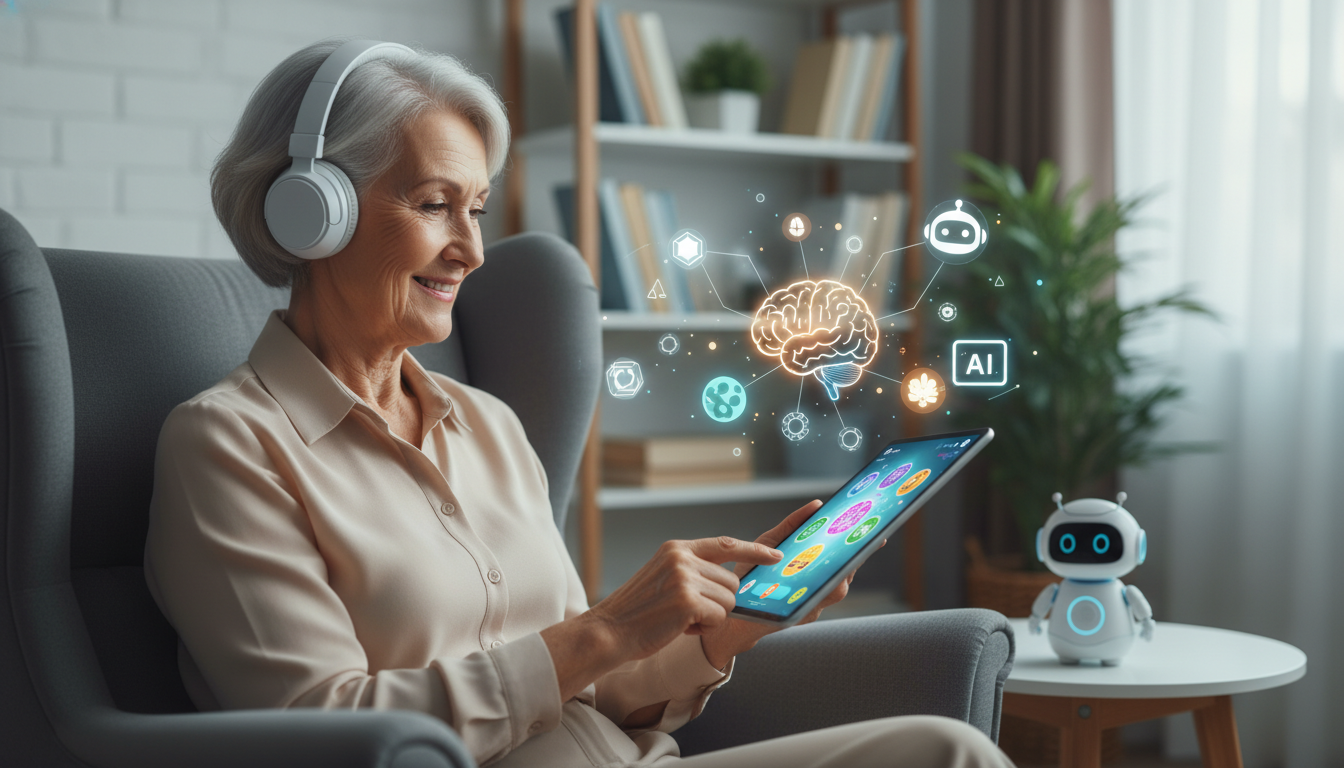


The population is aging globally, bringing with it a growing need for innovative care solutions that support cognitive health. For many seniors, maintaining mental agility is key to independence and quality of life. Traditional memory exercises are valuable, but a new method is showing significant promise: gamification of cognitive exercises for seniors, powered by cognitive training AI.
This technology turns brain workouts into engaging, fun, and personalized gaming experiences. By making the training feel less like a chore and more like a game, AI is revolutionizing how we approach dementia prevention and brain health for older adults.
The Urgent Need for New Approaches to Cognitive Health
As we age, cognitive decline becomes a major concern. While some memory loss is a normal part of aging, conditions like Alzheimer’s disease and other forms of dementia significantly impact lives. Preventing or slowing this decline requires consistent mental stimulation.
For cognitive training to be effective, it must meet two critical criteria: consistency and personalization. If exercises are too easy, they quickly become ineffective. If they are too difficult, they cause frustration, leading seniors to quit. Finding that sweet spot is where artificial intelligence excels.
AI: The Architect of Personalized Cognitive Training
The core innovation in these programs is the AI engine itself. It goes beyond static, pre-set exercises. Instead, the system acts as a highly attentive, real-time coach, adjusting the brain games for elderly players dynamically.
Real-Time Difficulty Adjustment
Imagine a senior playing a memory game. If they are consistently successful, the AI instantly introduces a higher level of complexity—perhaps reducing the time allowed to match pairs or increasing the number of items to remember. Conversely, if the senior begins to struggle or show signs of frustration (which the system can sometimes monitor through reaction times and inputs), the AI gently scales back the difficulty.
This adaptive mechanism ensures that the senior is always operating within the zone of productive challenge—a concept researchers call the "flow state." This continuous adjustment is fundamental to stimulating neuroplasticity, the brain’s ability to reorganize itself by forming new neural connections.
Tracking and Tailoring Progress
Beyond adjusting difficulty, AI systems track performance across multiple cognitive domains, such as:
- Working memory
- Processing speed
- Attention span
- Problem-solving abilities
By creating a detailed, longitudinal profile of a user's cognitive strengths and weaknesses, the AI can tailor the sequence and type of serious games offered. For example, a senior who performs well on verbal tasks but struggles with spatial reasoning will receive a tailored sequence of games designed to specifically target those weaker areas, maximizing the training impact. This level of personalized feedback and curriculum design is impossible to deliver consistently without advanced computational power.
Why Gamification Works: Making Training Enjoyable
The problem with many traditional cognitive exercises is engagement. They can feel repetitive and lack motivating elements. Gamification solves this by incorporating typical game mechanics into the training activities:
Rewards and Milestones
Successful completion of tasks or sustained effort is rewarded with points, badges, virtual currency, or the unlocking of new game levels. These small, immediate rewards provide positive reinforcement and encourage continued participation.
Narrative and Theme
Many brain games for elderly users are wrapped in appealing themes, such as virtual travel, gardening, or puzzle-solving adventures. This narrative layer distracts the user from the fact that they are performing strenuous cognitive work, turning a perceived therapy session into a pleasant activity.
Social Connection (Optional)
Some platforms permit friendly competition or collaborative play among users. Social interaction is known to be a powerful stimulus for cognitive health, and integrating this element into the games combats the isolation that many seniors face.
The Science Behind Cognitive Training AI
The principles guiding these systems are rooted in cognitive neuroscience. The goal is not just to practice memory, but to genuinely change the brain’s structure and function through high-intensity, structured activity that pushes mental boundaries.
Stimulating Neuroplasticity
Neuroplasticity is the biological foundation of effective cognitive training. When the brain is challenged just the right amount—neither too easy nor too hard—it generates new synapses and strengthens existing neural pathways. The AI’s ability to precisely control the challenge level ensures that the cognitive load is always sufficient to induce these positive structural changes. This makes the training directly relevant to long-term dementia prevention efforts.
Transfer Effects
A critical measure of any cognitive training is whether the improvements achieved in the game transfer to real-world function. While the research is ongoing, many AI-driven programs are designed using tasks that mimic real-life challenges, such as tracking multiple pieces of information simultaneously or quickly shifting attention. If successful, skills learned in the game, such as increased processing speed, can help seniors perform daily activities, like managing finances or following complex conversations, more efficiently.
Practical Applications in Aged Care
Cognitive training AI is finding its place in various care settings, moving beyond individual home use to professional environments:
Residential Care Facilities
In assisted living and nursing homes, AI games provide a structured, measurable activity for residents. Staff can easily track participation and progress, generating data that can inform individual care plans. The games are easy to administer and can be accessed via tablets or specialized consoles, requiring minimal technical skill from the user.
Telehealth and Remote Monitoring
For seniors living independently, these platforms offer a crucial connection to cognitive assessment. The detailed data collected by the AI can flag subtle changes in cognitive function months or years before they might be noticed in a standard clinical setting. This early warning system allows healthcare providers to intervene sooner, potentially altering the progression of age-related cognitive decline.
Support for Caregivers
The systems also provide valuable tools for family caregivers. By showing tangible metrics of engagement and progress, they offer reassurance and structure to the daily routine. Caregivers gain insights into the specific cognitive difficulties faced by their loved one, helping them adjust communication and support strategies accordingly.
The Future Trajectory of Brain Games
The technology is rapidly advancing. Future iterations of cognitive training AI are expected to connect even more deeply with other areas of senior health.
Integration with Physical Activity
The next wave of development involves integrating cognitive training with physical exercise. Research shows that combining mental and physical exertion yields superior results for brain health. Future serious games might require simultaneous physical movement, like balancing or stepping, while solving a complex cognitive task, further accelerating the benefits of neuroplasticity.
Biofeedback and Emotion Monitoring
Advanced systems are beginning to incorporate sensors that monitor biometric data, such as heart rate variability, skin conductance, or even basic facial expressions. This biofeedback allows the AI to gain a deeper understanding of the user’s stress and engagement levels, making the real-time difficulty adjustments even more precise. If a user is becoming overly anxious, the game can pivot instantly to a more calming activity, ensuring the training remains a positive experience.
Predictive Modeling
The vast amounts of data collected by millions of users will eventually be used to build sophisticated predictive models. These models could identify which specific training protocols are most effective for individuals based on their genetic markers, lifestyle, and existing cognitive baseline, truly customizing dementia prevention strategies at a population level.
A New Era of Active Aging
The introduction of cognitive training AI through gamified platforms represents a fundamental shift in how we view and support senior cognitive health. It moves the focus from passively accepting decline to actively strengthening the mind through enjoyable, personalized, and scientifically grounded methods. By embracing the fun and adaptiveness of these brain games for elderly populations, we are giving seniors the tools to protect their independence and maintain sharp minds well into their later years.
Frequently Asked Questions About Cognitive Training AI
1. How often should seniors use these brain games for them to be effective?
Consistency is crucial. Most studies suggest that participating in cognitive training AI games for three to five sessions per week, with each session lasting 20 to 45 minutes, yields the most measurable benefits for neuroplasticity. The AI system itself is designed to track usage and encourage a consistent routine without causing burnout.
2. Can these AI-driven games really prevent dementia?
While no current technology guarantees the absolute prevention of dementia, consistent, high-quality cognitive stimulation—such as that provided by adaptive serious games—is a key factor in building cognitive reserve. Increased cognitive reserve helps the brain withstand damage and may delay the onset or slow the progression of symptoms associated with age-related cognitive decline. This makes it a proactive strategy for dementia prevention.
3. Are these cognitive training systems difficult for seniors to learn?
The designers of these brain games for elderly users typically place a high priority on accessibility. The interfaces are usually designed to be intuitive, using large buttons, clear graphics, and minimal text. The AI’s ability to adjust difficulty also means that a beginner can start with very simple tasks and gradually increase complexity as their comfort with both the technology and the cognitive challenges improves.
4. What is the main difference between these AI games and simple mobile puzzle games?
The primary difference lies in the underlying technology and purpose. Simple mobile puzzles are often static and designed for entertainment. AI-driven cognitive training programs, however, are dynamic: they constantly measure user performance against scientific metrics, adjust difficulty in real-time to maintain the optimal challenge level, and focus on targeting specific cognitive domains critical for maintaining real-world function, making them a true form of cognitive training AI.


