

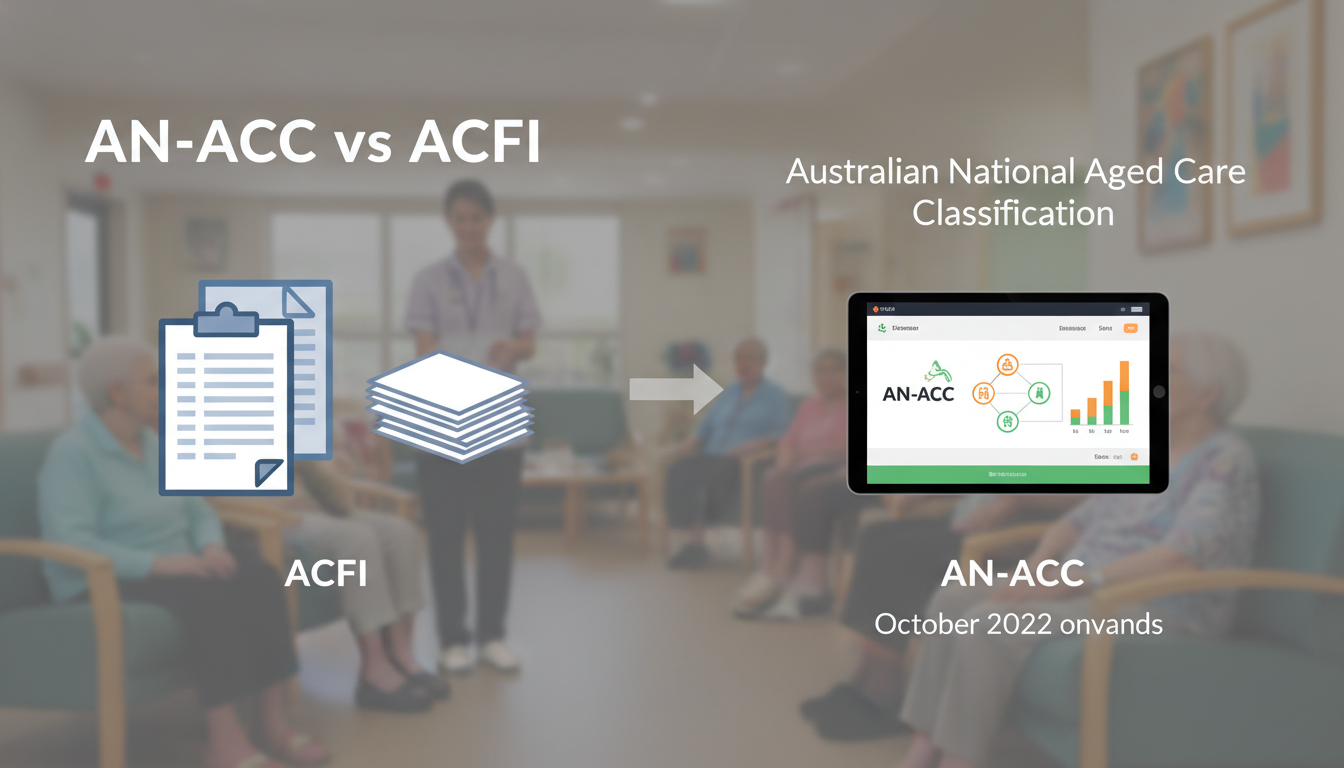


In Australian aged care, understanding funding models is very important for facility operations. The shift from the Aged Care Funding Instrument (ACFI) to the Australian National Aged Care Classification (AN-ACC) marks a big change. This guide explains the core differences between AN-ACC vs ACFI, helping you understand what this means for your aged care facility.
Key Takeaways
- AN-ACC replaced ACFI as the primary aged care funding model in Australia.
- AN-ACC focuses on resident care needs, assessed independently.
- ACFI relied on facility staff assessments and documentation.
- The new model aims for fairer funding distribution based on care requirements.
- Facilities must adapt operations, documentation, and staff training for AN-ACC.
Introduction to Aged Care Funding in Australia
Australia's aged care sector has seen many changes, especially concerning how facilities receive funding. For a long time, the Aged Care Funding Instrument (ACFI) was the main system. It helped decide how much money a facility got based on the care residents needed. However, the government decided to replace ACFI with a new system called the Australian National Aged Care Classification (AN-ACC). This change happened to make funding fairer and better match the actual care needs of older Australians. Understanding the AN-ACC vs ACFI comparison is essential for anyone involved in aged care.

What Was ACFI?
The Aged Care Funding Instrument (ACFI) was the funding model used in Australian residential aged care from 2008 until September 2022. It was designed to link funding levels to the care needs of residents.
Here are the main features of ACFI:
- Assessment Process: Facilities used a self-assessment process. Your staff would assess residents across three care domains:
- Activities of Daily Living (ADLs)
- Complex Health Care
- Behavior
- Documentation: Detailed documentation was very important. Facilities had to keep records to support their ACFI claims. This included care plans, progress notes, and specific assessment tools.
- Funding Levels: Based on the assessments, residents were classified into different funding categories. These categories then determined the amount of government funding your facility received for that resident's care.
- Review System: ACFI claims were subject to reviews by the Department of Health. If documentation did not support the claim, funding could be adjusted.
While ACFI aimed to provide funding based on need, it faced criticism for its complexity and the administrative burden it placed on facilities. There were also concerns about the accuracy of self-assessments.
Introducing AN-ACC: The ACFI Replacement
The Australian National Aged Care Classification (AN-ACC) is the new funding model for residential aged care in Australia. It officially began on October 1, 2022, replacing ACFI. This ACFI replacement was a key recommendation from the Royal Commission into Aged Care Quality and Safety.
The AN-ACC model was created to:
- Provide fairer and more transparent funding for aged care.
- Better match funding to the actual care needs of residents.
- Reduce the administrative load on aged care providers.
- Focus on independent assessments rather than facility self-assessments.
Under AN-ACC, funding is based on a resident's individual care needs, determined by an independent assessment. This is a big change from the ACFI system.
AN-ACC vs ACFI: Core Differences
The shift from ACFI to AN-ACC represents a significant change in how aged care facilities are funded. Here is a direct aged care funding comparison:
- Assessment Method:
- ACFI: Relied on facility staff to assess residents' care needs and submit claims.
- AN-ACC: Uses independent assessors to evaluate residents. These assessors are external to your facility.
- Classification:
- ACFI: Classified residents into different categories based on three care domains (ADLs, Complex Health Care, Behavior).
- AN-ACC: Classifies residents into 13 different AN-ACC classes. This classification is based on the independent assessment and considers factors like mobility, cognitive function, and other care needs.
- Funding Components:
- ACFI: Funding was primarily linked to the ACFI classification.
- AN-ACC: Funding has three parts:
- Base Care Tariff: A fixed amount paid for each resident, covering shared care costs.
- Care Funding: An amount based on the resident's AN-ACC class, reflecting their individual care needs.
- One-off Adjustment: A payment for specific care events, like palliative care.
- Focus:
- ACFI: Focused on documenting care provided to justify funding.
- AN-ACC: Focuses on the resident's individual characteristics and care requirements, as determined by an independent clinical assessment.
- Administrative Burden:
- ACFI: Placed a significant administrative burden on facilities for assessment and documentation.
- AN-ACC: Aims to reduce this burden by moving to independent assessments, allowing facility staff to focus more on direct care.
This aged care funding comparison highlights that AN-ACC is a more resident-centric model, aiming for accuracy and fairness in funding allocation.
How AN-ACC Affects Aged Care Facilities: Provider Impact
The introduction of AN-ACC has a direct provider impact on how aged care facilities operate and manage their funding. You will need to make several adjustments to adapt to the new system.
Here are some key areas of provider impact:
- Assessment Process: Your staff no longer conduct the primary funding assessments. Instead, independent assessors will visit your facility to assess residents. Your role shifts to facilitating these assessments and providing relevant resident information.
- Care Planning: While AN-ACC determines funding, your facility remains responsible for developing and delivering person-centered care plans based on residents' assessed needs. The AN-ACC class provides a general guide to care intensity.
- Staffing: The new funding model may influence staffing models. You will need to ensure you have the right mix of staff to meet the care needs funded by AN-ACC. This could involve reviewing your current staffing levels and skill mix.
- Documentation: While the assessment burden is reduced, accurate documentation of care delivered remains important for quality assurance and regulatory compliance. You will need systems to track resident care and outcomes.
- Financial Management: Understanding the AN-ACC funding components (Base Care Tariff, Care Funding, One-off Adjustment) is vital for your financial planning and budgeting. You will need to track revenue streams differently than under ACFI.
The goal of AN-ACC is to link funding more closely to care needs, which should lead to better outcomes for residents and a more sustainable sector.
Preparing for AN-ACC: Steps for Your Facility
To successfully transition to and operate under the AN-ACC model, your aged care facility needs a strategic approach. Here are steps you can take:
- Understand the Model: Make sure all relevant staff, especially management and clinical teams, fully understand the AN-ACC framework, its assessment process, and funding components.
- Review Operations:
- Care Management: Assess how your current care planning and delivery align with AN-ACC's focus on resident needs.
- Staffing: Evaluate your staffing mix and levels to ensure they meet the needs indicated by AN-ACC classifications.
- Data Management:
- Resident Information: Ensure your resident data is accurate and easily accessible for independent assessors.
- Reporting: Develop systems to track AN-ACC classifications and related funding.
- Staff Training:
- Train staff on the AN-ACC assessment process, including how to interact with independent assessors and provide relevant information.
- Educate staff on the importance of accurate care documentation.
- Financial Planning:
- Adjust your budgeting and financial forecasting to reflect the AN-ACC funding structure.
- Monitor funding streams closely to understand the financial impact.
Proactive preparation will help your facility adapt smoothly to the new funding landscape and ensure continued quality care for residents.
The Role of Technology in AN-ACC Compliance
Technology plays a very important role in helping aged care facilities manage the AN-ACC model effectively. Using the right software can simplify processes and improve compliance.
Here is how technology can help:
- Resident Information Systems:
- Store all resident data in one place, making it easy for independent assessors to access relevant information.
- Track care plans, progress notes, and clinical assessments.
- Reporting and Analytics:
- Generate reports on AN-ACC classifications and associated funding.
- Analyze care needs across your facility to inform staffing and resource allocation.
- Staff Management Tools:
- Help manage staff rosters and ensure appropriate skill mix based on resident AN-ACC classes.
- Track staff training and competencies related to AN-ACC requirements.
- Integration:
- Integrate with other systems, such as financial software, to provide a complete picture of your facility's operations and funding.
Governa AI offers solutions designed to support aged care providers in navigating the complexities of AN-ACC, helping you manage resident data, optimize care planning, and ensure compliance.
Conclusion
The transition from ACFI to AN-ACC represents a major change in Australian aged care funding. While ACFI relied on facility self-assessments, AN-ACC brings in independent assessments to ensure fairer funding based on resident care needs. This ACFI replacement requires aged care facilities to adapt their operations, documentation, and financial planning. By understanding the core differences and preparing effectively, you can ensure your facility continues to provide high-quality care under the new AN-ACC model.

Frequently Asked Questions
What does AN-ACC stand for?
AN-ACC stands for Australian National Aged Care Classification.
When did AN-ACC replace ACFI?
AN-ACC officially replaced ACFI on October 1, 2022.
Who conducts AN-ACC assessments?
Independent assessors, who are external to the aged care facility, conduct AN-ACC assessments.
How does AN-ACC affect funding for aged care facilities?
AN-ACC affects funding by basing it on independent assessments of resident care needs, using a three-part funding model (Base Care Tariff, Care Funding, One-off Adjustment), rather than the facility-led assessments of ACFI.
What should aged care facilities do to prepare for AN-ACC?
Aged care facilities should understand the new model, review their operations, manage data effectively, train staff, and adjust financial planning.


