

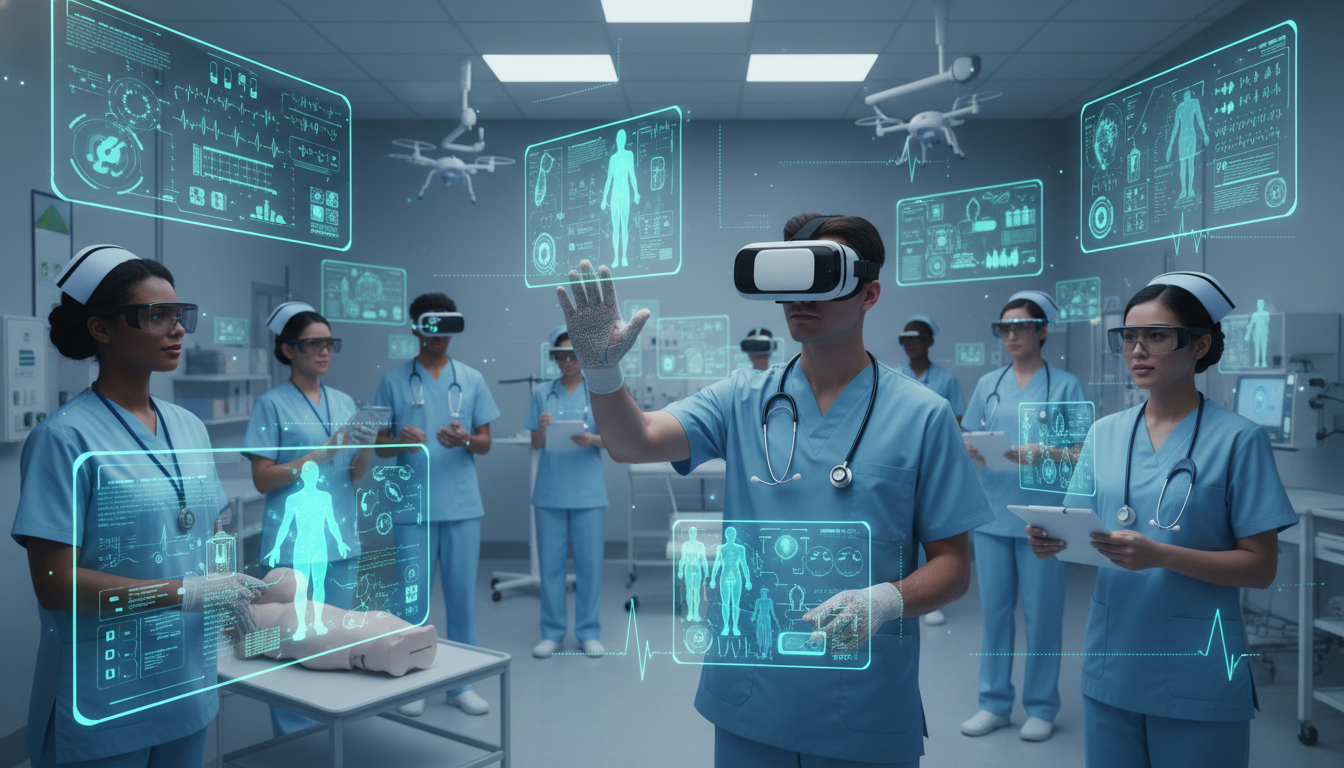


The intersection of technology and healthcare is continually evolving, with Artificial Intelligence (AI) standing out as a significant area of development. Far from replacing the human touch, AI is establishing itself as a powerful tool to support caregivers, refine patient care, and revolutionize how nurses receive training. By thoughtfully integrating AI into aged care and nursing practice, health professionals can dedicate more time to relationship-building and complex patient needs, resulting in better outcomes for all involved.
AI in Aged Care: Redefining Human-AI Partnership
The goal of introducing AI into elderly care is not to automate compassion, but to support a higher quality of life for residents and reduce the burden on human staff. This approach centers on creating a "Human-AI Partnership," where technology takes on repetitive, data-heavy tasks, allowing caregivers to focus on what humans do best: providing personalized, empathetic support.
In practical application, AI technologies are capable of automating routine tasks and accurately predicting potential health risks. This capability frees up human caregivers significantly. Instead of spending time on mundane monitoring or data logging, staff can devote their attention to person-centered care, dignity, and relationship-building. By reducing administrative workload and offering early warning signs of issues like falls or sudden changes in health status, AI directly addresses and helps mitigate staff burnout, creating a healthier working environment. The technology functions as an extension of the human carer, ensuring that AI complements and supports human interaction, rather than diminishing it.
AI Tools in Aged Care
AI tools being adopted in aged care often address critical areas:
- Risk Prediction: Algorithms analyze historical and real-time data to spot subtle patterns indicating increased risk of falls, infections, or other complications, triggering alerts before a crisis occurs.
- Routine Automation: AI-powered systems can handle scheduling, medication reminders, and documentation, ensuring accuracy while freeing up nursing hours.
- Personalized Interventions: Data analysis informs care plans, ensuring that interventions are tailored precisely to the individual resident's preferences and evolving health status.
This approach acknowledges that true care requires emotional connection and judgment—qualities only humans possess—while recognizing that technology can manage the complex data flow needed for efficient, safe operations.
Preparing the Future Workforce: AI in Nursing Education 🎓
Just as AI is changing the practice of nursing, it is fundamentally changing how future nurses learn their trade. The next generation of nurses will rely on technologies that provide highly realistic, accessible, and individualized training environments.
Nursing education is moving beyond traditional classroom settings through the integration of cutting-edge tools like Virtual Reality (VR) and Augmented Reality (AR). When combined with Generative AI (GenAI), these technologies offer potential future applications that promise immersive and highly realistic clinical skills simulation.
Next-Generation Learning Tools
The combination of GenAI, VR, and AR allows educational programs to construct scenarios that perfectly mimic complex patient care situations without any real-world risk.
- Virtual Clinical Settings: Students can practice critical procedures, handle emergencies, and interact with virtual patients whose responses are dynamically adjusted by GenAI based on the student's actions.
- Personalized Learning Paths: AI can monitor a nurse's pace and learning style, identifying areas where they struggle or excel. The system then tailors the curriculum and simulations to fit the individual’s needs, offering focused practice on specific clinical skills. This ensures every student gains proficiency at their own speed.
- Feedback and Assessment: AI provides immediate, objective feedback on performance, offering data-driven insights that traditional instructors might miss.
This forward-looking view of education shows how technology will allow nurses to enter the workforce with a deeper, more practical understanding of patient needs, developed through realistic simulations.
The Ethical Foundation of AI Implementation
While the benefits of AI in healthcare are clear—improved efficiency, better risk management, and superior educational resources—its introduction must be grounded in ethical considerations. The conversation around AI in care must always return to the core values of medicine and nursing: safety, dignity, and autonomy.
Key Ethical Considerations:
- Data Governance and Privacy: AI systems rely on vast amounts of patient data. Strict protocols must protect this sensitive information, ensuring transparency about how data is collected, stored, and used to inform care decisions.
- Bias Mitigation: If AI algorithms are trained on biased data, they may perpetuate or worsen existing health inequities. Continuous auditing and careful design are necessary to ensure fairness and equitable outcomes for all patient populations.
- Accountability: When an AI system informs a medical decision, establishing clear lines of responsibility remains crucial. The AI is a tool, but the ultimate accountability for patient care rests with the human professional.
- Preserving the Human Connection: The primary function of AI in care should always be supportive, never subtractive. It must not diminish the importance of human empathy, judgment, and connection, which are irreplaceable aspects of quality caregiving.
By thoughtfully addressing these ethical challenges, the healthcare community can guarantee that AI serves as a truly helpful partner, maintaining the integrity of the caregiver-patient relationship while bringing technological advances to the bedside.
Frequently Asked Questions
1. Does AI replace the need for human nurses or caregivers?
Absolutely not. AI is implemented to automate routine, data-heavy tasks and predict risks. This supports human staff by freeing up their time, allowing them to spend more time providing empathy, relationship-building, and complex, person-centered care. AI works as a tool to support, not substitute, the human element of care.
2. How does AI specifically aid in person-centered care?
By managing routine monitoring and documentation, AI reduces the burden on staff. This time savings allows caregivers to focus their energy on the individual needs and preferences of the person they are supporting. The Human-AI Partnership ensures that staff have the capacity to deliver care that respects the dignity and autonomy of the resident.
3. What are the main benefits of using VR/AR in nursing education?
The combination of Virtual Reality, Augmented Reality, and AI creates highly realistic clinical simulations. This allows student nurses to practice complex skills and handle high-risk situations in a safe, controlled environment. The educational approach becomes personalized, tailoring the learning pace and practice scenarios to the individual student’s needs.
4. What safeguards are in place to manage patient data used by AI?
All AI applications in healthcare must strictly follow established data governance and privacy laws. This involves transparency about data collection, robust encryption methods, and protocols to protect sensitive patient information from unauthorized access or misuse. Ethical guidelines require that these systems maintain the highest standards of confidentiality.
5. How is AI currently being implemented in elderly care settings?
AI is being applied primarily in areas of risk management, automation, and predictive analytics. This includes monitoring residents for signs of distress or falls, automating medication reminders, and analyzing data to give staff early warnings about potential health deteriorations. This leads to better resource allocation and proactive rather than reactive care.


