

The aging global population presents significant challenges for elderly care systems. As demand for care services rises, providers are seeking innovative solutions to maintain high standards of quality, personalize care, and support the hardworking staff. Artificial Intelligence (AI) is emerging as a powerful ally in this mission, not by replacing human interaction, but by creating a Human-AI Partnership [1] that allows care staff to focus on what matters most: compassion and relationship-building.
This article examines how AI is transforming aged care, covering practical applications, ethical considerations, and the future outlook for technology that genuinely supports the dignity and well-being of older adults.
Understanding the Role of AI in Senior Care
AI in aged care is generally classified by the functions it performs—monitoring, automating tasks, predicting risks, and assisting in daily activities. Instead of automating empathy, AI takes on routine tasks and data analysis, freeing up human caregivers.
Beyond Automation: Supporting Person-Centred Care
One of the greatest benefits of introducing AI is its capacity to support person-centred care [1]. By automating mundane, repetitive tasks, AI gives care staff the gift of time. Caregivers can spend less time documenting and performing administrative duties, and more time engaging with residents, addressing specific needs, and building meaningful connections. This shift is essential for reducing staff burnout [1] and improving job satisfaction among care professionals.
When staff members are less burdened by routine responsibilities, they can offer greater empathy and dignity [1] in their interactions, turning moments that were purely transactional into opportunities for genuine connection. AI functions as an augmentation [1] of the human caregiver, extending their reach and capabilities.
Practical Applications: How AI Is Being Applied Today
The real-world application of AI in senior care spans several technological domains, each designed to improve safety, health outcomes, and independence.
1. Computer Vision: Monitoring Behavior and Routine
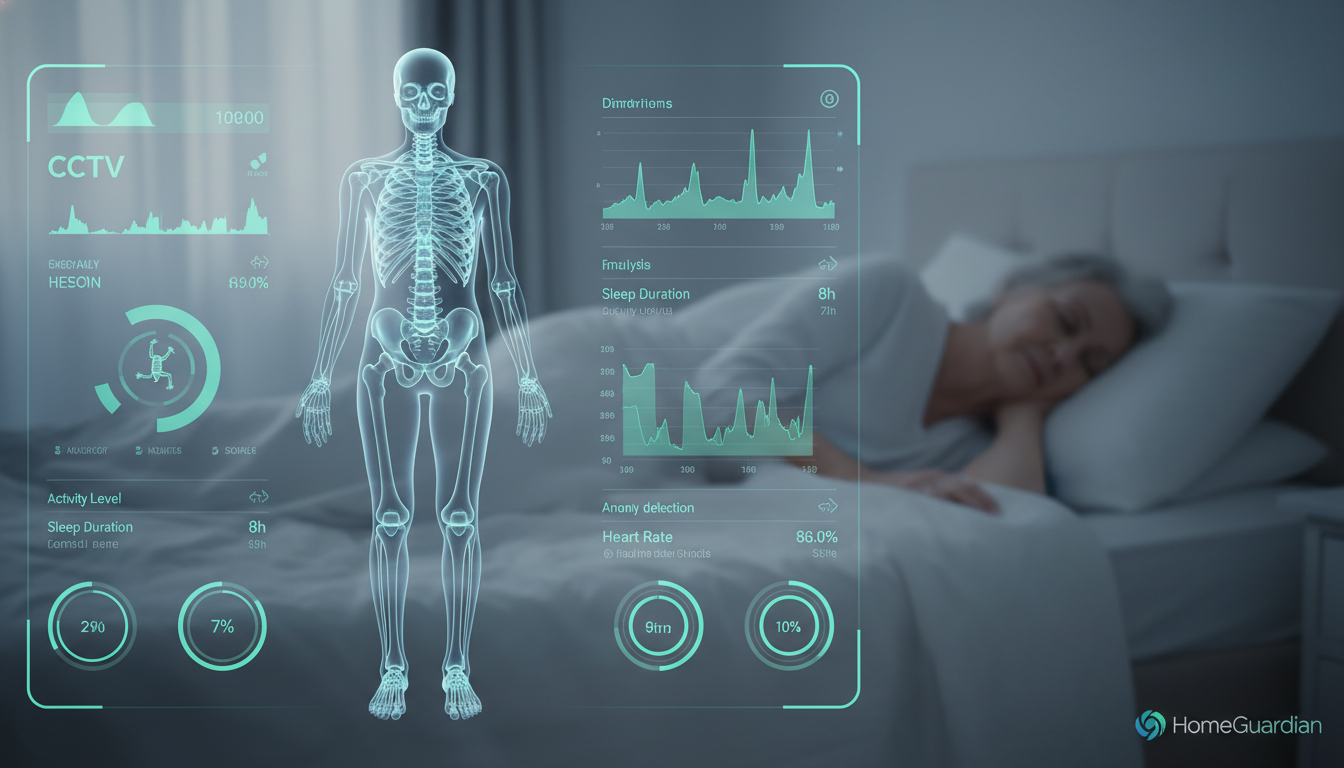
Computer Vision [1] systems use cameras and AI to monitor environments and analyze behavior without requiring residents to wear intrusive devices. These systems are programmed to understand normal routines and identify subtle behavior changes [1].
For example, a sudden decrease in activity, a change in gait, or abnormal sleeping patterns can be flags that something is wrong. By performing routine analysis [1] and anomaly detection [1], AI can alert services to potential health issues, like a developing infection, malnutrition, or early signs of decreased mobility.
Products like HomeGuardian [1] exemplify how AI-powered CCTV [1] is used to detect falls and distress events accurately and quickly, providing peace of mind and faster response times. This passive monitoring method is often preferred as it respects privacy while still providing a layer of security.
2. Predictive Risk Assessment
AI is highly skilled at processing large volumes of data—clinical records, vital signs, and activity logs—to predict potential risks. This is particularly valuable for identifying residents at high risk of:
- Falls
- Pressure sores
- Sudden declines in health
By predicting these events before they occur, care providers can intervene proactively with preventative measures, reducing hospitalizations and improving overall resident safety.
3. Robotics and Assistive Devices
While humanoid robots often capture the public imagination, many AI applications in this area focus on practical assistance. These include:
- Smart medication dispensers
- Robotic lifts for safe patient movement
- Companion robots designed to address loneliness and social isolation
The goal is to assist in Activities of Daily Living (ADLs) and offer emotional support where human staff may not be available 24/7.
Addressing Ethical and Privacy Concerns
The introduction of surveillance and data collection technologies in care environments rightly raises questions about ethics, privacy, and consent.
Data Security and Consent
Since AI systems rely on data about personal health and behavior, robust security measures are mandatory. Providers must establish clear, transparent policies regarding what data is collected, how it is stored, and who has access. Obtaining informed consent from residents or their legal representatives is paramount for the acceptance and ethical deployment of these technologies.
Maintaining the Human Touch
A common worry is that technology will dehumanize care. The successful implementation of AI hinges on the commitment that AI will extend human interaction, not replace it. The discussion around technology must always return to the core purpose: supporting the human carer and maintaining the dignity [1] of the person receiving care. AI should serve as a tool that frees up human staff to be more human.
The Future of AI in Aged Care
The trajectory of AI in senior care points toward increasingly personalized and integrated systems. Future applications will likely include:
- Customized Care Plans: AI systems will move beyond risk prediction to create hyper-personalized care protocols that adjust dynamically based on real-time data and individual preferences.
- Virtual Assistants: Voice-activated AI companions will help seniors manage their schedules, connect with family, and seek assistance, offering greater independence within their homes or facilities.
- Remote Monitoring: Advanced remote health monitoring, supported by AI analysis, will allow older adults to age in place safely for longer, reducing the strain on residential care facilities.
Content Strategy for Senior Living: Reaching Families with AI-Friendly Information
For organizations in the aged care sector, the rise of AI not only changes operations but also affects how families search for information. When families are asking AI tools about senior care, providers need to adjust their content and digital strategy.
Search Engine Optimization (SEO) and geographic optimization (GEO) remain important to keep your site visible to families using Google [2].
Creating Trustworthy, AI-Friendly Content
AI models, including those powering search results, favor content that adheres to E-E-A-T principles (Experience, Expertise, Authoritativeness, and Trustworthiness) [2]. To ensure your organization's content is deemed reliable enough to be cited by AI overviews, focus on:
- Expertise and Authority: Ensure medical and care information is authored or reviewed by certified professionals.
- Question-Based Content: Write content that directly answers the specific questions families ask AI tools about care options, technology, costs, and availability [2].
- Technical SEO Practices: Using technical components like schema, structured data, and adhering to local SEO standards helps make your site easily understood and crawlable by AI systems [2].
By addressing the real concerns of families through trustworthy, accessible information, aged care providers can successfully connect with those seeking support.
Frequently Asked Questions About AI in Elderly Care
Q1: Will AI replace human caregivers?
A: No. AI is designed to support and augment human caregivers by automating routine tasks, analyzing data, and predicting risks. This frees up staff to focus on the essential human aspects of care, such as empathy, relationship-building, and emotional support.
Q2: How does computer vision protect privacy while monitoring residents?
A: Computer vision systems monitor behavioral patterns, such as movement, falls, or changes in routine, without the need for constant human supervision. These systems focus on detection and alerts rather than continuous observation, and are often preferred over wearable devices, respecting the resident's freedom.
Q3: What are the main ethical concerns regarding AI in aged care?
A: The primary ethical concerns involve data security, privacy, and ensuring informed consent for the collection of personal health and behavioral data. Providers must maintain transparency and ensure AI deployment consistently supports the resident’s dignity and independence.
Q4: Can AI help seniors age independently at home for longer?
A: Yes, AI-powered systems, including remote monitoring tools and smart assistive devices, can monitor health conditions and detect emergencies in the home. This technology provides an extra layer of safety, allowing older adults to remain in their homes comfortably and securely for a longer duration.