

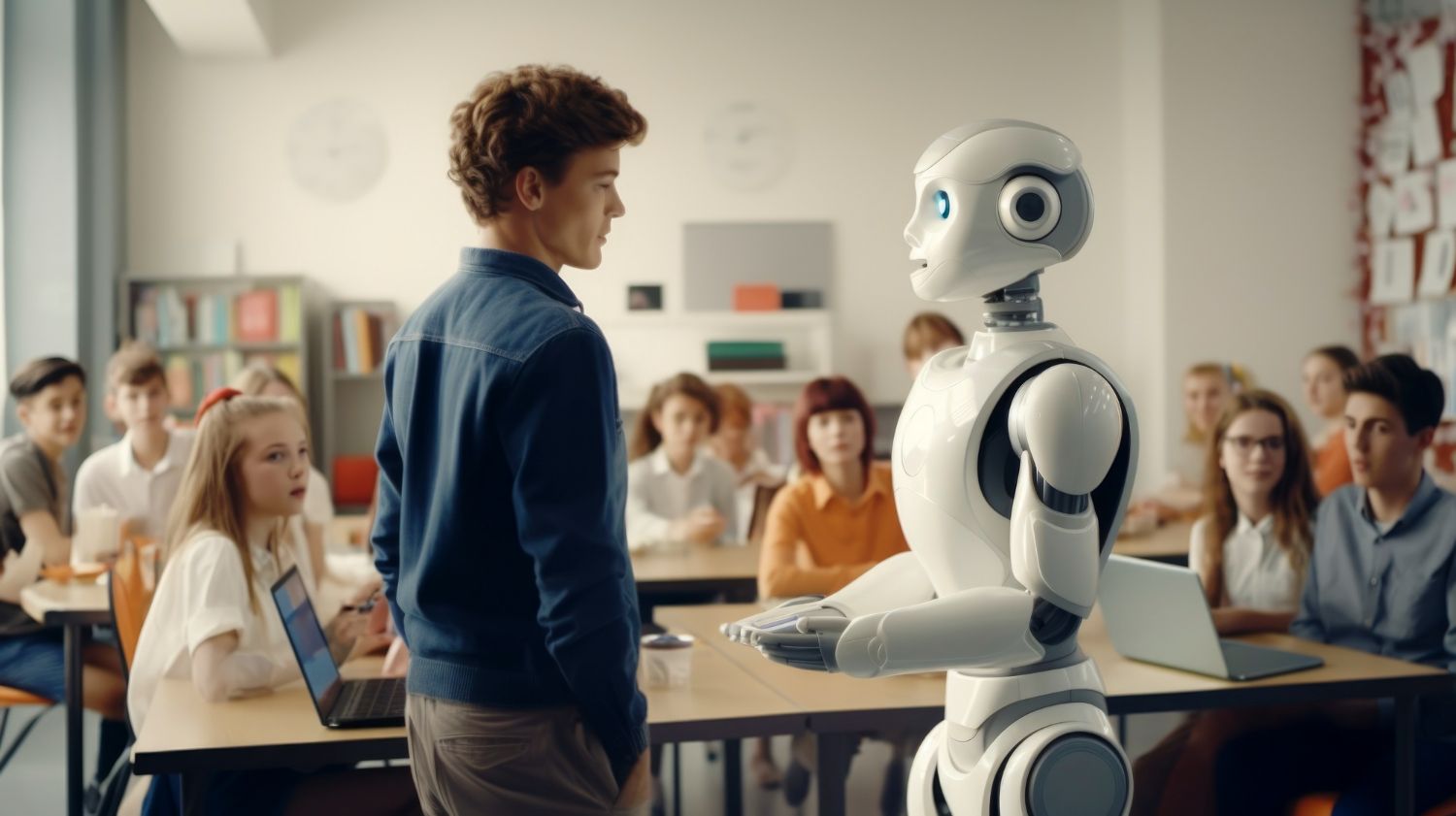


🤖 AI-Driven Growth: The Future of Continuing Professional Development
The working world is changing at an incredible speed. New technologies, especially artificial intelligence (AI), are reshaping industries and redefining what it means to be skilled. For professionals across all fields, staying current is no longer optional—it's a requirement for ongoing success. This necessity has put a spotlight on Continuous Professional Development (CPD), and AI is showing itself to be the most powerful tool yet for supporting lifelong learning.
CPD, also known as continuing education (CE), is the structured method professionals use to maintain, improve, and broaden their knowledge and competence. Historically, this meant attending annual conferences, sitting through training sessions, or completing standardized courses. While these methods served their purpose, they often felt disconnected from the individual's specific needs or daily work.
AI is fundamentally altering this experience. It moves CPD from a one-size-fits-all requirement to a tailored, dynamic, and integrated part of a professional’s career. By moving beyond traditional models, we can make learning more effective, relevant, and accessible.
The Personalized Study Plan: Moving Beyond the Standard Curriculum
One of AI's greatest contributions to CPD is its capacity for personalization. Think about traditional training: everyone gets the same materials, regardless of their background, current skill set, or learning preferences.
AI-powered systems change this completely. They collect data on how a person learns—their speed of understanding, their preferred content format (visual, auditory, or hands-on), and areas where they struggle or succeed. [5]
Based on this data, the AI constructs a truly custom study path.
How AI Customizes Learning:
- Learning Style Adaptation: If a professional absorbs information better through case studies and practical exercises, the AI weights those activities higher in their plan. If another person prefers short videos or reading materials, the system adjusts accordingly.
- Pace Control: The system allows the learner to move through content at their own speed. If they quickly grasp a concept, the AI moves them forward immediately. If they need more time, the system offers additional explanations, quizzes, or review sessions until mastery is confirmed.
$$5$$ - Real-time Relevance: The content itself adapts as the professional progresses. This means the learning path is always challenging but never overwhelming, keeping engagement levels high.
Identifying and Closing Skill Gaps
A professional’s true knowledge gaps can be difficult to self-identify. Often, people are unaware of what they don't know, especially when a new field like AI or digital transformation is rapidly changing the landscape.
AI excels at Skill Gap Analysis. By analyzing job roles, industry demands (like the 65% of in-demand skills expected to be redefined by 2030), and the individual’s performance data, AI can accurately pinpoint missing skills.
For instance, an AI tool might observe that a healthcare professional consistently hesitates or performs poorly in simulations related to the ethical applications of new technology. It would then recommend a microlearning module or a specific course on "Ethical Considerations in Health Sciences Education" to close that specific knowledge gap.
This precision means time isn't wasted reviewing material the professional already knows. Learning becomes targeted and efficient, directly serving the goal of making the individual more capable in their current or future role.

Supporting High-Stakes Certification and Licensure
For many professionals, maintaining a license or achieving a new certification is non-negotiable. These exams—whether for medicine, finance, or technology—are high-stakes and require focused preparation.
AI-powered systems are turning certification prep into a much smarter process:
- Personalized Practice Exams: Instead of relying on generic test banks, AI generates practice questions tailored to the learner's weaknesses, based on their previous performance. This means professionals spend more time drilling topics they need work on, like responsible AI, security, or compliance, rather than topics they've already mastered.
- Study Guide Creation: AI can take large amounts of documentation (like official exam guides or industry white papers) and synthesize it into a structured, custom study guide. This dramatically cuts down on the time spent organizing materials, allowing the professional to focus on learning the content.
- Confidence Check: Some practitioners even suggest using AI to generate practice exams as a final check. If a learner can spot when the AI provides an incorrect or "hallucinated" answer, they know they have a deep understanding of the material.
The content in the continuing education modules itself can focus on new evidence, ensuring that professionals stay current, which is key to maintaining licensure.
Lifelong Learning: AI Integrated into the Workflow
The concept of lifelong learning—the continuous pursuit of knowledge and skills throughout life—is what makes modern professionals resilient to economic change. AI is making this philosophy a reality by embedding learning directly into the work process.
Instead of needing to block out large chunks of time for training, AI platforms often deliver microlearning modules—short, focused bursts of information—that can be consumed quickly and applied immediately.
This shift turns learning from an annual chore into an ongoing function. The training doesn't feel like a separate activity; it feels like support for better performance. For example, a product manager faced with new AI workflow automation tools doesn't attend a full-day seminar. Instead, they receive personalized, short modules weekly, based on their current project needs and performance reviews. This keeps learning relevant and deeply connected to business goals.
Building "Connective Tissue" in Education
The challenge for the overall system—including governments, educational institutions, and businesses—is keeping pace with technological change. As AI reshapes the workforce faster than traditional curricula can adapt, there must be stronger links between these groups.
AI can serve as this "connective tissue." It provides data and insights that allow institutions and employers to understand exactly which skills are becoming obsolete and which ones are urgently needed. This information flow can then inform curriculum adjustments, ensuring that training programs are aligned with the dynamic needs of the economy.
Essential Human Skills in an AI Future
While AI manages the technical aspects of learning—personalization, tracking, and content delivery—it is important to remember that human skills become even more valuable.
AI cannot replace creativity, emotional intelligence, or critical thinking. Therefore, a successful AI-powered CPD strategy must include development in these human-centric areas. Professionals should also be encouraged to acquire foundational AI knowledge, data literacy, and prompt engineering skills to properly interact with and benefit from the new tools available to them.
In summary, AI is not replacing professional development; it is making it smarter, faster, and more personal. By moving away from generic training and toward customized, real-time, and targeted learning, professionals are better equipped to face the turbulence of the modern working environment and remain competent and competitive for years to come.


