

The future of aged care is here, and it involves technology working hand-in-hand with human caregivers. As the population ages globally, finding ways to maintain high-quality, dignified care while managing caregiver workloads is becoming increasingly important.
Artificial intelligence (AI) is proving to be a powerful tool, not as a replacement for human connection, but as a supporting partner that can profoundly affect the daily lives of older adults and the staff who look after them.
A New Era of Care: The Human-AI Partnership
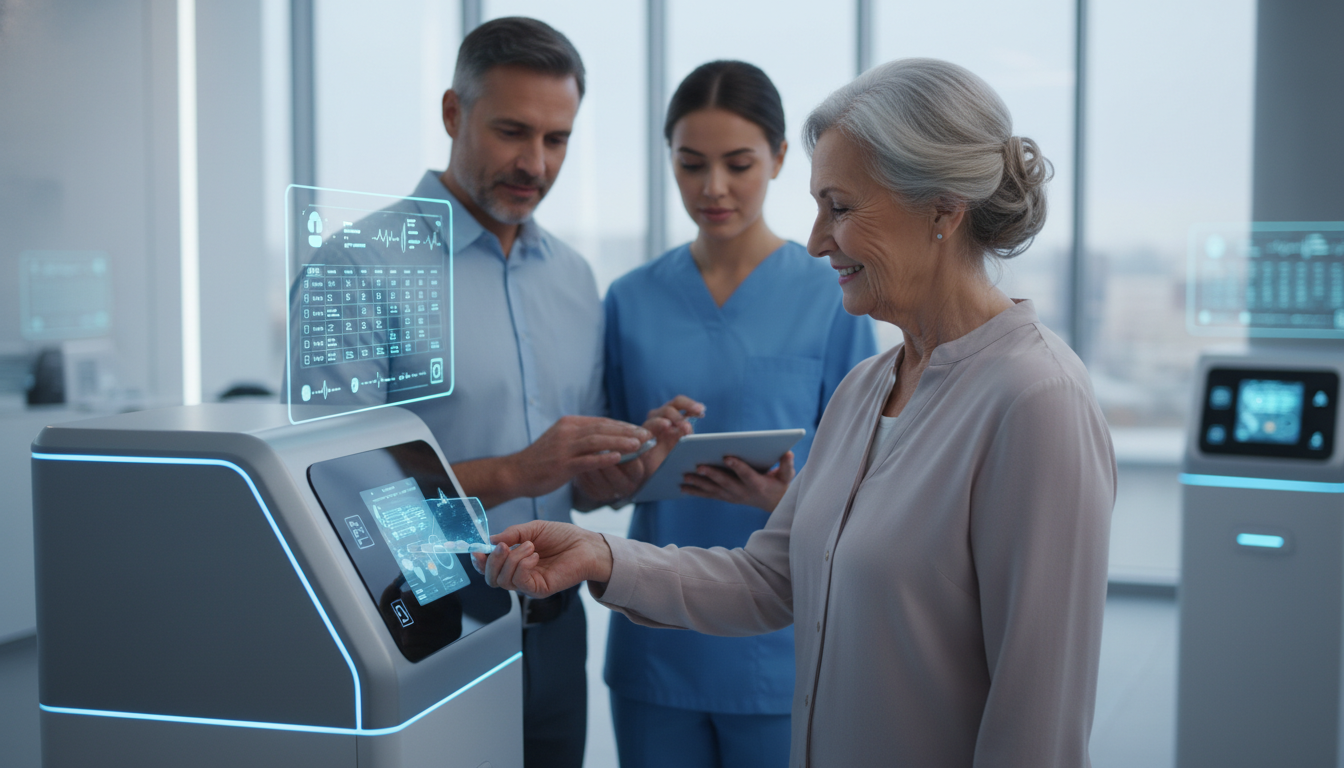
The most impactful application of AI in aged care isn't about replacing the human element; it's about making the human role better and more meaningful. When AI manages routine, repetitive tasks and predictive analysis, it frees up human carers. This strategic partnership allows staff to redirect their energy toward what truly matters: providing personalized attention, building relationships, and delivering person-centred care.
AI systems can automate many administrative and monitoring duties, predicting potential risks before they occur. This shift away from constant, low-value monitoring gives care staff the necessary time to focus on empathy and maintaining the dignity of the individuals they support. The goal is simple: to make sure that technology extends human interaction, rather than diminishing it. The result is a reduced risk of staff burnout and a higher quality of life for the elderly residents.
Automated Precision in Medication Management
One of the most critical areas where AI is having an immediate and measurable impact is in medication administration. Errors related to medicine dosage and adherence represent a serious health risk for older adults. In fact, medication errors contribute to approximately 20% of hospital admissions among older adults.
AI-powered dispensing units are changing this statistic by providing an extra layer of protection. These sophisticated systems can:
- Verify correct dosages automatically.
- Dispense medications accurately.
- Send immediate alerts to caregivers if a dose is missed, ensuring timely adherence to the prescribed schedule.
This automation significantly reduces the potential for human error, moving toward a safer environment for those who depend on consistent and accurate medicine delivery. This technological support allows caregivers to spend less time on manual checks and more time providing compassionate care.
Beyond Monitoring: Predictive Health and Risk Reduction
AI’s ability to process and analyze vast amounts of data makes it uniquely suited for predictive healthcare in an aged care setting. Instead of reacting to a crisis, facilities can move toward predicting and preventing health issues.
Identifying Fall Risks
Falls are a major concern in elderly care, often leading to serious injuries and a decline in independence. AI-driven monitoring systems, often using non-intrusive sensors or computer vision technology, can analyze movement patterns and environmental factors.
Over time, the AI learns the resident’s baseline behavior. Small, subtle changes in gait, stability, or activity level—changes that a human observer might miss—can be flagged by the system as an increase in fall risk. Caregivers can then intervene early by adjusting the environment, providing mobility aids, or arranging for physical therapy consultation.
Tracking Wellness and Behavior Changes
A sudden change in an older adult's behavior or routine can signal the onset of an illness, pain, or mental health issue. AI can monitor patterns related to:
- Sleep
- Appetite
- Social interaction
- Activity levels
If the system detects a deviation—for instance, consistently shorter sleep duration or prolonged periods of inactivity—it notifies staff. This early warning system means that health concerns can be addressed quickly, often leading to simpler treatment and better outcomes. This kind of consistent, objective tracking supports caregivers in maintaining a stable and supportive environment.
Ethical Considerations: Trust, Privacy, and Data Security
While the benefits of AI are numerous, implementing this technology requires careful consideration of ethical issues, particularly concerning resident privacy and dignity.
The use of sensors, cameras, and data collection tools means that the data security and confidentiality must be absolute. Aged care providers must be transparent with residents and their families about:
- What data is being collected.
- How it is being used.
- The robust security measures in place to guard it.
Building trust is paramount; AI must be seen as a tool that respects individual autonomy and privacy, not as a constant surveillance system.
The Future: Integrating AI into Daily Operations
The successful adoption of AI in aged care hinges on successful integration into the existing workflow. Technology should simplify, not complicate, the daily operations of staff. This means using systems that are intuitive and reliable. Training staff not just on how to use the technology, but why it helps them deliver superior care, is crucial for long-term success.
Future advancements may include:
- More sophisticated robotic aids for mobility and personal assistance.
- Personalized mental stimulation programs informed by AI analysis of cognitive health.
- Predictive staffing models that match care needs with available personnel in real time.
The integration of technology promises to transform challenging and time-consuming tasks, freeing up human staff to deliver the empathy and warmth that machines cannot replicate.
By focusing on a supportive Human-AI Partnership and applying technological solutions to critical issues like medication safety and risk prediction, aged care facilities are poised to deliver truly individualized, high-quality care well into the future.
Frequently Asked Questions (FAQ)
Is AI replacing human caregivers in elderly care?
No. The primary role of AI is to automate routine, repetitive, or predictive tasks. This automation is intended to support human staff by reducing workload and predicting risks, thereby allowing caregivers to spend more time on meaningful, person-centred interaction, empathy, and relationship-building. AI works as a partner to human staff, not a replacement.
How does AI improve medication safety?
AI systems, often integrated into automated dispensing units, ensure the correct medication and dosage are administered at the right time. These systems can mitigate the risk of human error by verifying prescriptions and immediately sending alerts if a dose is missed or if there's an adherence issue. This assistance helps address the issue of medication errors, which are a major factor contributing to hospital admissions among older adults.
What kind of data does AI collect about residents?
AI systems collect various types of data depending on the application. For risk prediction, they may monitor movement patterns, gait stability, and vital signs using non-intrusive sensors. For general wellness, they may track sleep patterns, meal consumption, and activity levels. All data collection must adhere to strict privacy regulations, and providers are expected to be transparent about their data policies.
How does AI help prevent staff burnout?
By taking over monitoring, data entry, and other routine or administrative tasks, AI significantly reduces the non-care burden on human staff. This allows caregivers to work more efficiently and focus on the aspects of care that provide them with professional satisfaction, such as emotional support and relationship-building, ultimately reducing stress and the risk of professional fatigue.
What ethical concerns are associated with AI in aged care?
The main ethical concerns revolve around data privacy, security, and maintaining resident dignity. Care providers must commit to strong data protection measures and transparency regarding data usage. The application of AI must always respect the autonomy and privacy of the older adults receiving care.