

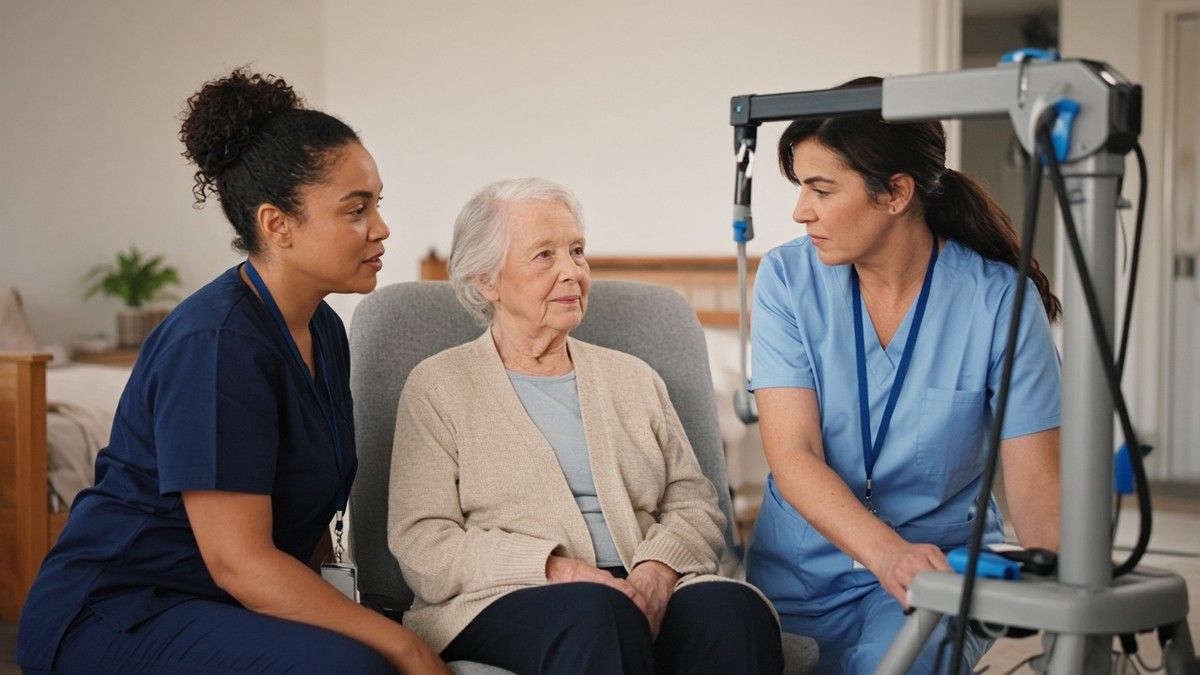


An aged care manual handling procedure check belongs before the sling goes under the resident, not after someone feels a twinge or the hoist alarms. Transfer work is frequent, physical, and easy to treat as automatic. Automatic is where facility-specific rules disappear. The hoist model changes. The resident's plan changes. The two-person rule applies to this transfer and not the last one. Staff who move on memory of "how we usually do it" are not careless. They are working at the speed of the floor. Ask Norma is the short pause that makes the approved procedure cheaper to confirm than to assume. This article is that pause: what to ask, what varies, and how to keep the check practical when the corridor is already busy.
What "the Usual Way" Gets Wrong
Manual handling procedures are written for a reason, and they are also long. Staff absorb a simplified version during induction and then adapt under real conditions. Over months, the adapted version becomes the culture of a wing. That culture can be safe. It can also drift from the written method, from manufacturer guidance the facility adopted, or from a resident-specific instruction that never made it into hallway practice. Common drift points include which sling is approved for which resident, whether a second person is required for this transfer type, where the brakes must be before the lift starts, and what to do if the resident is fearful or resists mid-transfer. None of those are good improvisation topics mid-lift. The aged care manual handling procedure check is not a full re-read of the policy. It is a targeted query that returns the rule for the transfer in front of you.
The Twenty-Second Ask Norma Sequence
Before positioning equipment, ask in the language you would use with a colleague. What is the approved transfer method for this resident today. Do I need a second person for this hoist transfer under our procedure. Which sling is listed for this resident. What do I do if the resident resists during the transfer. Ask Norma should pull from facility procedures and, where linked, from care plan content the organisation has made available to the assistant. If the answer is thin, stop and use the human escalation path rather than inventing a method. The Norma care bot is useful only when the source material exists. Empty answers are a documentation problem for the facility to fix, not a green light to proceed on guesswork.
Resident-Specific Instructions Beat Generic Technique
Two residents can need the same hoist and still require different handling. Pain, preferred side, fear of equipment, limb precautions, and skin integrity issues change the transfer even when the equipment is identical. Generic manual handling skill is necessary and not sufficient. Workers covering an unfamiliar wing feel this most. They know how to operate the hoist. They do not know Mrs K's preference to be talked through every step, or that a particular sling was withdrawn for her last month. Asking Ask Norma about the resident's transfer instructions before starting is faster than learning those facts mid-transfer under stress. Support for frontline assistants working inside clear boundaries is also covered in AI support for personal care assistants. The transfer check is one of the highest-value moments for that support because the physical risk is immediate.
Competency, Authorisation, and the Right Person for the Task
Procedure checks often surface a second question: am I the right person to do this transfer. Some facilities restrict certain hoist types or transfer situations to staff with a named competency. Others allow trained care assistants to complete routine transfers and reserve complex ones for nursing staff. The line is local. Treating it as universal is how people step outside their authority without noticing. If Ask Norma returns that a transfer requires a competency you do not hold, the correct action is to stop and obtain the right person, not to "just be careful." The facility's workforce training and competency policy is the reference point for how those boundaries are meant to work. Pair it with the manual handling procedure rather than treating competency as a separate universe. Escalation when the transfer cannot proceed safely should follow the same pathway used for other clinical risk, not a private arrangement between two workers in a hallway. The clinical handover and escalation policy should connect to the handling procedure so staff are not choosing between two conflicting instructions.
Equipment Reality on the Floor
Written procedures assume equipment is available, charged, and intact. Floors do not always meet that assumption. When the preferred hoist is in use elsewhere, staff substitute. Substitution without a check is another drift point. Ask Norma will not invent a safe substitute if the facility never documented one. What it can do is return the approved options and the rule for when a transfer must wait. Waiting feels wrong when a resident needs the toilet. It is still better than an unapproved lift that injures a worker or a resident. Team leaders who punish waiting and ignore unsafe substitution teach the wrong lesson. The procedure check only sticks if the organisation accepts the delays it implies.
After the Transfer: What Still Needs Recording
Not every routine transfer needs a novel. Transfers that deviate, involve near-misses, equipment faults, resident distress, or a change from the planned method do. Workers should know before they start which outcomes trigger a note, an incident form, or both. Asking Ask Norma after a difficult transfer what must be documented is still useful. Asking before is better, because it changes what you watch for during the move. If the same transfer question appears across many staff, the care plan section for mobility may be hard to find or written in language nobody uses on the floor. That is an authoring problem. Fixing it reduces Ask Norma load and reduces risk.
Building the Habit without Slowing the Wing
The check should sit in the same beat as gathering the sling and checking the brakes. It is part of set-up, not an extra philosophical step. New staff should be taught to query Ask Norma for transfer method on residents they do not know well. Agency staff should be taught that "I watched someone else do it yesterday" is not a procedure check. Supervisors can sample: pick three transfers in a shift and ask what the worker confirmed before starting. If nobody can name a source, the habit is not real yet. If everyone names Ask Norma or the care plan consistently, the culture has moved.
Near-Misses and the Honesty Problem
Manual handling near-misses are under-reported when staff fear blame for "making a fuss." A sling that almost tore, a hoist that drifted, a resident who slipped part-way through a transfer - each is information the organisation needs. Ask Norma can confirm whether your procedure treats those events as reportable and what fields the report needs. The check before the transfer reduces how often near-misses happen. Honest reporting after they happen reduces how often they repeat. Leaders who only celebrate speed teach staff to skip both the pre-check and the near-miss note. Leaders who ask "what did you confirm before you lifted" change the status of the aged care manual handling procedure check from optional courtesy to expected craft. Agency staff deserve a short orientation line on day one: before any hoist or assisted transfer on this site, confirm method and resident instructions in Ask Norma or with the shift lead. That single sentence prevents a large share of "I did it the way my last facility did it" events.
Related Resources
For deeper facility workflows and product context, see: Norma care bot; workforce training and competency policy; AI support for personal care assistants; clinical handover and escalation policy.
Common Questions About Manual Handling Checks
1. What is an aged care manual handling procedure check?
It is a short confirmation, before a hoist or assisted transfer, that the approved method, equipment and any resident-specific instructions match what you are about to do.
2. When should I use Ask Norma for transfers?
Use it before the transfer when the method is unclear, the equipment looks different to last time, or the resident has changed mobility, weight-bearing status or behaviour.
3. What if the hoist I need is unavailable?
Do not improvise with the wrong sling or an unapproved workaround. Ask Norma for the facility pathway when preferred equipment is out of service, then escalate if the answer is still unclear.
4. Does every transfer need a written note?
Follow local documentation rules. Unusual transfers, near-misses, equipment issues and resident distress usually need a note even when routine transfers do not.
5. What if Ask Norma conflicts with how my wing usually transfers?
Facility procedure and resident-specific instructions win over wing habit. Raise the conflict with the senior on shift so the source documents or local practice can be corrected.


