

Key Takeaways
- Transitions of care involve moving patients between different healthcare settings or providers.
- Five core quality principles guide safe and effective transitions.
- Good communication, clear roles, and ongoing review are essential.
- Governa AI provides tools to help healthcare organizations meet Australian health standards.
Introduction
When a patient moves from one healthcare setting to another-for example, from a hospital to home care, or between different departments within a hospital-this is known as a transition of care. These transitions are important moments in a patient's journey. If not managed well, they can lead to misunderstandings, errors, and poor health outcomes. Understanding and applying key quality principles helps make these transitions safe and effective for everyone involved. This article outlines five such principles, focusing on how they apply within Australian health standards.
Principle 1: Person-Centered Care
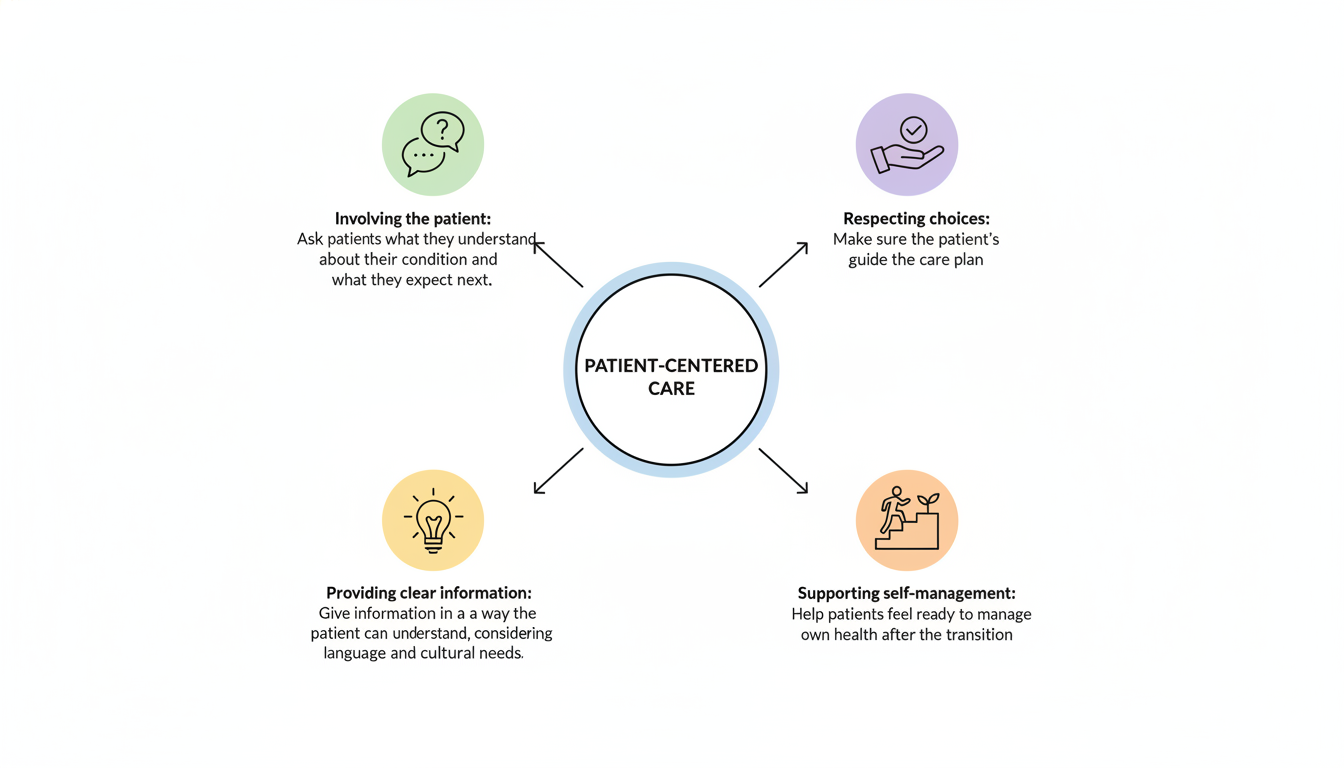
At the heart of every successful transition is the patient. You must always put the patient's needs, preferences, and values first. This means involving them and their family in decisions about their care.
Key aspects include:
- Involving the patient: Ask patients what they understand about their condition and what they expect next.
- Respecting choices: Make sure the patient's choices guide the care plan.
- Providing clear information: Give information in a way the patient can understand, considering language and cultural needs.
- Supporting self-management: Help patients feel ready to manage their own health after the transition.
Principle 2: Effective Communication Tools
Clear and timely communication is perhaps the most important factor in safe transitions. Misunderstandings between healthcare providers can cause serious problems. Using structured communication tools helps prevent these issues.
Consider these approaches:
- Written plans: Develop clear, written care plans that everyone can access.
- Digital solutions: Use electronic health records or specialized software to share patient information.
- Standardized forms: Apply consistent forms for referrals and discharge summaries.
- Governa AI: Governa AI offers solutions designed to improve information exchange between care teams, helping you keep everyone informed.
Principle 3: Clear Responsibilities and Accountability
Everyone involved in a patient's care must know their role and what they are responsible for. When roles are unclear, important tasks can be missed, leading to gaps in care.
To achieve this:
- Define roles: Clearly state who is responsible for each part of the transition process.
- Assign tasks: Make sure specific tasks are given to specific individuals or teams.
- Establish accountability: Create ways to check that tasks are completed correctly and on time.
- Leadership support: Leaders must support staff in taking ownership of their responsibilities.
Principle 4: Standardized Clinical Handover Processes
A clinical handover is when responsibility for a patient's care is transferred from one healthcare professional to another. This often happens at shift changes, when patients move between wards, or when they are discharged. Using a standardized process for handover helps make sure all important information is passed on accurately.
An example of a widely used structure is ISBAR:
- I - Identification: Identify the patient and yourself.
- S - Situation: Explain what is happening now.
- B - Background: Give relevant patient history.
- A - Assessment: Describe your assessment of the situation.
- R - Recommendation: Suggest what needs to happen next.
Using frameworks like ISBAR helps meet Australian health standards for safe care.
Principle 5: Continuous Review and Improvement
Healthcare is always changing, and so should your transition processes. Regularly reviewing how transitions are managed helps you find areas for improvement and make necessary adjustments.
Steps for continuous review include:
- Collecting feedback: Ask patients and staff about their experiences with transitions.
- Analyzing incidents: Investigate any problems or errors that occur during transitions to learn from them.
- Implementing changes: Make changes based on what you learn.
- Monitoring results: Check if the changes you made are actually improving patient safety and care quality.
- Regular audits: Conduct audits of your processes to make sure they follow established guidelines and Australian health standards.
Governa AI: Supporting Your Transition of Care
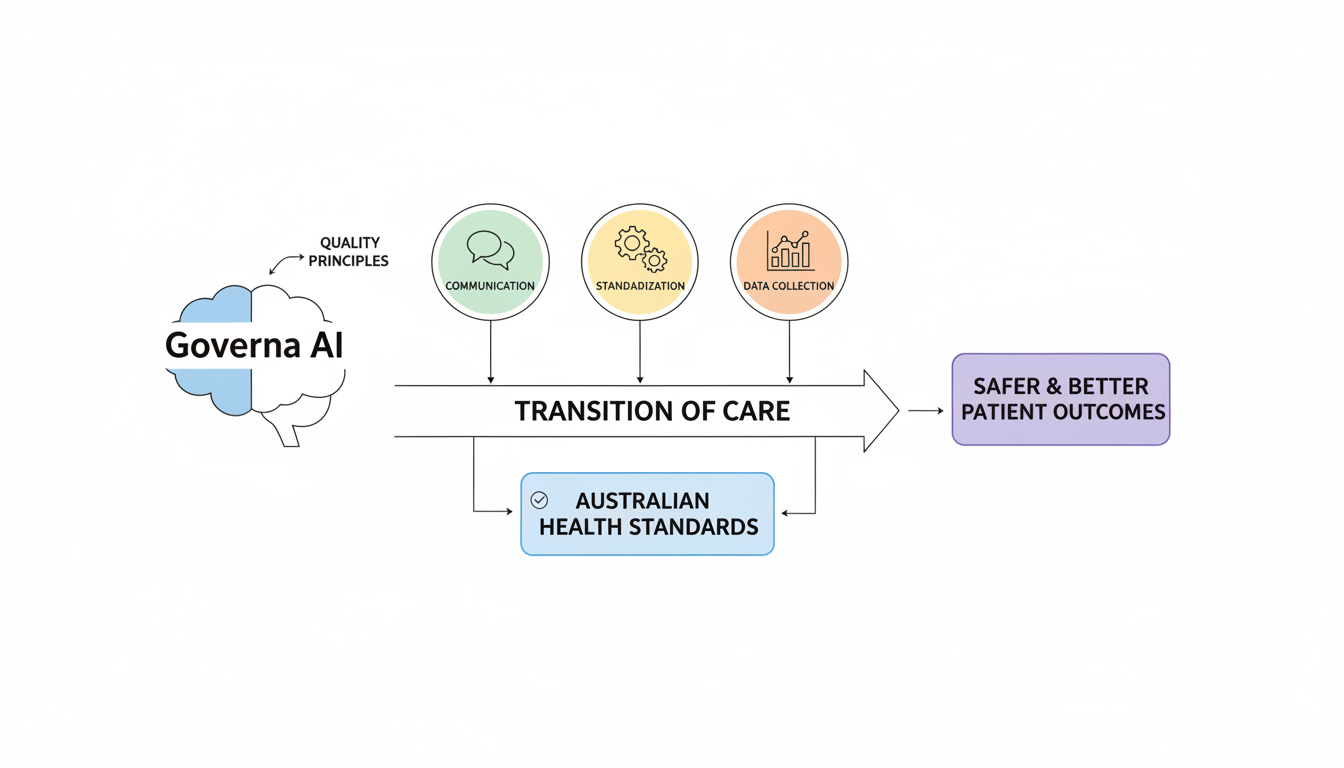
Governa AI provides advanced software solutions designed to help healthcare organizations manage transitions of care more effectively. Our tools assist with communication, standardization, and data collection, helping you to meet and exceed Australian health standards. By partnering with Governa AI, you can put these quality principles into practice, leading to safer and better outcomes for your patients.
Conclusion
Safe and high-quality principles for transitions of care are not just ideals; they are essential for protecting patient well-being and maintaining trust in the healthcare system. By focusing on person-centered care, effective communication, clear responsibilities, standardized handovers, and continuous improvement, you can make every transition a positive step in a patient's recovery journey. Embracing these principles helps healthcare providers in Australia give the best possible care.
Frequently Asked Questions
What is a transition of care?
A transition of care refers to the movement of a patient from one healthcare setting or provider to another. This can include moving between different hospitals, wards, or from a hospital to home care.
Why are transitions of care important for patient safety?
Transitions are important because they are points where errors can happen due to poor communication or unclear responsibilities. Safe transitions help make sure patients continue to receive the right care without interruption.
How do communication tools help in transitions?
Communication tools provide structured ways to share patient information between healthcare providers. This reduces the risk of important details being missed or misunderstood, which is key for patient safety.
What is ISBAR and how is it used in clinical handover?
ISBAR is a structured framework for clinical handover that stands for Identification, Situation, Background, Assessment, and Recommendation. It helps healthcare professionals pass on patient information clearly and completely.
How does Governa AI assist with transitions of care?
Governa AI offers software solutions that help healthcare organizations improve their processes for transitions of care. This includes tools for better communication, adherence to Australian health standards, and data management.